

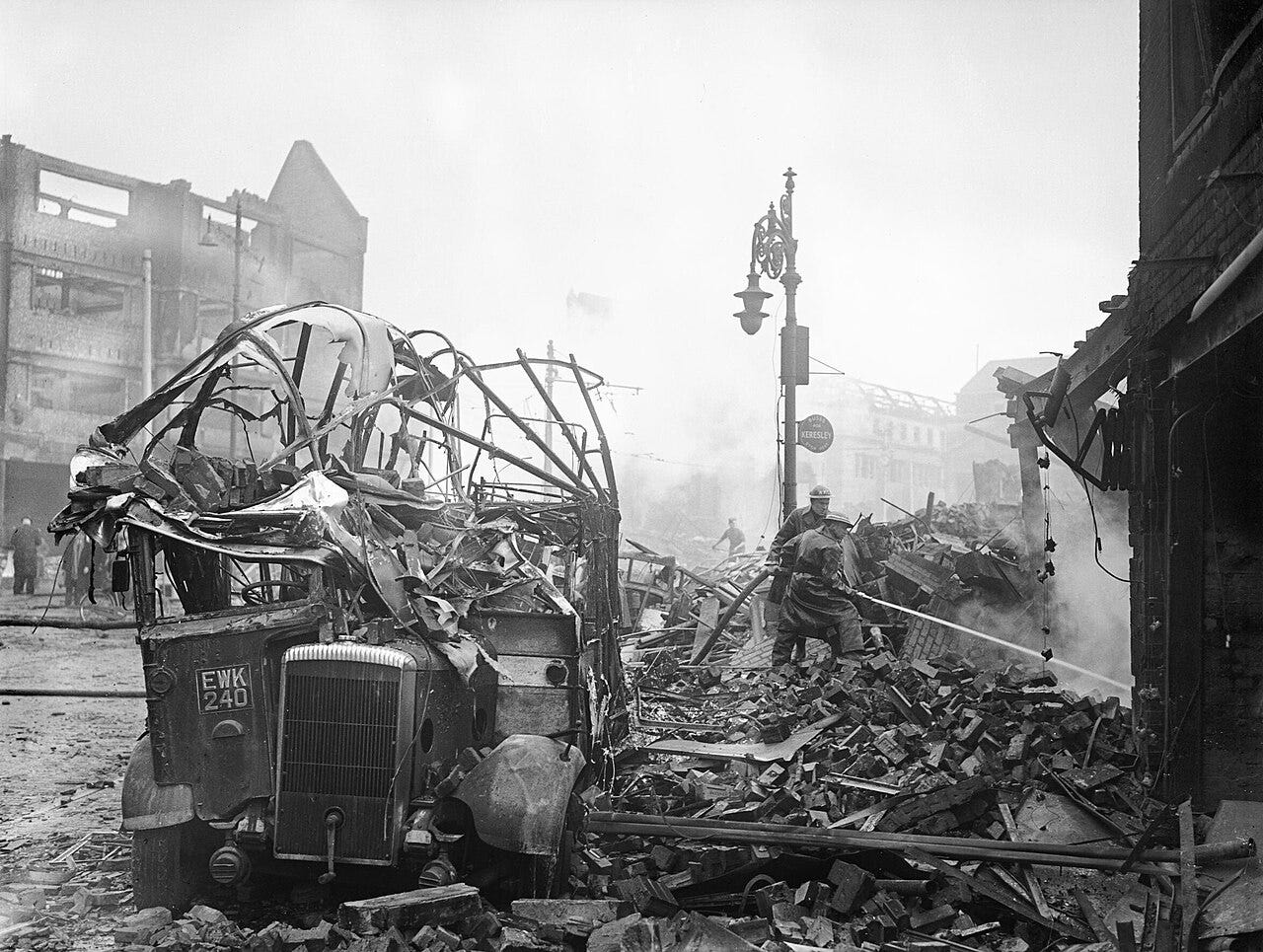
I have to admit that I didn’t think I’d enjoy visiting Coventry as much as I did. I’d somehow never been there before despite having lived in the UK for many years. And yet, there was an image of a drab post-war city in my mind.
Growing up in Germany, the name evoked a place destroyed by the Luftwaffe in the Second World War and later rebuilt in a modernist style. Since living in England, I’ve often heard people talk about Coventry in disparaging or mocking terms. Whenever I posted something from the German city of Dresden, also badly bombed, someone would comment: Why couldn’t Coventry rebuild as nicely as that?
So, when the charity The Friends of Coventry Cathedral invited me to speak about lessons from history and the theme of reconciliation in the Cathedral itself, I jumped at the chance to see the place for myself.
The date of my presentation – Friday, 13 November – was hugely symbolic. It’s the eve of the anniversary of the destruction of the old Cathedral by German bombers on 14 November 1940. So I was expecting to see the ruins of the old St Michael’s Cathedral before speaking in the new one, built immediately adjacent to them.
But the chairman of The Friends, Canon David Porter, asked to meet me at the Coventry Charterhouse, a medieval monastic house recently refurbished and opened to the public. It’s a fascinating old structure with wonky floors and a beautiful garden. Incidentally, the founder of the Order of Carthusians, whose monks lived here in tiny cells and in solitude for much of their days, was Bruno of Cologne — yes, I really can find German history anywhere…
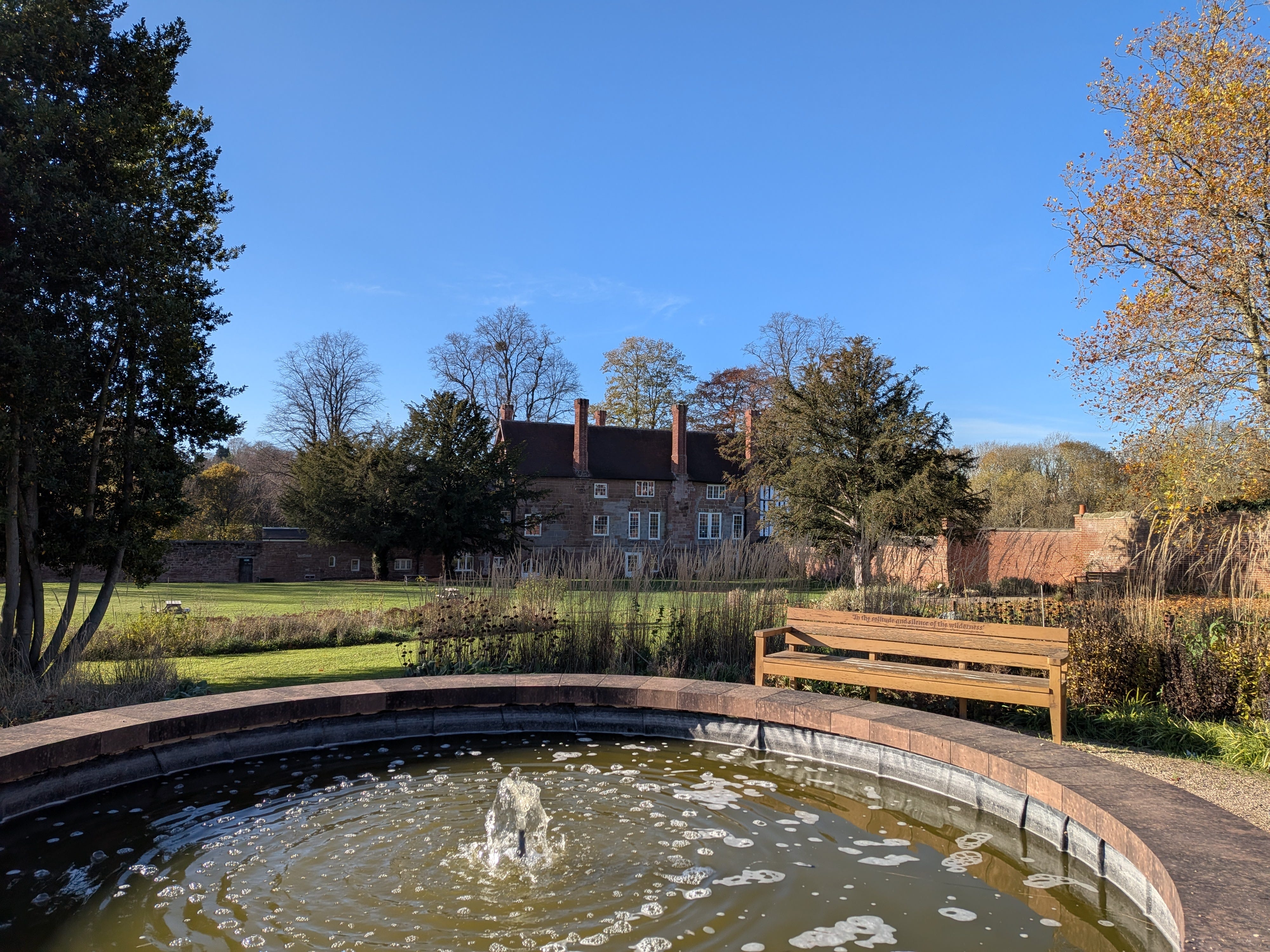
I arrived a bit early (as one does when one is German) and strolled through the rooms, chatting with eager and knowledgeable volunteers about Tudor-era wall paintings and about Coventry itself. Did you know that it is the most central city in England? I didn’t.
Satisfied with all my newly acquired knowledge, I bought a cup of tea and went for a walk in the crisp, wintery sunshine we were blessed with that day. When David turned up at the Charterhouse cafe, I was surprised to find that he was Northern Irish, but that certainly meant he knew a thing or two about reconciliation and how long and complex a process it can be.
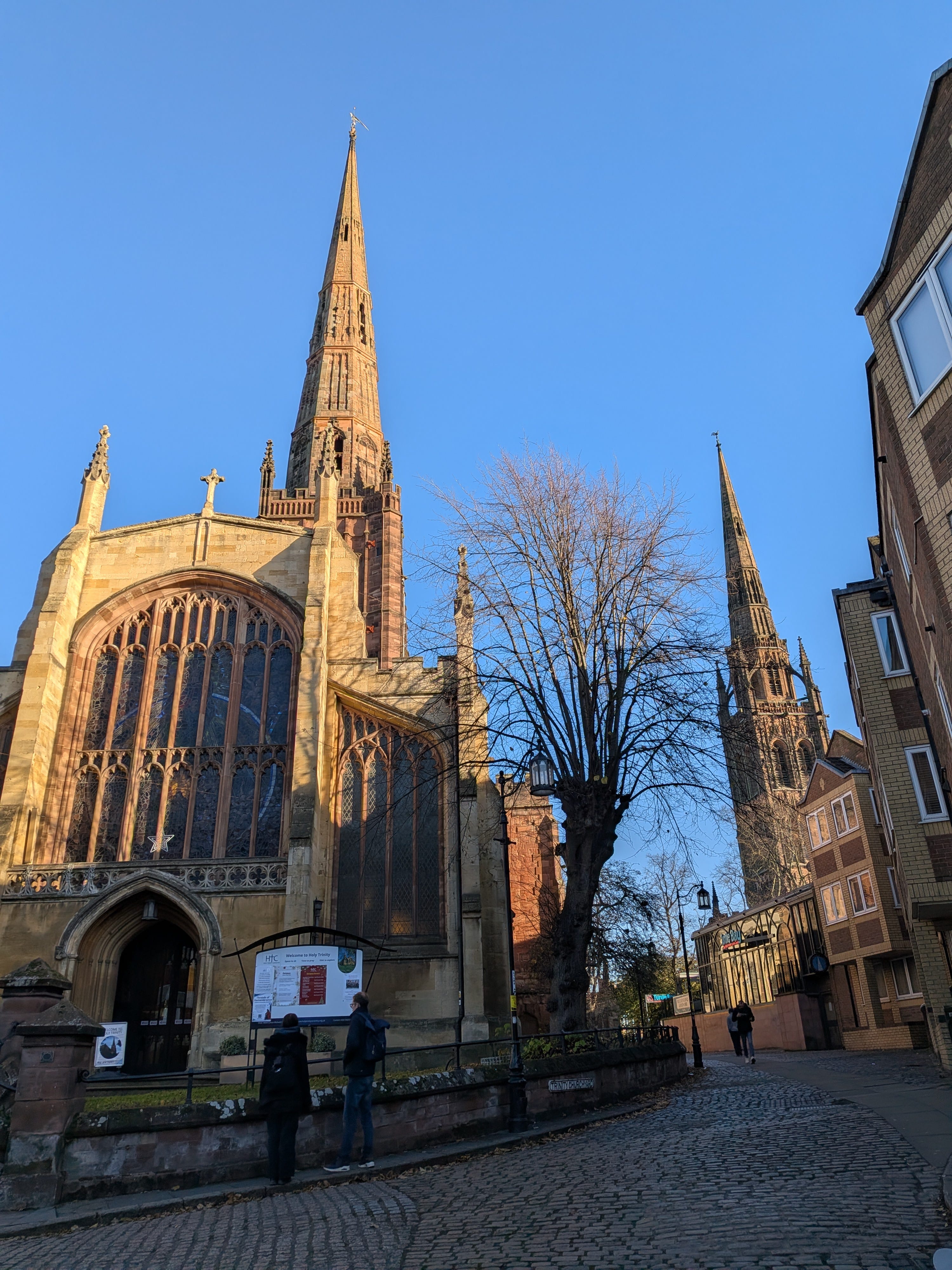
Soon, we moved on to Coventry proper, where we visited Holy Trinity Church, a medieval church that somehow survived the Blitz intact despite being very close to the Cathedral. This is largely due to the astonishing commitment of Revd Graham Clitheroe, vicar of Holy Trinity at the time, who stayed with his church during the terrible night of the air raid of 14 and 15 November, extinguishing fires and even pushing bombs off the church roof to stop further damage. He and his team also looked after exhausted fire crews.
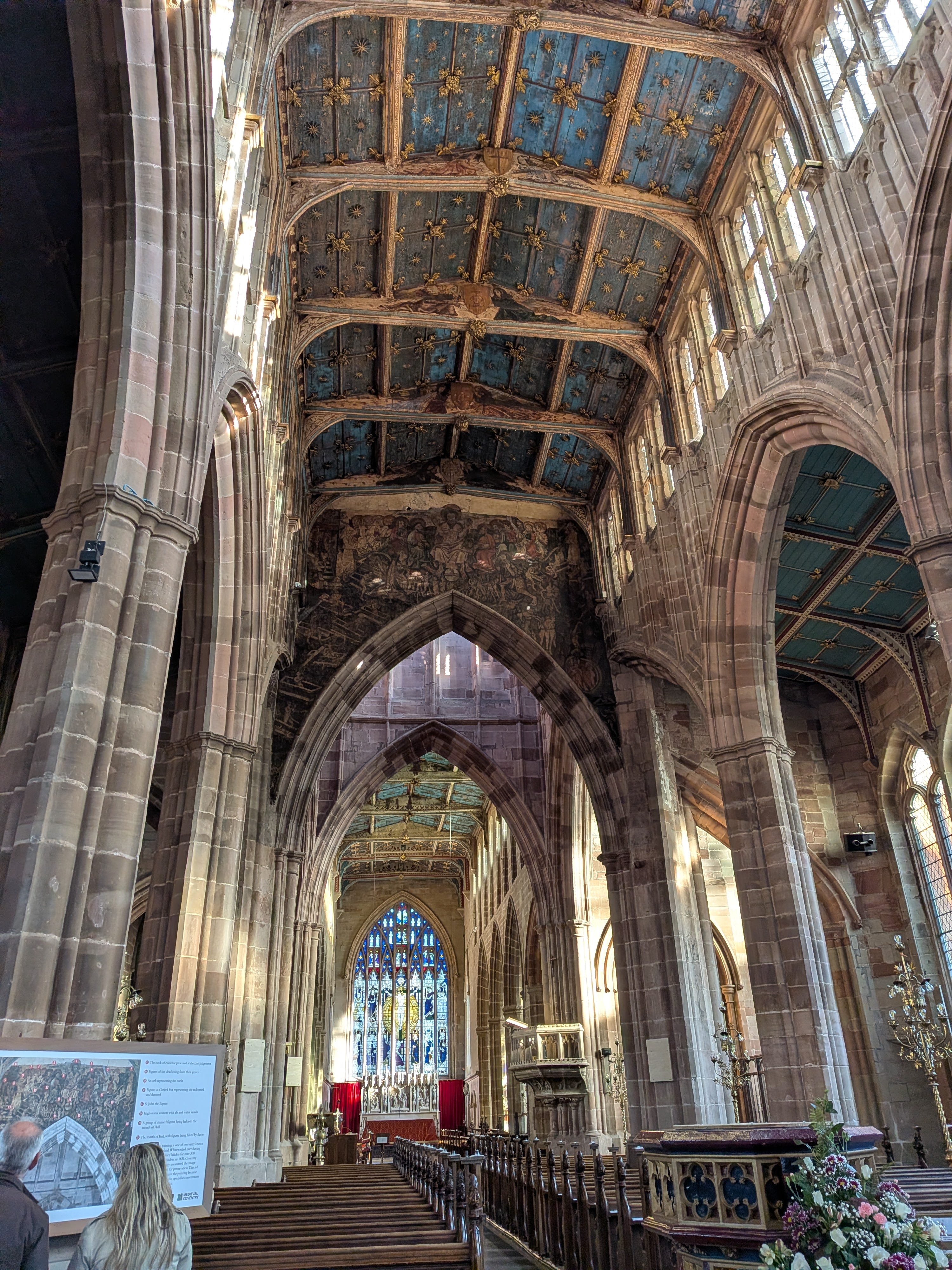
It’s a magnificent building that gives you an idea of the irretrievable things we lose in war. There’s an incredibly vivid and evocative Doom Painting from the 1430s. When I entered, brightly coloured spots of sunlight filtered through magnificent stained-glass windows illuminated the space. I could easily imagine the dread the depictions of sin, death and hell may have caused in Early Modern worshippers worried about their souls. The thought that such a thing could be consumed by flames is heartbreaking.
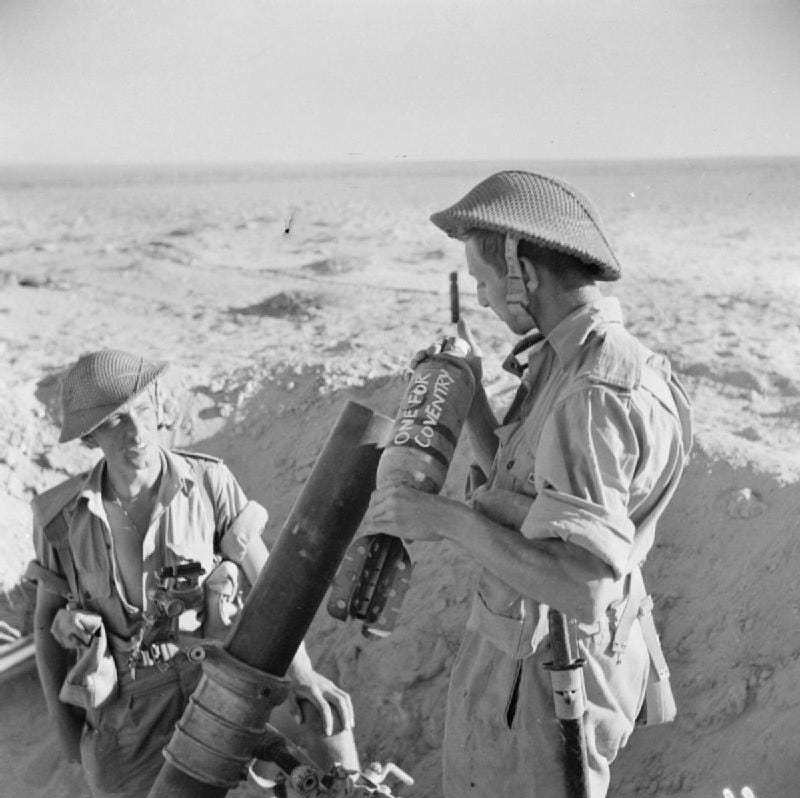
And yet, the destruction of Coventry Cathedral happened just a very short walk away. At around 8 pm on 14 November 1940, it was set on fire by incendiaries for the first time. In all, 515 German bombers set off from northern France to carry out Operation Moonlight Sonata, intended to destroy Coventry’s factories while accepting that the medieval city centre would also be devastated.
Afterwards, the Nazis coined the term “coventrieren”, “to coventry” to describe the bombing of cities in war. Firefighters managed to extinguish the first fire threatening the Cathedral, but more hits followed, and a firestorm engulfed the structure, overwhelming the efforts to control it. In one night, more than 4,300 homes were destroyed, two-thirds of buildings, two hospitals, two churches and a police station were damaged. An estimated 568 lives were lost.
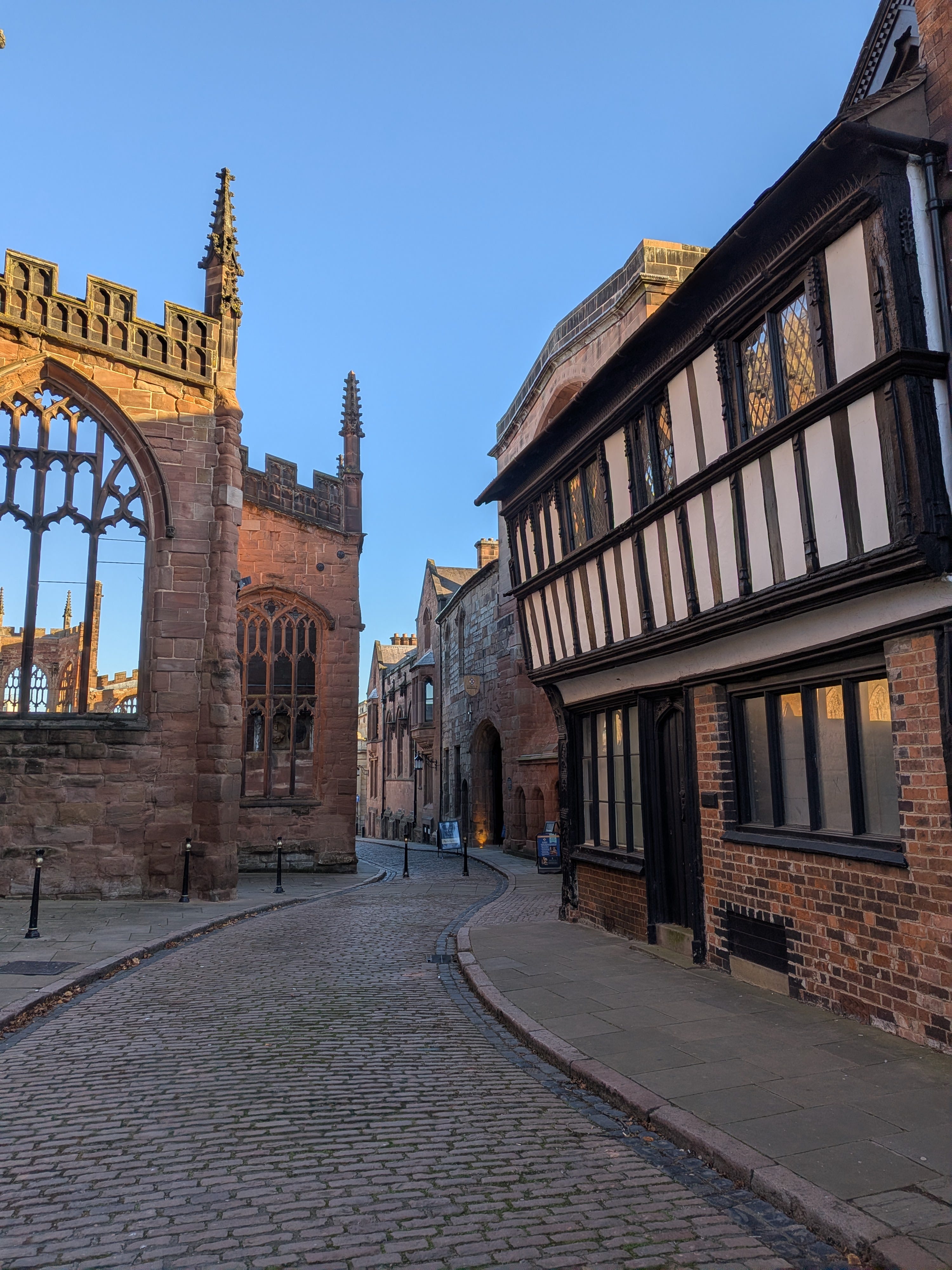
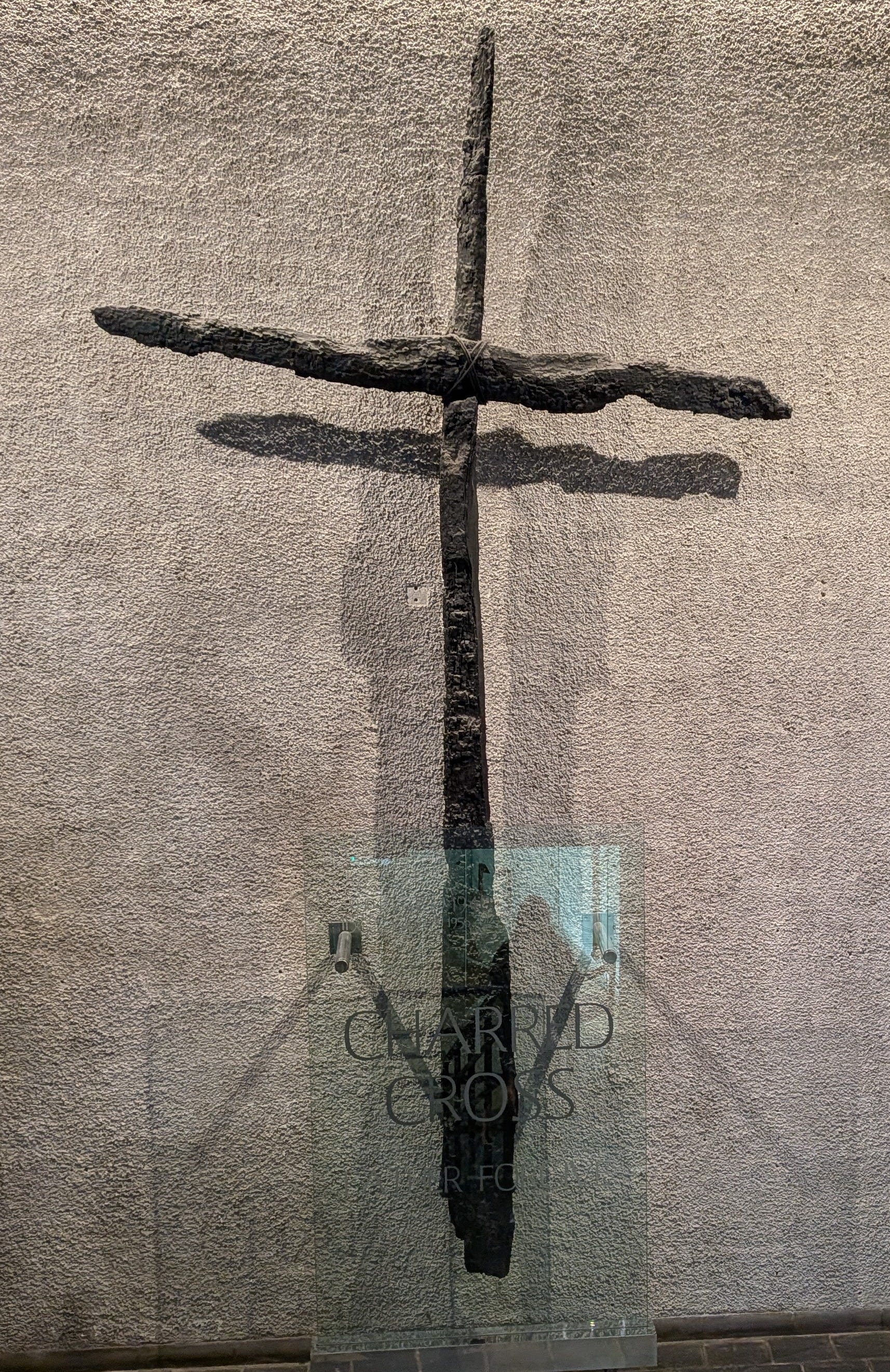
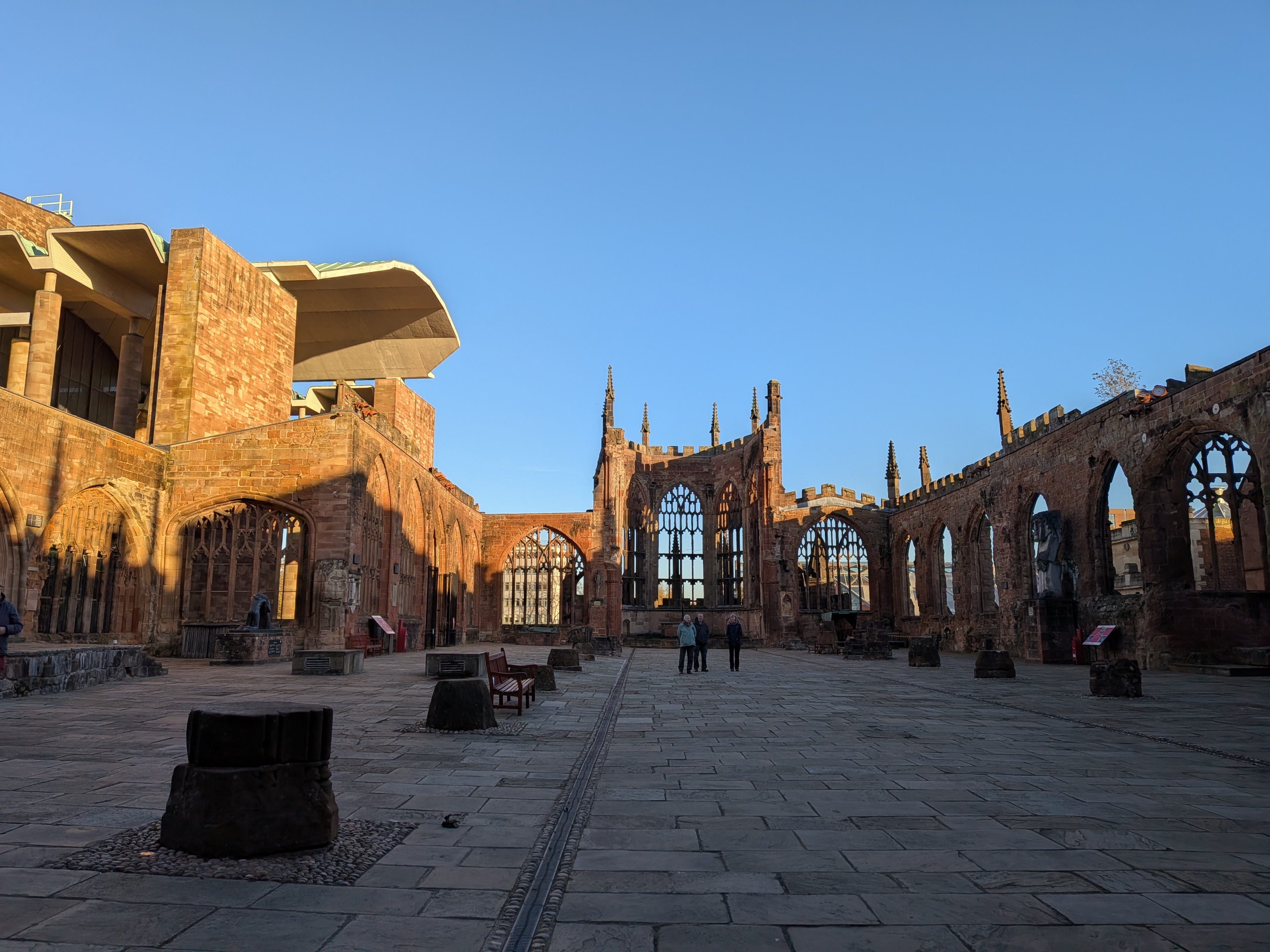
The Cathedral was in ruins. On the charred walls behind the Altar, Provost Richard Howard wrote the words “Father Forgive”’. Today they are engraved there. It was a strange and moving experience to walk through the ruins with David. He spoke about the Charred Cross created by cathedral stonemason Jock Forbes, who saw two wooden beams lying in the shape of a cross and tied them together. Today, it’s preserved in the New Cathedral. You don’t have to be religious to feel the sense of loss and tragedy standing in the middle of a destroyed place of worship.
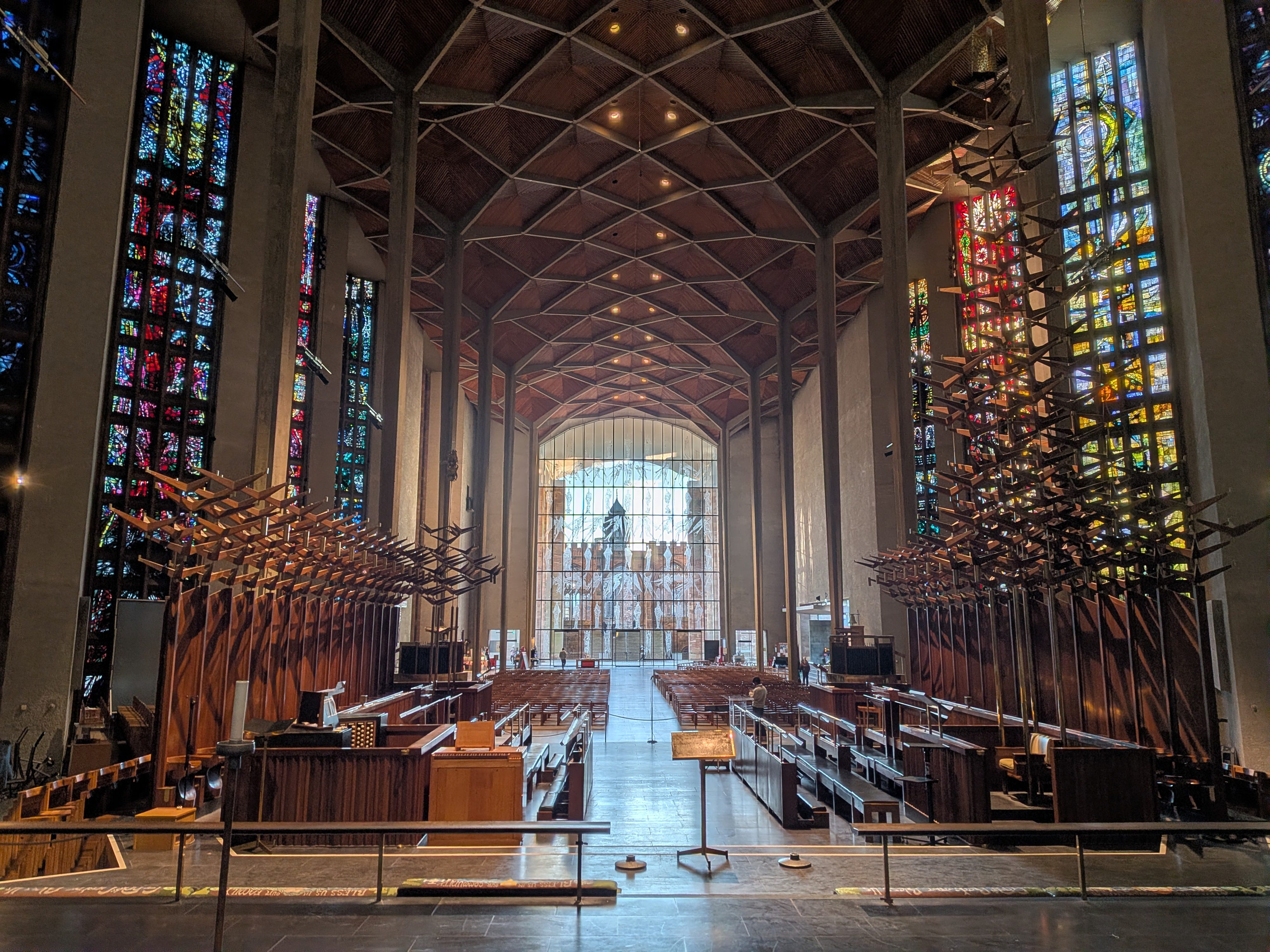
David then took me into the New Cathedral. It’s adjacent and on the same consecrated ground. Built after the war and reopened in 1962 with Benjamin Britten’s War Requiem, composed for the occasion, this too is often derided as a modern structure.
Where Dresden rebuilt its destroyed Frauenkirche after reunification, Coventry decided on a different path: preserve the ruins of the old cathedral as a memorial and build a new one for a new age, with both parts forming one church together.
I have to say, I found the concept and the idea impressive. David took me to stand behind the altar and look back, and the light that flooded in through the huge, engraved glass doors made for a spectacular vista. He admires both Coventry and Dresden for how they have built back in different ways.
For my part, I was beginning to worry how I could ever express anything new and meaningful about reconciliation in a place that has thought about and worked on this concept since its own destruction. The fact that Provost Richard Howard found it in himself to write the words “Father Forgive” behind the Altar at a time when many people’s hearts would have been filled with rage and the desire for vengeance is remarkable and humbling.
After the war, Coventry immediately worked to reconcile people who’d been mortal enemies. The British military commission in the German city of Kiel, which had also been bombed, appointed a construction commissioner called Williams, who was from Coventry. Williams was struck by the common experiences of both cities in loss, suffering and the challenges of rebuilding. He helped establish and forge links between the Mayor of Kiel and the Lord Mayor of Coventry. The result was one of the first formal town-twinning projects in post-war Europe.
Clearly undeterred by the Cold War gulf that soon emerged and deepened, Coventry also reached out to Dresden, which, unlike Kiel, ended up in East Germany. In 1965, just a few years after the Berlin Wall was built, a team of young people from the Sunday morning service in Coventry Cathedral were sent to Dresden to help rebuild the Church Hospital. Remarkably, Rabbi Lionel Blue led a Sunday morning BBC Radio appeal for funds for this project and people from all over the UK sent money to help rebuild a city that had been — and in a way now was again — deep in enemy territory.
But there was much that transcended political animosities. There was the musical tradition, which soon expressed itself in war requiems composed under the immediate impression of destruction but often performed together. There was a common Christian faith with its concepts of forgiveness and redemption. And there was a shared humanity, a feeling particularly among young people that a better world order should emerge from the ruins of the old. Incredibly, one of those young people who volunteered to help rebuild Dresden in the 1960s was there Friday night. She’d come in especially to speak to me.
Dorothy told me how she travelled from Coventry to Dresden repeatedly as a volunteer in the 1960s and afterwards. How she helped clear rubble to make space for the rebuilding of the hospital and how she became fascinated with German culture.
She learnt to speak German so well that she even had traces of the local dialect in her language and when her health allows, she still returns to Dresden and Berlin today. The encounter fortified me for my talk. A large part of reconciliation is kindling interest and empathy for other people. That’s what Dorothy had done in her way, and perhaps I could do it in mine.
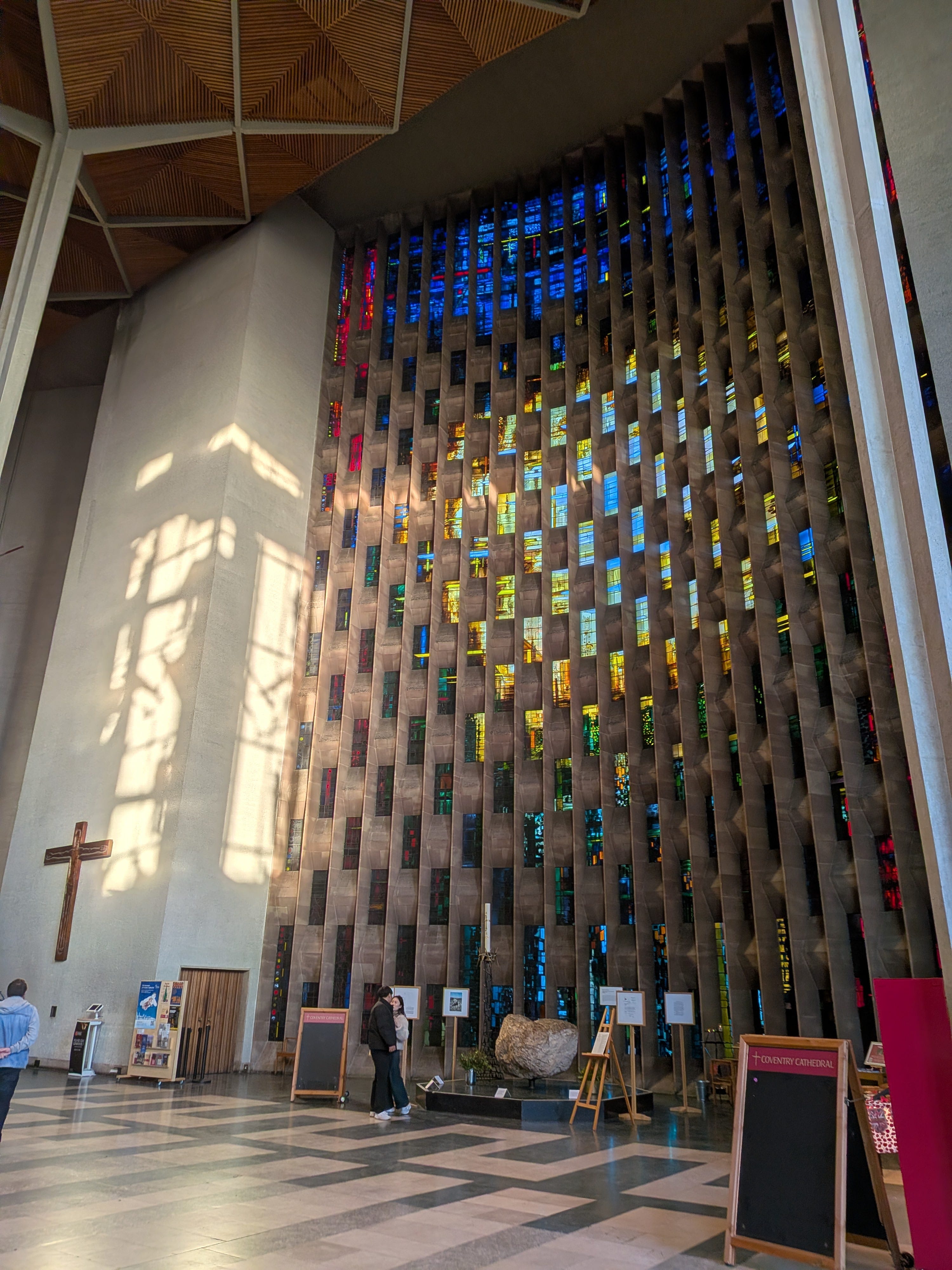
Standing in the New Cathedral that was built because Germans had bombed the old one, I talked to a mostly English audience about the events that led up to this: the rise and reign of Hitler and what we can learn from this today. I was touched by the size of the audience that came out on this bitterly cold Friday night to learn more about German history. There were great questions and comments. One boy told me he’s studying this at school and found it fascinating, which is why he’d come out to delve deeper. A young man asked me to sign his battered-looking 2023 hardback copy of Beyond the Wall, saying it had inspired him to study history at university.
When I reflect back on the day I spent in Coventry now, it seems utterly remarkable. Looking at what’s left of the city's medieval sights and strolling through the ruins of the old Cathedral made the scale of loss and suffering obvious. And yet, I’ve met so many people working on reconciliation every day. Some in obvious roles dedicated to the process, such as David and Dorothy — albeit in very different ways. Others in more indirect ways, by showing an interest in the history of former enemies.
The fact that, as a German historian, I can speak in a place where the country of my birth once sent bombers is remarkable. As is the fact that there is a popular German-themed Christmas market in the heart of Coventry's once-destroyed city centre.
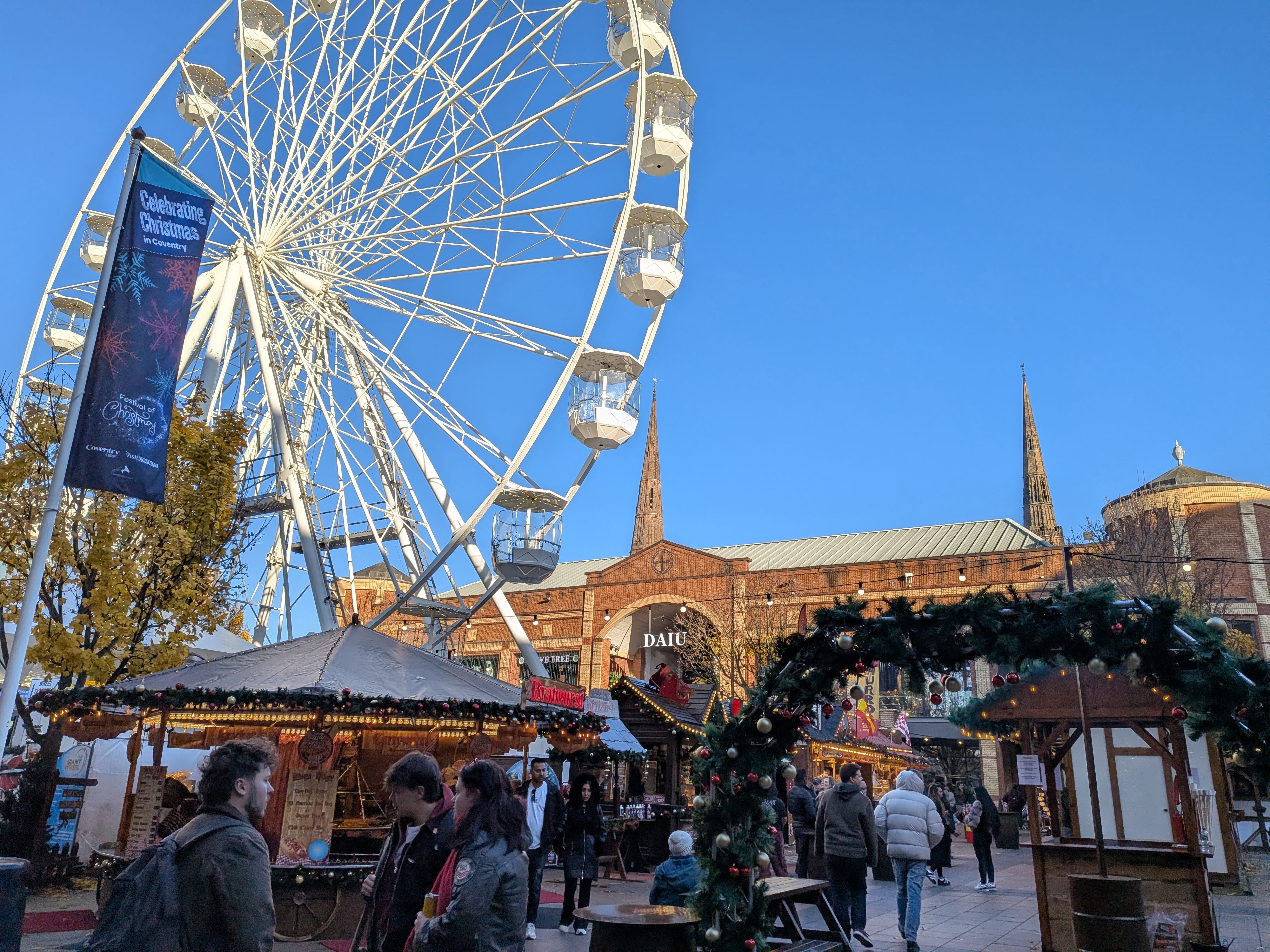
Sharing some German-style food there with representatives of The Friends of Coventry Cathedral seems a deceptively normal experience in the mid-2020s. But we should never take such things for granted. There was nothing inevitable in the post-war path that led to this point. It was paved by many people across several generations who refused to forget but were willing to forgive.