Austria has finally decided the fate of Hitler's birthplace...
...but can architecture ever escape the burden of memory?

Almost exactly a year ago, I reported here on ZEITGEIST about the small Austrian town of Braunau am Inn. Then, it was the final stages of heated debate about what to do regarding the legacy of its most (in)famous son: Adolf Hitler.
The future dictator was born here in 1889, and Braunau has long debated whether this fact should be remembered, forgotten or ignored. Now, there’s news, so I thought I’d share an update with you.
Braunau am Inn never asked to be Adolf Hitler’s birthplace. Yet this quaint Austrian town by the German border will always be where the story of the most infamous dictator in human history began. For decades, Braunau debated whether to confront or erase this past. Now, the house where Hitler was born has been turned into a police station. It’s unlikely to be the end of the matter. There are no definitive answers to the question of what to do with houses associated with historical horrors.
On Wednesday, the new police station moved into the house where Hitler came into the world. For any onlooker, it was immediately obvious how much of a live issue the legacy of this location remains. At the address, Salzburger Vorstadt 15, stands an unassuming, even pretty house dating back to the 17th century. On Wednesday, it was cordoned off by scores of Austrian police officers. A helicopter circled above the small town and its 17,500 residents. The place is as contested as it has ever been.
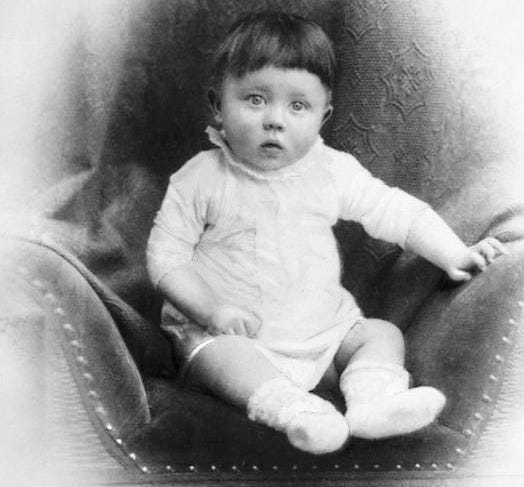
Much of Braunau resents this kind of fuss. When the house stood empty ten years ago, and there was a national debate over whether it should be torn down or reused in some way, Braunau’s District Governor at the time, Georg Wojak, spoke for many residents when he said: “This is where baby Adolf was born. Innocent, as all children are. He filled nappies here, not battlefields.” Indeed, the Hitlers moved to a different location in Braunau just three months after the birth of their son and then out of Braunau altogether three years later.

Keen not to be associated with Hitler forever, just because he learnt how to walk and talk here, many in Braunau favoured an approach to “neutralise” this history. In practice, this means that the house at Salzburger Vorstadt 15 would neither be demolished nor become a memorial. It would simply be reused in a neutral way. That’s exactly what making it a police headquarters is intended to achieve. “Our police is the opposite of the darkest times of our history”, said the Austrian Interior Minister Gerhard Karner, who attended the opening ceremony on Wednesday, adding that he envisioned it reframed as a place of “democracy, the rule of law, security, freedom and human dignity”.
The expert commission that had been set up to make recommendations about the fate of the house was also quite open about its fears that even turning it into a memorial or education centre would be no guarantee that the continuous association with Hitler wouldn’t still attract “brown pilgrims”, as one Austrian newspaper put it in allusion to the colour associated with the Nazi movement. Especially on Hitler’s birthday, 20 April, the house exuded an “almost mystical air” in “far-right circles”, the paper reports, with people putting wreaths or flowers in front of the house. So the security cameras fitted on police stations as standard may be an added bonus, the expert commission suggested.
There are more prominent examples of a “neutralisation” approach to dealing with places associated with Nazism. Take the Berlin Olympic Stadium. Originally designed for the Summer Games of 1936, held in the capital of Nazi Germany and heavily exploited for the regime’s propaganda purposes, it was extensively modernised in the mid-2000s and is now mostly associated with German football. It’s the home of Hertha BSC and has hosted various iconic World Cup matches as well as the 2015 UEFA Champions League final. Yet people also still visit it to learn about the Nazi past, of which many traces have been retained, including the Olympic Bell, which serves as a memorial.
Even outright political buildings erected by Hitler’s regime have been “neutralised” through reuse. Senior Nazi Hermann Göring had a vast Ministry of Aviation built in central Berlin in the mid-1930s, at the time the largest office building in Europe. Ironically, it survived the bombing of Berlin. It was promptly redecorated but not structurally altered and then used by the Soviets, the East Germans and the reunified German government in succession. Today, it houses the German Finance Ministry and is named after Detlev Rohwedder, a politician and industrialist who was murdered by far-left terrorists in April 1991. The Nazi origins of the building have become just one of many layers of history.
In other places, especially those associated directly with Hitler, “neutralisation” has been less successful. Take the Führerbunker, the infamous air raid shelter that became the headquarters of the Nazi regime at the end of the war and where Hitler committed suicide. The fascination with this space was immediate and powerful. Countless politicians, diplomats, photographers and writers visited, including Winston Churchill.

In order to prevent this from becoming a future pilgrimage site for old and new Nazis, various attempts were undertaken by the Soviets and the East German government to blow the place up, which proved difficult. Later on, mundane things like car parks and housing were built on top. But in 2006, when Germany hosted the World Cup, there were still concerns over who and what the site might attract. So a simple information board was installed in an attempt to “demystify” the place by finding the right balance between “neutralisation” and memorialisation.
Some sites, like Hitler’s mountain retreat, the Berghof in Bavaria, were completely demolished. At the other end of the spectrum, places like the Wolf’s Lair, Hitler’s Eastern Front military headquarters, have been turned into popular tourist attractions, drawing hundreds of thousands of visitors each year. Braunau thinks it has found a middle way by giving Hitler’s birthplace a new purpose while retaining a memorial stone in front of the new police station headquarters. It was retrieved from the quarry of the former concentration camp of Mauthausen and has been in Braunau since 1989. Deliberately not mentioning Hitler by name, its caption reads: “For peace, freedom and democracy. Never again fascism. The millions of dead remind us.”

But even this compromise remains deeply contested. The Austrian Interior Ministry wanted to remove the stone and place it in a museum in Vienna, leaving the space in Braunau without any reference to the building’s history. This was met by fierce resistance from campaigners. One of them, 77-year-old Florian Kotanko, told the German newspaper Frankfurter Rundschau: “The stone remains. Anything else would be the erasure of history.” But otherwise, he’s happy with the repurposing of the building. After all, he said, “this is the police of a democracy.”
It remains to be seen whether the people of Braunau can live with the uneasy compromise they have reached in managing the legacy of a past they never chose to become custodians of. Since there is no one-size-fits-all approach to dealing with buildings associated with the darkest chapters of human history, this is unlikely to be the last chapter in the story of the house at Salzburger Vorstadt 15. The town and Austria may have to live with the fact that its legacy will be negotiated by future generations. After all, as Braunau resident Kotanko put it, “It’s pointless fighting the fact that Braunau was Hitler’s birthplace.” The eternal question is: “What do you do with that?”
*
This article was first published at The Telegraph.
You can find last year’s ZEITGEIST piece on Braunau here.


