
Berlin 1936: When Owens Met Long
Rivals, friends, Olympic legends. But how much of their story is true?

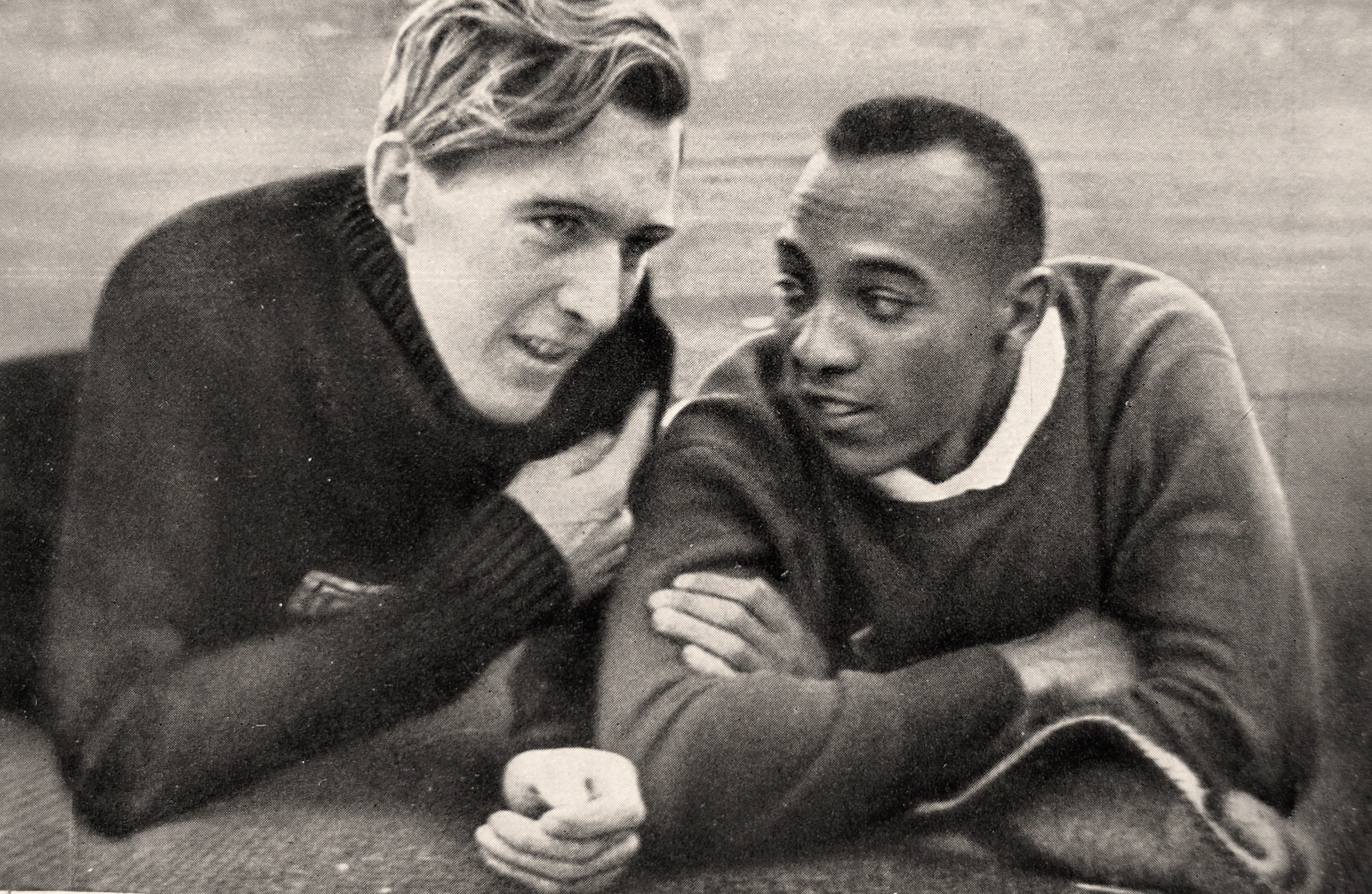
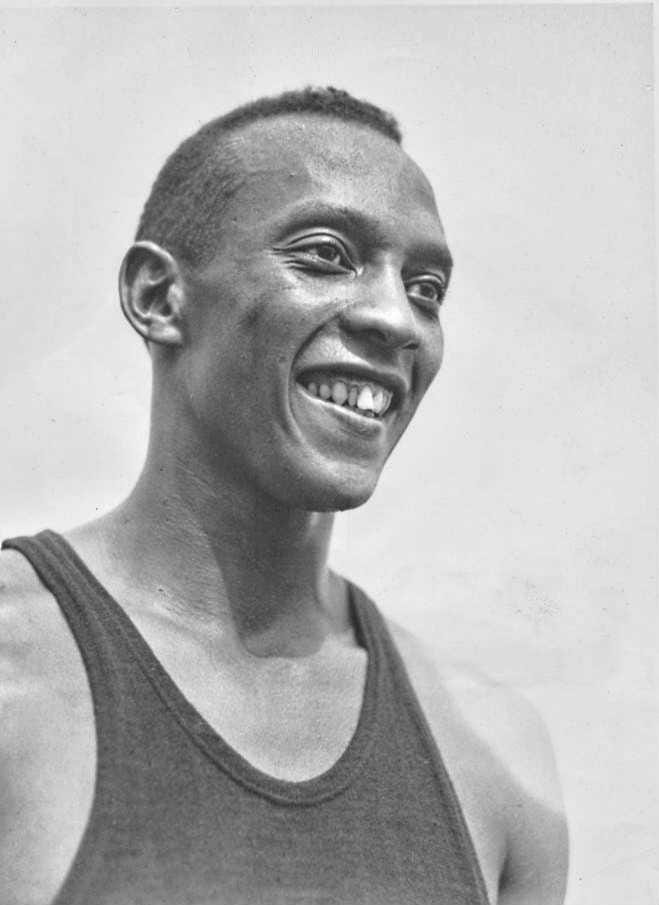
“Luz received instructions from on high (Hess) to never hug a negro again,” Johanna Long wrote in her diary. Luz was her son and a famous Olympic long jumper in the 1936 Summer Games held in Nazi Germany. On 4 August 1936, he won the silver medal, losing to the world record holder Jesse Owens but congratulating him heartily. The white German and the black American hugged, posed together for photographs, ran a lap of honour together and walked back into the dressing room arm in arm – right under Hitler’s gaze.
In the context of the deeply racialised ideology of the Nazi regime and the impending war, the friendship between Owens and Long became legendary in more ways than one. But how much of it is true?
It’s a captivating story. Two men bridging a sharp divide between nations that were not only ideologically opposed but very soon at war with one another. Owens had made a mockery of the Nazis’ narrative of physical aryan supremacy. Long, the tall, blond personification of Hitler’s master race, was not only graceful in defeat but genuinely warm and respectful towards Owen. Owen in turn praised Long for decades after the war. Theirs a wonderfully counterintuitive and deeply human story of fairness, decency and unlikely friendship.
Over the years, however, doubts have crept into the veracity of some of the claims made about their relationship. Owens, who died in 1980, told and retold the story in interviews, documentaries and his autobiography. Some historians were quick to find faults and contradictions. This week is the 90th anniversary of their epic long jump event in Berlin’s Olympic Stadium. Time to take stock of the myth and reality of a friendship that wasn’t meant to be.
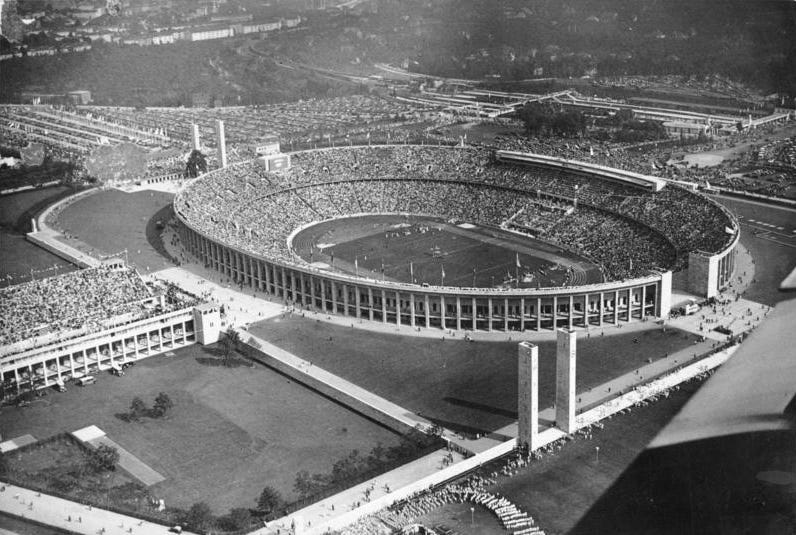
Let’s start by looking at what actually happened. The 1936 Summer Olympics had been awarded to Berlin in 1931, two years before Hitler came to power. The new Nazi regime decided to run with it and use the opportunity as a propaganda spectacle with their brand new, specially designed Olympic Stadium. The idea was to show the world and the German population that Germany was a resurgent power that had overcome mass unemployment and political fragmentation. But from the outset, there was also an obsession with race, physical purity, and strength that underpinned the aesthetics and values of the Games.
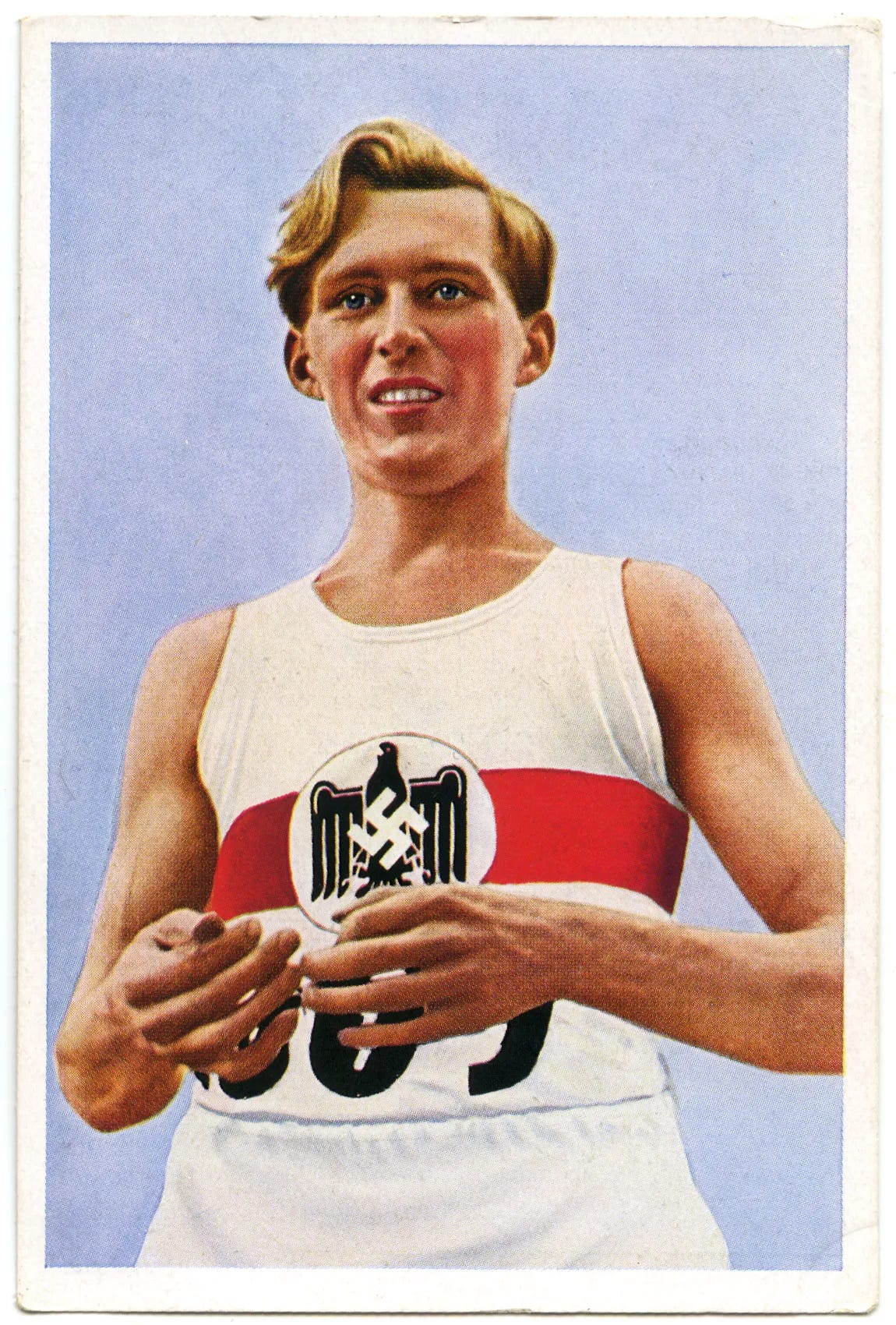
Jesse Owens posed an interesting challenge for the regime. He was already a sporting sensation. The previous year, in 1935, he managed to set five world records in 45 minutes at the Big Ten competition in the United States. That a black man from a humble background in Alabama, the grandson of a slave, who developed his sporting fame through sheer determination, talent and physical prowess, was a favourite with the German audience in the Olympic Stadium must have riled Hitler. But there they were chanting “Yesseh Oh-vens” as he competed.
Black people weren’t the prime target of Nazi ideology. Jews were. But nonetheless, they were regarded as foreign and inferior, and the regime obsessed over their intermixing with Germans. This was most prominent in the Rhineland, where there were around 500-800 mixed-race children – mostly the offspring of German women and French Colonial soldiers stationed there during the French occupation following the First World War.
The regime derided them as “Rhineland Bastards” and established a secret programme in the mid-1930s to sterilise them. By the end of 1937, doctors had forcefully rendered at least 385 children and teenagers from that group infertile under this programme alone. Their obsession to prevent black and white people intermixing was well underway in 1936, which puts Frau Long’s diary entry in context.
The way Luz Long interacted with Jesse Owens should also be judged in that light. Long held the European record for long jump while Owens held the world record. The two men didn’t regard one another as the racial Other but as sporting competitors in an exciting tournament that would be live broadcast for the very first time. So tensions were high when the two men clashed for the very first time on 4 August 1936.
In the preliminary round of the long jump event, the men had to make 7.15m to qualify for the final. Long did this with ease, setting an Olympic record in the process. Owens – whose record from the previous year stood at 8.13m – was also expected to make it as a matter of routine, but he was unlucky. A misunderstanding led to his casual warm-up jump being counted as his first official attempt. This then appeared to rattle him, and he fouled on his second attempt. Now there was only one chance left to qualify.
Owens later claimed that at this point his rival Luz Long stepped in. “Your father came to my assistance,” he told Long’s son Kai on camera many years after the war. “He helped me measure a foot back of the takeoff board — and then I came down, and I hit between these two marks. And therefore I qualified.” It’s a lovely story on so many levels and one that Owens told with relish for decades. Hitler’s poster boy helping a black athlete from a country that in many parts still practised segregation.
But this is one element of the Long-Owens relationship that has been questioned. For one thing, Grantland Rice, a sports journalist at the Olympic Stadium, said that he watched Owens closely during the qualifying round and never witnessed him talk to Long. His account prompted the author Tom Ecker to ask Owens directly about this in 1965. According to Ecker, “Jesse Owens admitted to us that he had not met Luz Long until after the competition was over. When Ecker was asked why Owens kept retelling the tale then, he said: “He once was quoted as saying, ‘Those stories are what people like to hear, so you tell ‘em.’”
Let’s park that here for a moment and look at the long jump final, which happened later the same day. It was truly spectacular. In round one, Owens jumped 7.74m, beating Long. In round two, Long matched this, but was beaten again by Owens, who managed 7.87m this time. In rounds three and four, neither man managed to break the existing figures. But then in round five, Long whipped the stadium of 100,000 people into a frenzy by matching Owens’s 7.87m.
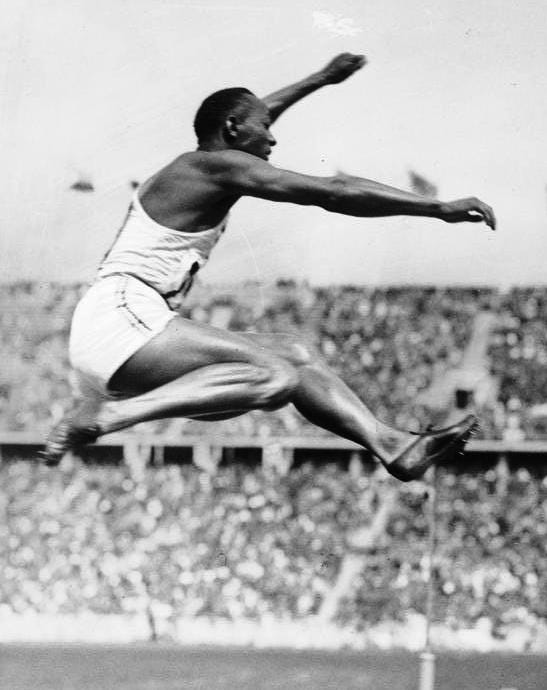
“Jesse immediately came running and congratulated me”, Long wrote a few days later in the “Neue Leipziger Zeitung” (New Leipzig Newspaper in his hometown of Leipzig). One of those hugs that Long was asked to refrain from afterwards ensued when Owens embraced the German.
Now it was Jesse Owens’ turn to see if he could beat his rival’s and his own best effort that day. Long, ever the fair sportsman, made a gesture for the crowd to quieten down and allow his competitor to concentrate on his jump. Owens did it, soaring to 7.94m. He beat that score again in the sixth and final round with 8.06m. Long came second and got silver.
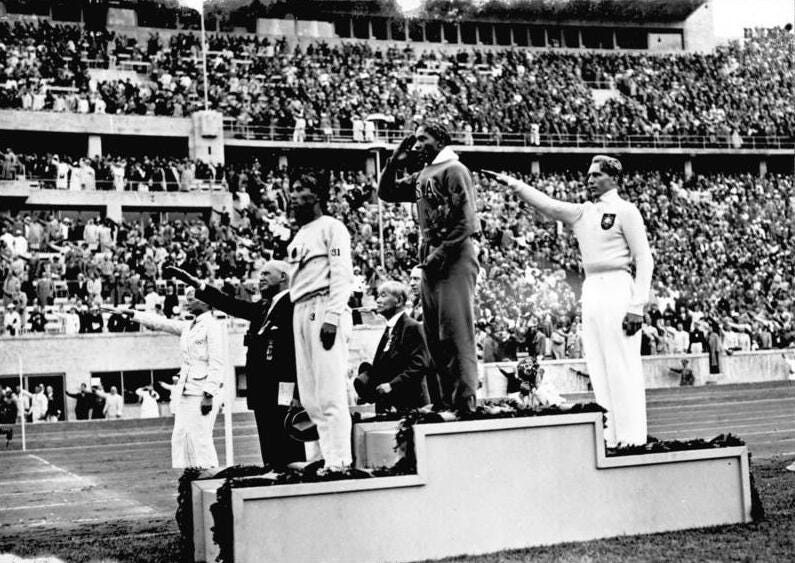
The images that were captured next are striking and have made history. Long is seen patting Owens on the back and hugging him. In the photographs, they laugh together, talk, pose shoulder to shoulder, and finally walk out together arm-in-arm.
“It took a lot of courage for him to befriend me in front of Hitler,” Owens said later. “I would melt down all the medals and cups I have and they wouldn’t be a plating on the twenty-four karat friendship that I felt for Luz Long at that moment”.
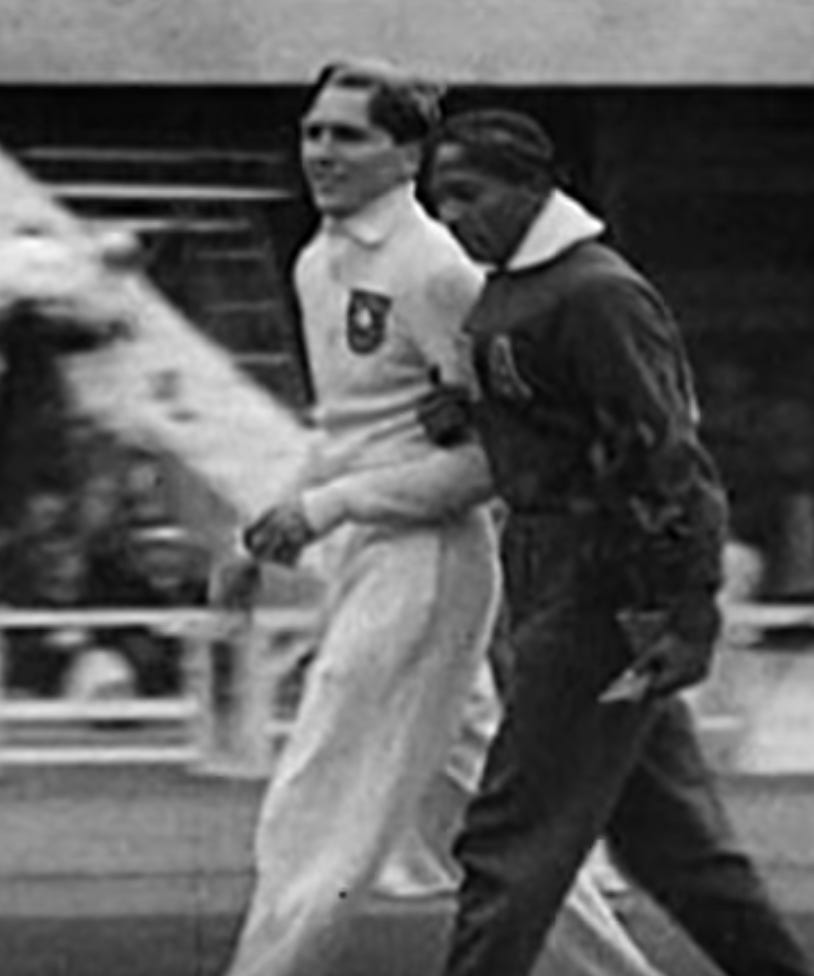
The well-worn version of the story, which continues into the Second World War, has it that Long sent Owens a letter from the battlefield, asking him to return to Germany one day and meet his son if Long were to die in war. “Tell him, Jesse,” is an oft-quoted line, “what times were like when we were not separated by war, tell him how things can be between men on this earth.”
But there is no evidence of such a letter. Neither family has ever seen it, and it has been questioned whether Long could have even sent it to the US from the battlefield in the 1940s. But the story was too good to disappear, especially since Long was killed in 1943 and Owens returned to Germany after the war to meet his son, Kai Long.
So do these embellishments – Owens’s own and those added by journalists, historians and authors over the years – mean that this unlikely friendship itself is a myth? I don’t think so. For one thing, both men clearly believed it was real, and they had deep respect for one another irrespective of the prevailing political circumstances. That’s not just evident in the pictures captured at the Olympics themselves but also in what happened afterwards.
Luz Long was by no means a resistance fighter for whom a display of friendship with Owens was a means of opposing the regime. On the contrary. At the Olympic Games he performed the required Hitler salute. In 1937, i.e. the following year, he joined the Nazi student organisation and the SA stormtroopers. In 1940, he joined the Nazi Party itself. True, so did millions of others, but the point is that as far as we know, the open display of affection and respect towards Owens was real rather than political signposting.
In his own newspaper report of his event with Owens in the Leipzig newspaper I quoted above, Owens also wrote that “the Führer claps enthusiastically,” at the moment he matched Owens’s jump. “He rises from his seat and greets me with his generous, fatherly smile.”
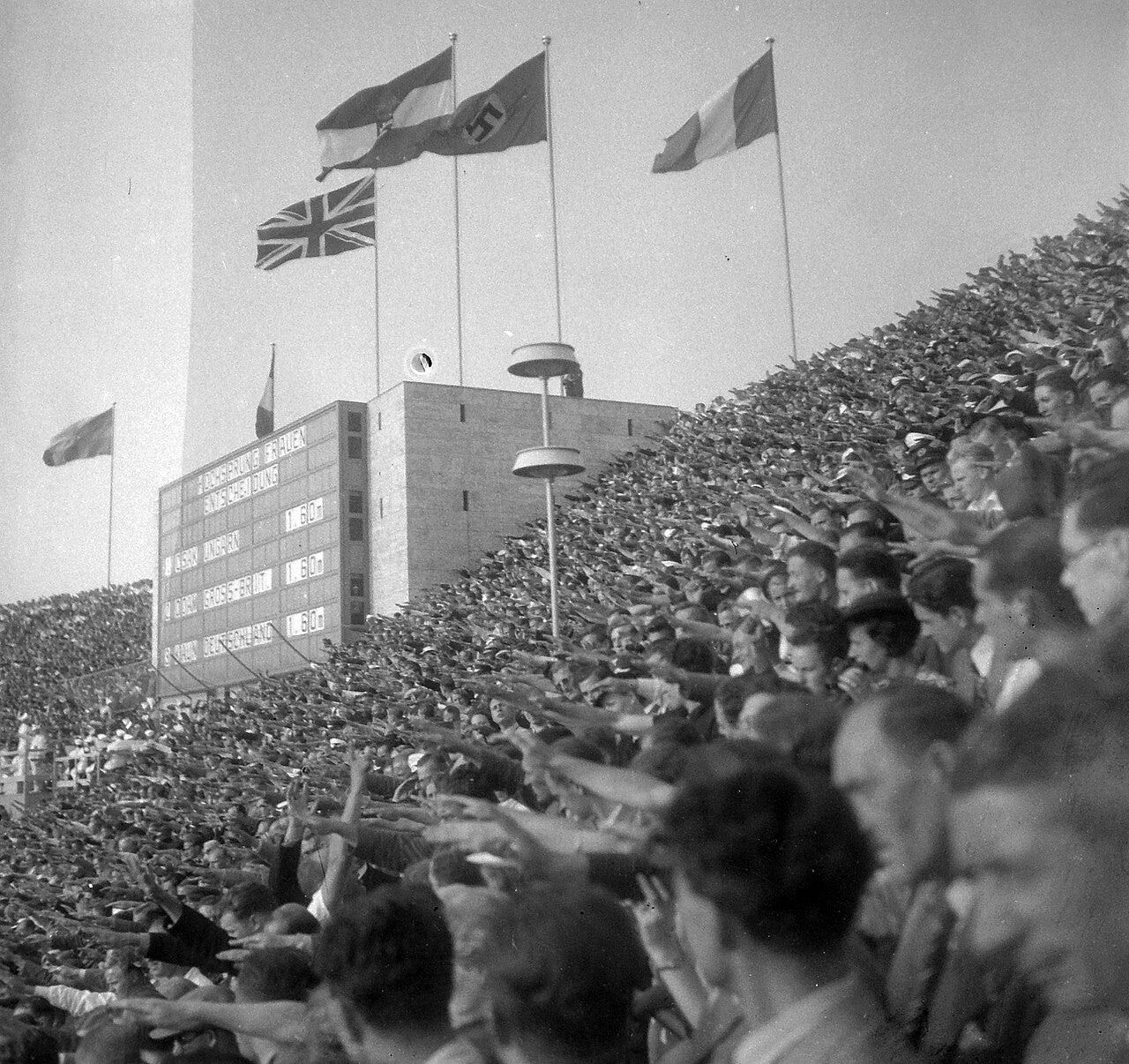
Yet, he also sums up who won and who lost with the words: “The battle of the colours is done. Black was best, fair and square the best, 19 centimetres ahead of white.” This is quite a remarkable thing to write in the deeply and strictly Nazified press and expressed once again his deep respect for Owens as a sportsman. It also caught the eyes of the authorities who deemed him “not racially conscious” and kept a close eye on him.
To this day, both families speak highly of the two men and are happy to carry the symbolism of their story into the future. For instance, at the 2009 World Championships in Berlin, Owens’s and Long’s granddaughters presented long jump medals. Another sign that this story of friendship is one of the most enduring Olympic stories of all time – and rightly so.
Has the story of this unlikely friendship been embellished over the years? Sure, but that doesn’t make the core of it any less true. Ninety years on, the encounter of Jesse Owens and Luz Long on a sporting field in the capital of Nazi Germany remains a remarkable episode of humanity and decency against the backdrop of dark and terrible politics.
*
If you’d like to find out more about the 1936 Olympics, let me recommend a Channel 4 documentary called Hitler’s Games: Berlin 1936 in Colour. It’s just come out and is available for free on catch-up (possibly only in the UK and Ireland). It discusses the Owens-Long friendship, as well as many other fascinating stories. It also features a certain German historian :)
Once again it’s a school day. I did watch your documentary, so Long wasn’t unknown to me. Interesting details. Perhaps people wanted happy stories to make them feel better; in the same way today people read some of these deeply suspicious books about The Holocaust that fill supermarket shelves. Or to distract from the very real prejudice Owens faced at home. After I watched the documentary I reached out to Holocaust historian Waitman Beorn and asked how the mixed race children fared under the Nazis. As you write Katja it was a grim story. Good read with my Sunday morning coffee.
That is an interesting story did you come across it while you were making the documentary or is it sort of common knowledge. I noticed that there was a Jesse Owen Alle near the stadium i guess Long had largely been forgotten although not completely with grand children presenting medals .