

I’m on a brutally early train to London Heathrow Airport as I type. A few tired-looking commuters sit around me. Some wear headphones or stare at their phones. One snores quietly. Another reads a real-life physical newspaper, and I find the distinctive smell of paper and ink vaguely reassuring.
Outside, the landscape rushes past in a dark blur. That classic English fog, so dense it’s almost drizzle, mists the view. I can’t help smiling a little as I watch it make tiny horizontal lines on the glass, and Albert Hammond’s voice sings in my head: “It never rains in California”.
That’s where I’m headed – California. San Francisco, to be precise. Perhaps not on a westbound 747, but something like that. In any case, I’m very excited. It’s for work rather than leisure – a Military History thing at Stanford University – but I’ve never been to the West Coast of the United States before.
The state’s cultural glow is vast and has been seeping into my life much the same as it clearly has into many others for centuries. So I’ve been listening to various California-themed playlists for the last few days to get into the groove. This morning, Albert Hammond is topping the charts in my head.
The California Dream – with all its opportunities and risks – often appears in cultural references as the ultimate version of the American Dream. For instance, a famous 1982 song by the late Austrian singer Udo Jürgens describes the pretty, humdrum life of a husband and father who goes out to get cigarettes and, on the way, fantasises about leaving it all behind and starting a new life in America. One line in it goes: “I’ve never walked through San Francisco in ripped jeans.”
It’s not a new thought, of course. From the westward pull of American migration and the mid-19th-century Gold Rush to the allure of Hollywood and world-changing big tech, the image of California as the “Golden State” has withstood the clash between hope and reality that awaited all too many who went there. After all, Hammond’s song pretty soon reaches a point where its protagonist desperately pleads: “I wanna go home.”
But that’s never stopped people from California Dreamin’, including Germans. Today, 2.7 million Californians claim German ancestry, second only to Pennsylvania in the United States. Over the years, German Californians also had a huge impact. Even the Great Seal of the State of California itself – with its motto of “Eureka”, Greek for “I have found it!” – was engraved by a German, Albert Kuner. Born as Albrecht Küner in Lindau, southern Germany, he left Europe for New York in 1848.
But soon news of the Gold Rush on the West Coast made the rounds, and Kuner made his way to San Francisco – by ship, by the way, enjoying apparantly hair-raising adventures as he sailed all the way around Cape Horn. When he finally arrived in the autumn of 1849, he found he was the only master goldsmith in town. So he began designing and engraving things, including the first coins minted in San Francisco as well as medals and the seals of many institutions. He died in San Francisco in 1906.
One of the most influential Germans to make their mark in San Francisco was Levi Strauss, founder of the legendary denim jeans brand. He came from a German-Jewish family and was born as Löb Strauß in Franconia in 1829. He was just 18 when he arrived in the United States with his mother and sisters. They followed his two brothers, who’d already moved to New York and established a successful business there.
The Strauss family wanted to expand their business (dry goods like bedding, kettles and bags) westward. California was especially attractive because the Gold Rush drew everything and everyone there. San Francisco seemed to be where it was at, so Levi was dispatched there to set up a West Coast outlet of the family enterprise. Like Albert Kuner, he went by ship. Unlike him, he took the shortcut through Panama. When he arrived in 1954, he began trading. Levi Strauss & Co. was born.
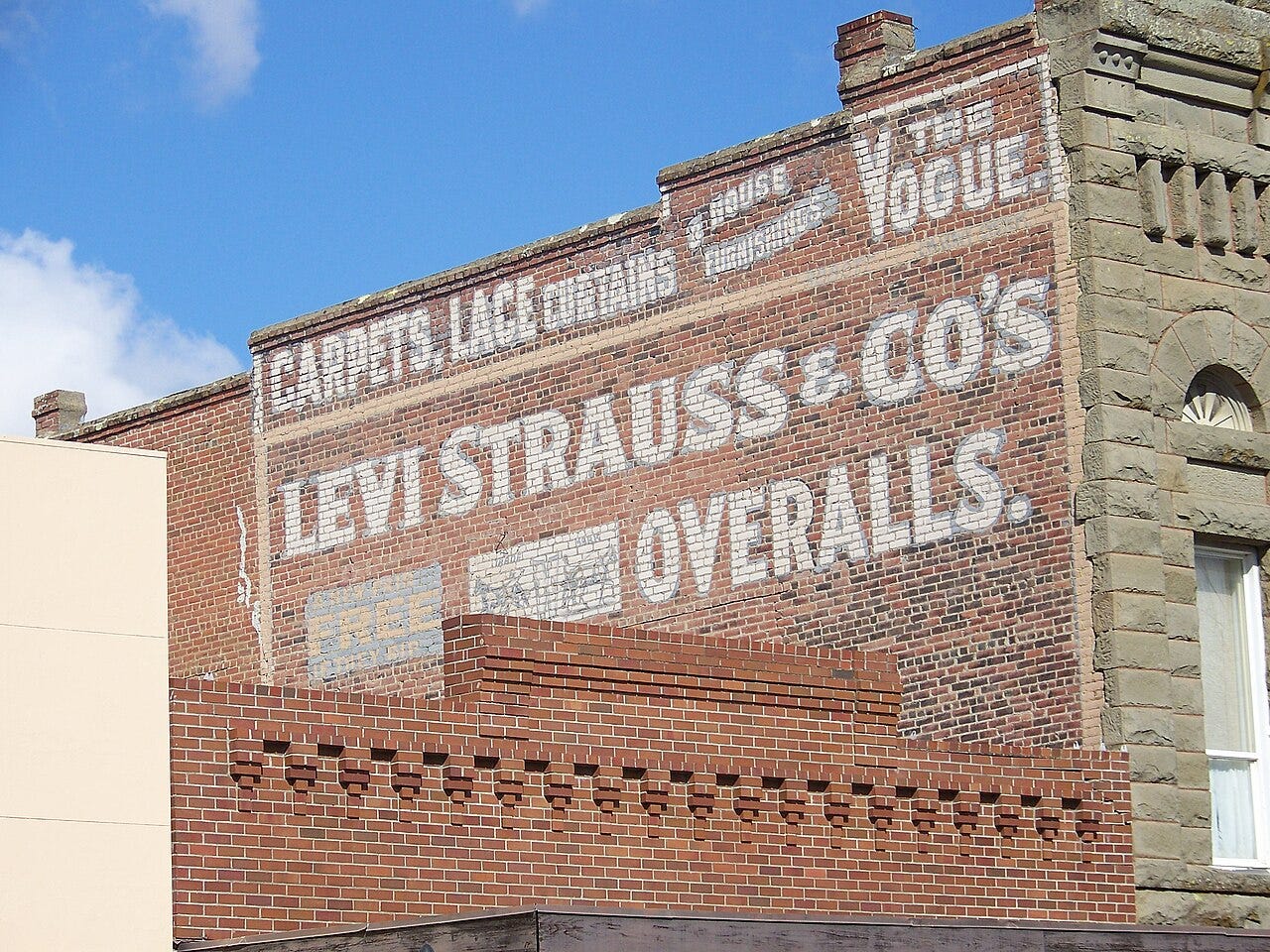
Initially, Levi Strauss carried on trading the same sorts of things his brothers were: good quality cloth and fabrics, for instance. In fact, he imported his products through them from New York. One of his regular customers was a tailor based in Reno, a Latvian-Jewish man called Jacob Davis, who bought denim from Strauss to make clothing from it.
Davis noticed that one of his customers was forever buying more bits of denim to reinforce tears in work trousers. So he came up with an ingenious idea. Perhaps he could strengthen areas that came under particular strain during work with copper rivets.
It turned out to be a great idea. The reinforced denim trousers withstood the pressures of everyday work much better, especially around the pockets. They became a hit with customers, and Davis sensed he was onto a good thing. His only problem was that he had no means of scaling production nor even to obtain a patent to protect the design.
So he got in touch with his business partner Levi Strauss in San Francisco and the two men struck a deal: half the patent would go to Levi Strauss & Co., who would refine and mass-produce Davis’s riveted denim trousers. The patent was issued in 1873 – a time at which Levi Strauss’s home in the old world had been part of a unified Germany for two years.
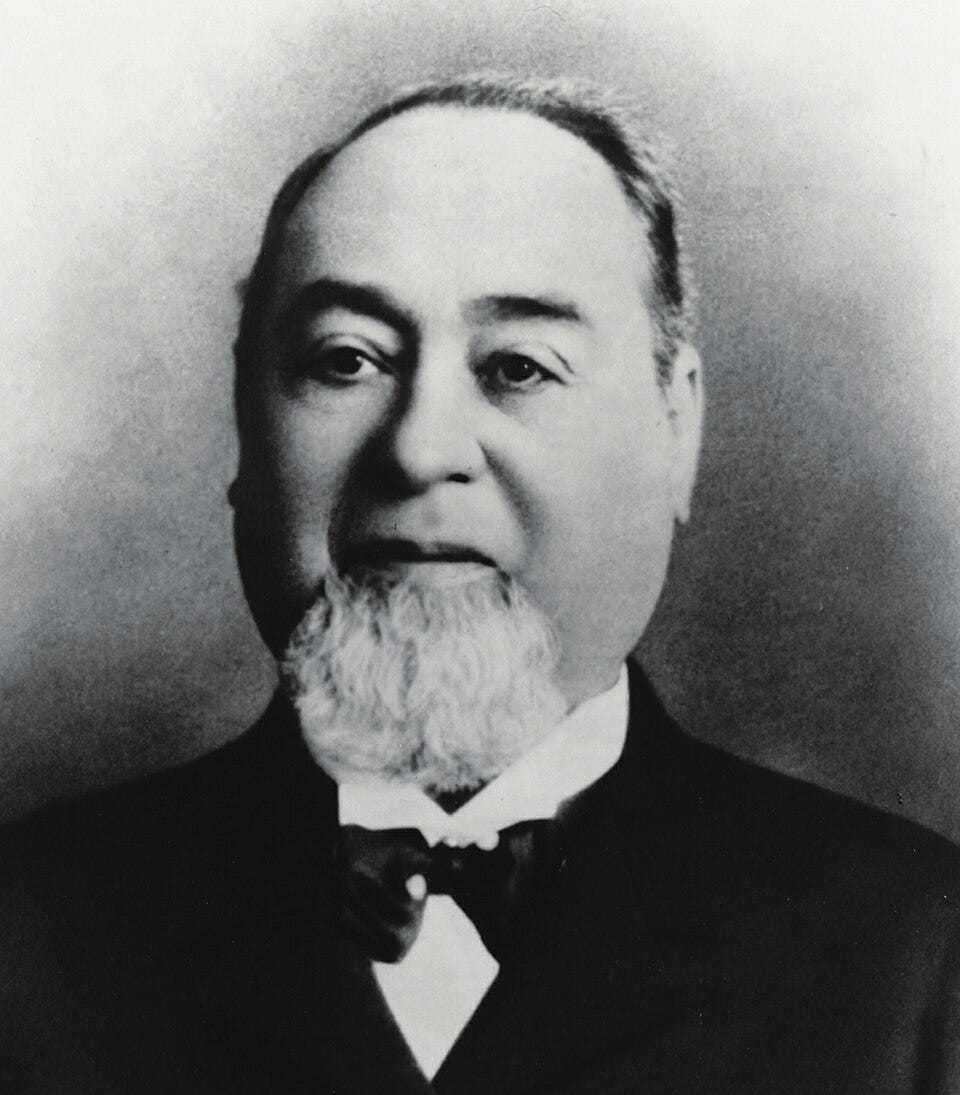
In 1890, the year Otto von Bismarck resigned as chancellor of Germany, Davis’s design was introduced to the public for the first time, and the Levi Strauss company decided to number all their output. The riveted trousers were assigned their legendary label: “501”. They also already had their signature stitching on the back pockets since 1873. Levi Strauss died a millionaire in San Francisco in 1902. His company is still headquartered there today. In Levi’s Plaza.
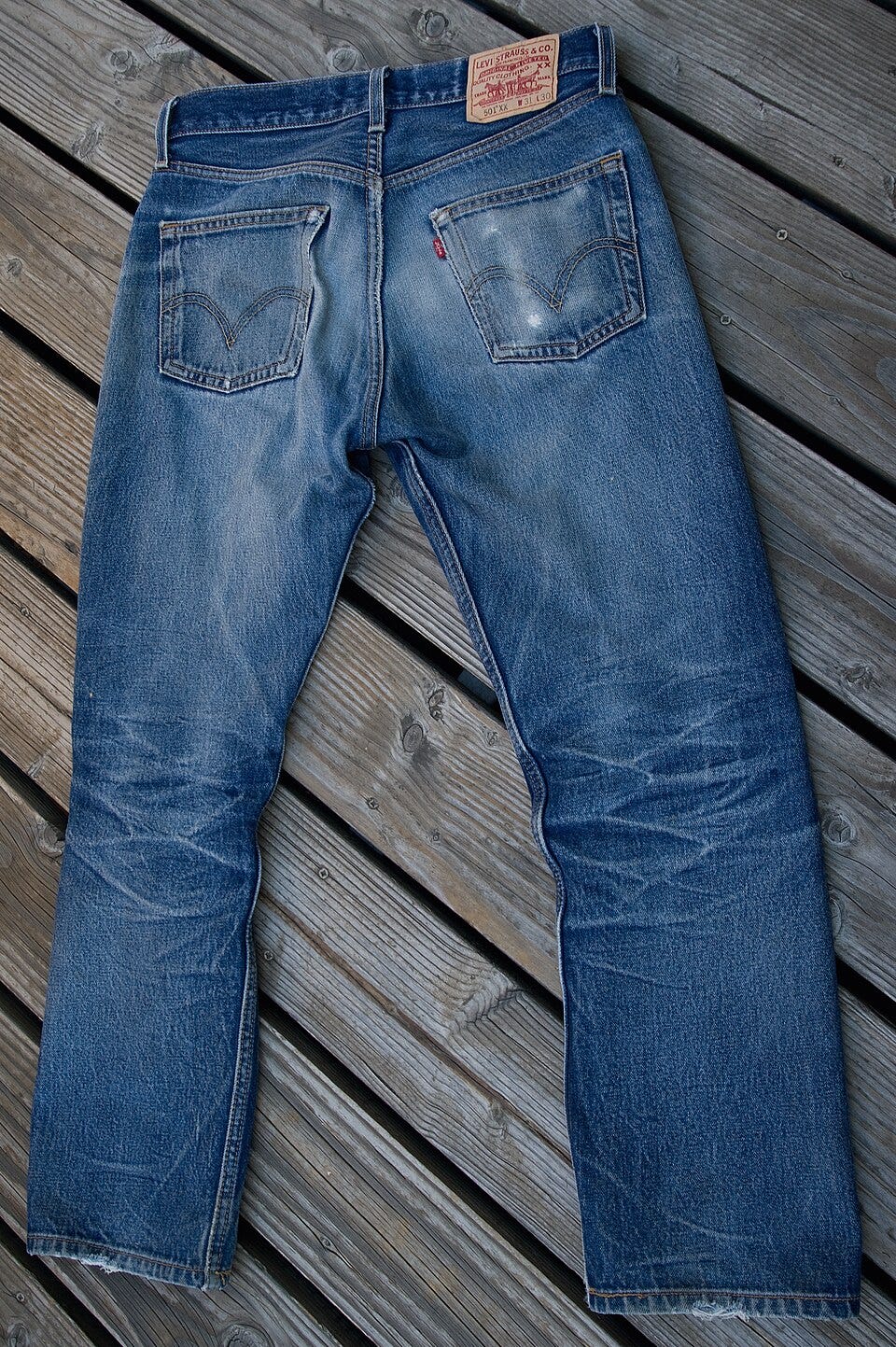
The fundamentals of the design of his product haven’t changed since. From film stars to factory workers, all sorts of people have worn Levi’s jeans over the decades – even and especially in socialist countries that weren’t supposed to crave this ultimate symbol of American casual wear. The German angle of the Levi’s story came full circle after the Second World War. By then, few people remembered or knew about the origins of the brand. It was intrinsically American and therefore highly desirable to East Germans.
While the first generation of East German politicians wasn’t entirely sure what to make of their citizens’ adoration of American Blue Jeans – switching between censoring them on screen and banning them from schools to a more open policy and back again – Erich Honecker, who took over in 1971, wanted to be seen to embrace the spirit of the youth.
And if East German youth wanted Blue Jeans, they would have to have them. The Ministry of Light Industry ordered hundreds of thousands of Levi’s jeans directly from the US in the 1970s. Once, even an astonishing 1 million pairs in one go in 1978. This was openly advertised by the regime as a “Special sale of jeans, original American Strauss- Levis.”
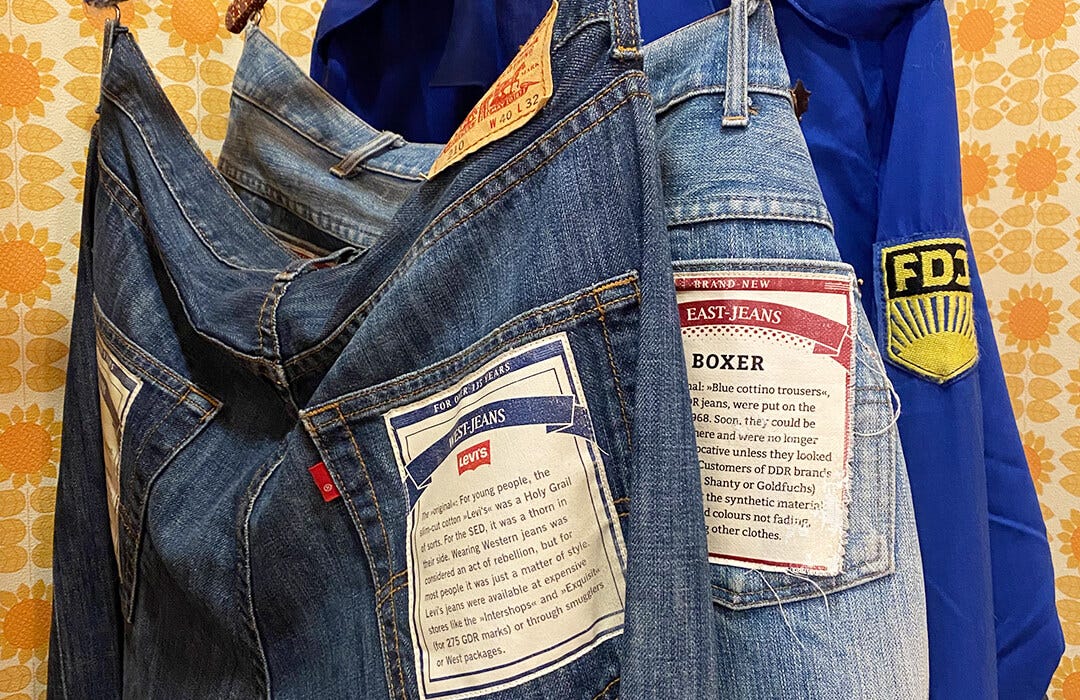
Since this was completely unsustainable for a state constantly short of hard cash, the GDR began producing its own jeans, too. It even tried to give the range American-sounding names like “Boxer” and “Shanty”. But nothing could ever match the original. That wasn’t just because of better cotton quality and the iconic design, but also because the allure was that Levi’s meant America. It evoked “the West”, California specifically, and the notions of freedom and opportunity attached to it.
Take a fresh look at the famous pictures of the Berlin Wall falling in the autumn of 1989 with that in mind, and you’ll notice the sheer amount of denim on display. That’s not a coincidence, but rather a late 20th-century symbol that the California Dream still had allure for those who felt stuck in unsatisfactory circumstances, those who wanted more.

All that was swirling through my mind as I packed my bags for California. Naturally, I couldn’t help myself and felt the need to pay homage to this history in my own little way. This East German is boarding the plane to San Francisco with The Beach Boys in her ear and a little red label on the back pocket of her jeans.
First of all safe trip to California. I think you might have difficulty finding German beer in California. Interesting history of the 501 jeans, I have two pairs myself; one of which is indeed ripped at the knee. I’m not sure I can pull off the ripped jeans look though. Enjoy the event at Stanford.
Levi jeans were also a useful currency throughout the Soviet Bloc. I recall selling two pairs in a market in Warsaw in the 70s that gave me sufficient funds for a weeks food and lodgings!