

I returned to Edinburgh this week for the International Book Festival. I love visiting the Scottish capital. Not only is it beautiful – they don’t call it the “Athens of the North” for nothing – but it’s also incredibly vibrant and bustly. The moment I stepped out of the vast Edinburgh Waverley train station, I was surrounded by people, chatter and noise. Strolling up the Royal Mile, I was handed leaflets for stand-up comedy, serenaded by buskers and asked to take photographs of tourists.
But my thoughts soon turned to the dark question I was supposed to answer on stage that evening: “What Would You Do?”, billed as a discussion of “what we’re all capable of when faced with catastrophe”. It’s a question that clearly occupies many people’s minds since the event had sold out incredibly quickly. And it was a question I began to ponder as I was making my way through Ediborough’s cheerful hive of human activity.
How do ordinary people end up doing evil things? Would that couple I had just photographed be capable of shooting civilians if put in a uniform and exposed to other wartime atrocities for long enough? Would that builder restoring an old church on the corner help construct a concentration camp if ordered to or paid well enough? Would that officer coming out of St Leonard’s Police Station round up ethnic minorities if her superiors asked her to? What would I do?
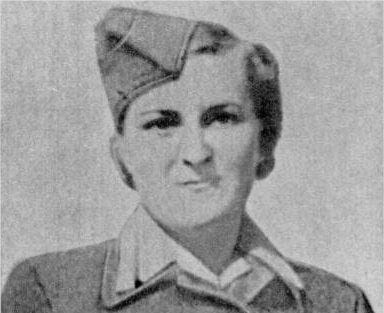
There are plenty of case studies in my Weimar book to explore this question. But I was also intrigued by my co-panellist’s contribution. The writer and lecturer Angharad Hampshire would be on stage with me to present her new book The Mare, a fictionalised portrait of Hermine Braunsteiner. Braunsteiner’s true story is a particularly extreme example of an ordinary person doing evil things.
A young, working-class woman from Vienna, history would probably not have taken much note of her had she been born a few decades earlier or later. But that’s not how things happened. By the time the war ended, Braunsteiner was notorious, having acquired a reputation for exceptional cruelty as one of the most violent guards in the concentration camp system. Prisoners called her the ‘Stomping Mare’ for kicking prisoners with steel-capped boots.
But let me recount her story in a bit more detail. Hermine Braunsteiner really is a chilling case study in the choices ordinary people are capable of making in extreme circumstances.