

We historians are supposed to be hard-nosed analysts. Well… or at least fact-minded academics with our emotions about the subject matter left outside our study door. But that’s not always possible. We all have areas of study that get to us because they touch upon something personal. For me, one such theme is British-German conflict.
By now, I’ve spent the majority of my adult life in Britain — entirely by choice. I love it here. Yes, the chips can be a bit soggy, and I will never understand why anyone would put taps with scalding hot and ice-cold water at opposite ends of a sink. But there’s much to enjoy and admire about these isles and their people. The thought that Germans who lived here just a few generations ago were faced with the prospect of the nation of their birth going to war with the country that has become their home is a terrible one to me, not just as a historian but also as a person.
Today, we tend to take the reconciliation of Germany and Britain for granted. Despite Brexit, both countries’ interests are largely aligned. Both face similar challenges in many areas, including and crucially on security and military matters. Just a few decades after the vicious devastation of two World Wars, it seems inconceivable that Germany and Britain would go to war with one another.
But Queen Victoria and her German husband Albert would also have found it hard to envision the horrors of the First World War that unfolded just 13 years after Victoria died in the arms of her oldest grandson, Kaiser Wilhelm II. It pays to remember how brutally fast things can change.
Such sobering thoughts ran through my Anglo-German mind yesterday as I stood in the dining room of the German Ambassador’s residence in London and listened to a couple of songs being performed live about courage in war and the spirit of reconciliation in peace. They came on the back of a powerful speech by Christopher Cocksworth, Dean of Windsor, who had previously served as Bishop of Coventry. Coventry is twinned with Dresden, sharing a deep historical connection with a fellow city that was destroyed in the Second World War. Cocksworth explained in moving terms how visiting Dresden had “changed my life.”
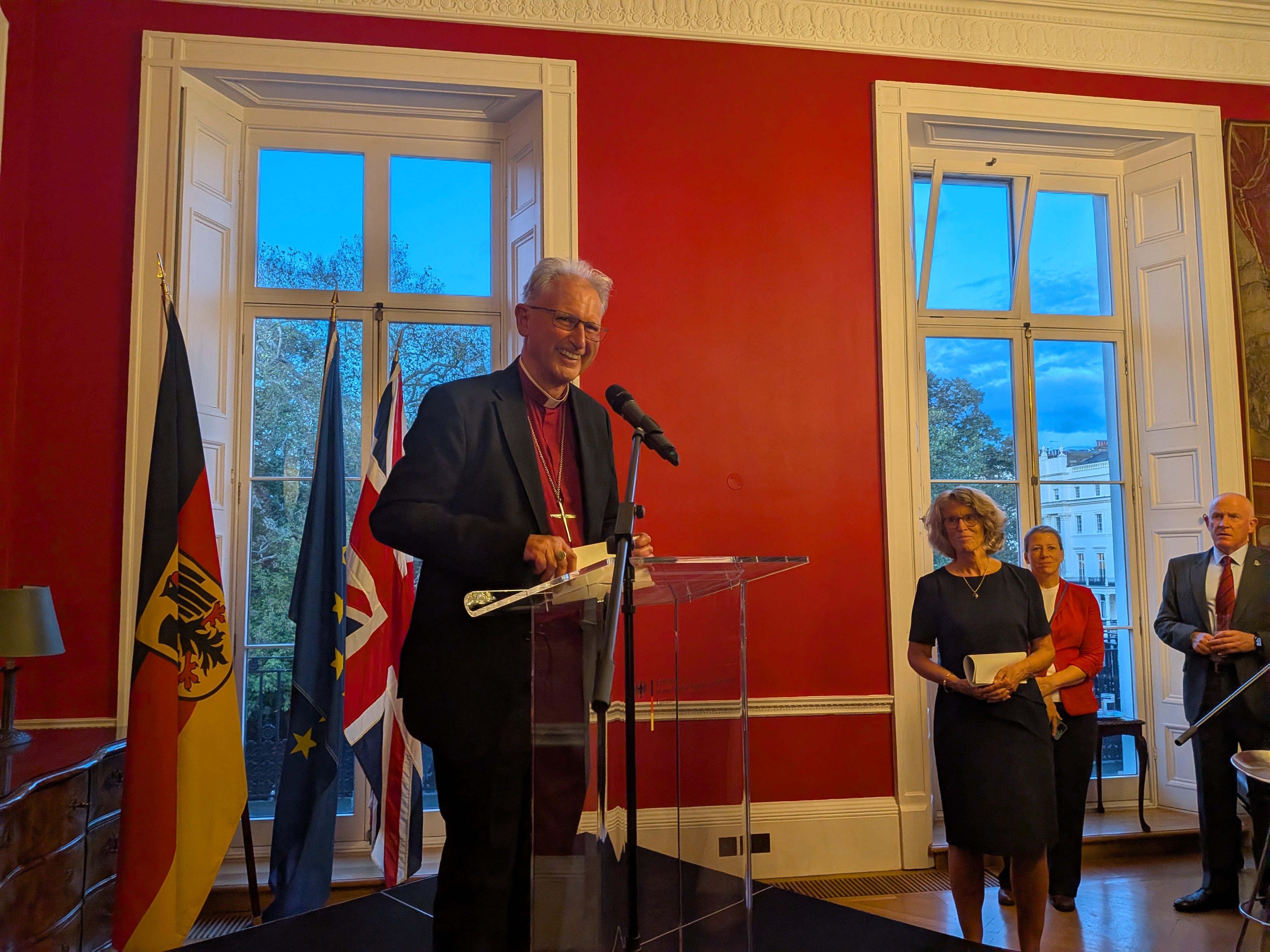
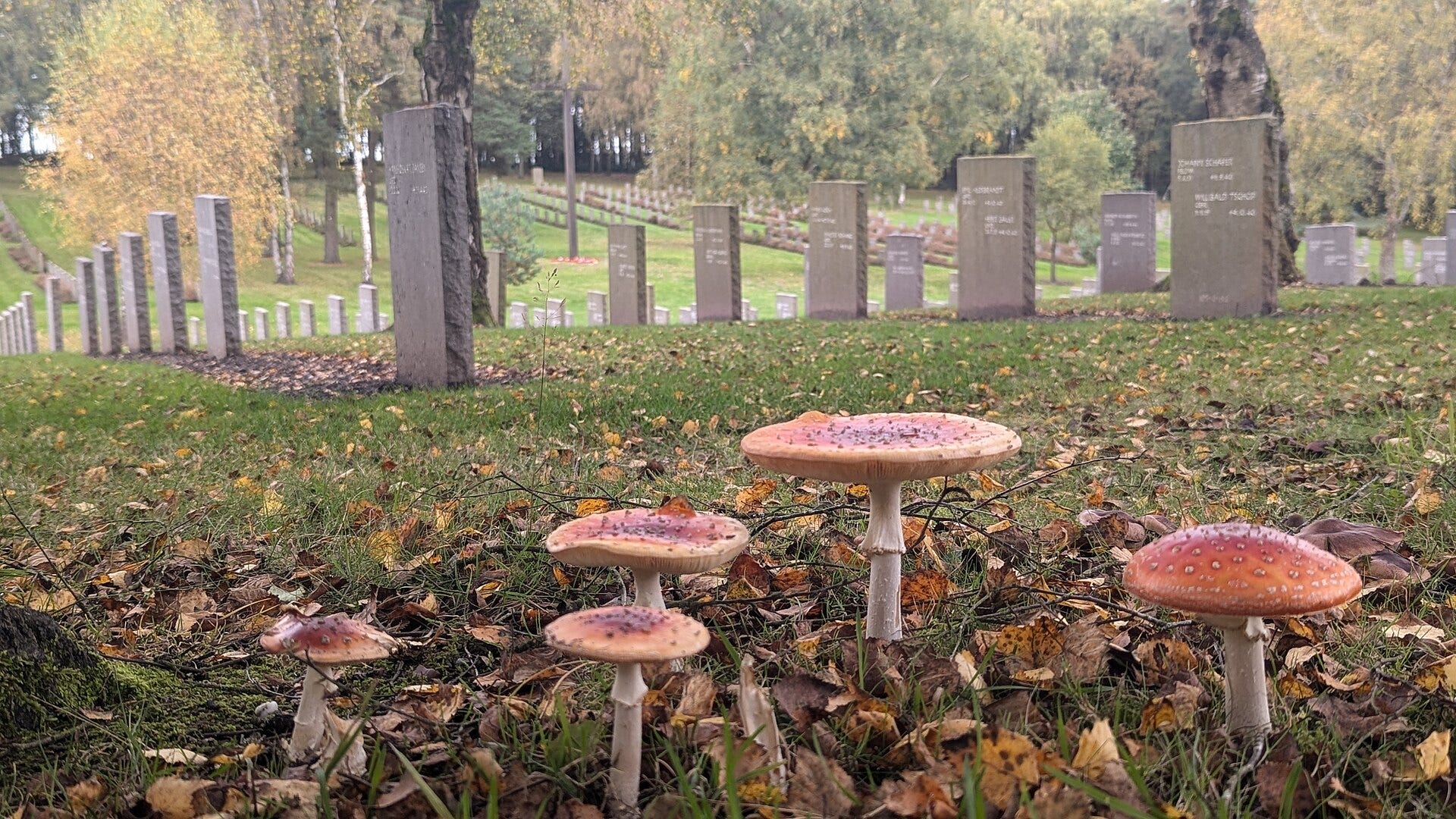
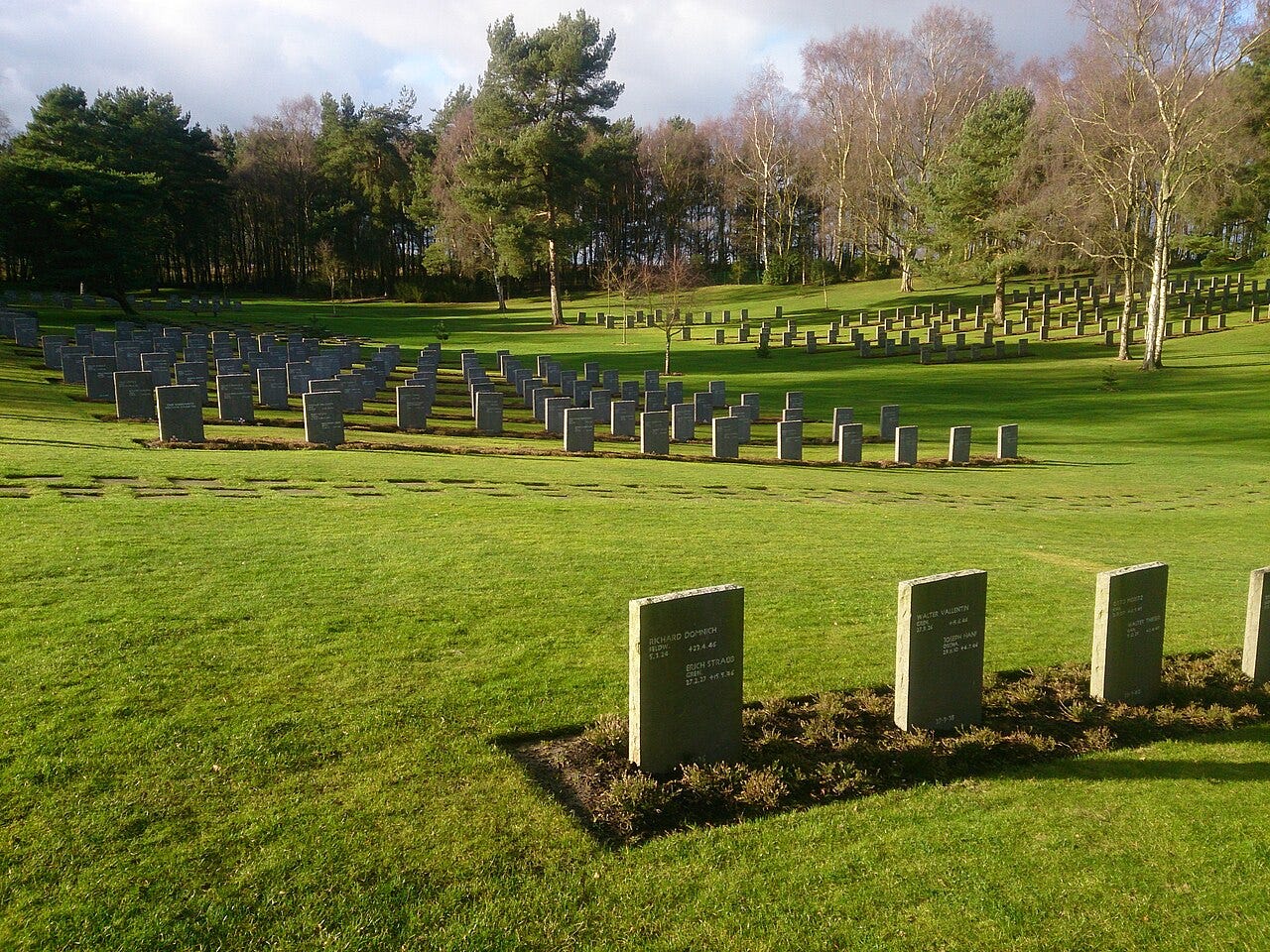
The event last night was held to mark the inauguration of the new History Centre at the Cannock Chase German Military Cemetery. Set among the Staffordshire countryside, it’s a remarkably peaceful place with row upon row of carefully maintained graves. The men buried there were German servicemen who died during both World Wars, far from home and, in some cases, under very different circumstances from those who died on the battlefields of continental Europe. Their presence on Cannock Chase is a reminder that the consequences of war reached deep into Britain itself, even if it was never invaded by Germany in either conflict.
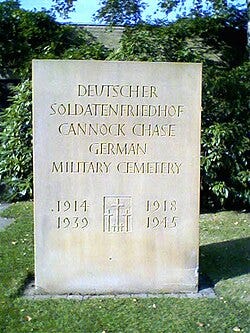
The UK and West Germany agreed on 16 October 1959 that there should be a central burial place for German nationals who lost their lives in the United Kingdom during the two World Wars. The German War Graves Commission, the Volksbund Deutsche Kriegsgräberfürsorge, organised the transferral of the graves of German servicemen and civilian internees from the various burial grounds elsewhere to the new cemetery established at Cannock Chase and inaugurated in 1967. It now contains almost 5,000 German and Austrian graves. Today, its newly refurbished exhibition and history centre will be inaugurated.
There’s more than symbolism in this, I feel. Most of the people laid to rest there fought the people on whose soil they are now buried in war. Britain and Germany were opposing nations in conflicts in which millions of lives were lost. Yet a few decades later, maintaining these graves has taken on another meaning as an act of reconciliation.
One of the speakers last night reminded us that a crucial aspect of reconciliation is our ability to mourn the dead as human beings rather than as representatives of an enemy nation. That’s what’s happening, and we shouldn’t take it for granted. It’s utterly remarkable that we got here.
Two young women – both 18 – spoke about that last night, reminding us that we’re just a few generations away from those deadly conflicts. One was English, with a great-grandfather who had fought as an infantry soldier. The other was Russian-German, with grandfathers who had fought one another in the Second World War, rendering one “badly injured and traumatised” and the other dead.
Now both girls attended a summer project at Cannock Chase and say it has completely transformed how they see the world. One said she’d previously felt the World Wars were ancient history but has now realised they really are not, and that preserving their memory is crucial to building a peaceful future. The other smiled sadly and said: “We’ve become good friends. A century ago, we may have ended up as enemies.”
That thought ran through my mind as I contemplated my own upcoming reconciliation speech. The Friends of Coventry Cathedral have kindly invited me to speak there on 13 November — a hugely important date in the city’s history. That day in 1940 was the last one St Michael’s Cathedral was still in one piece.
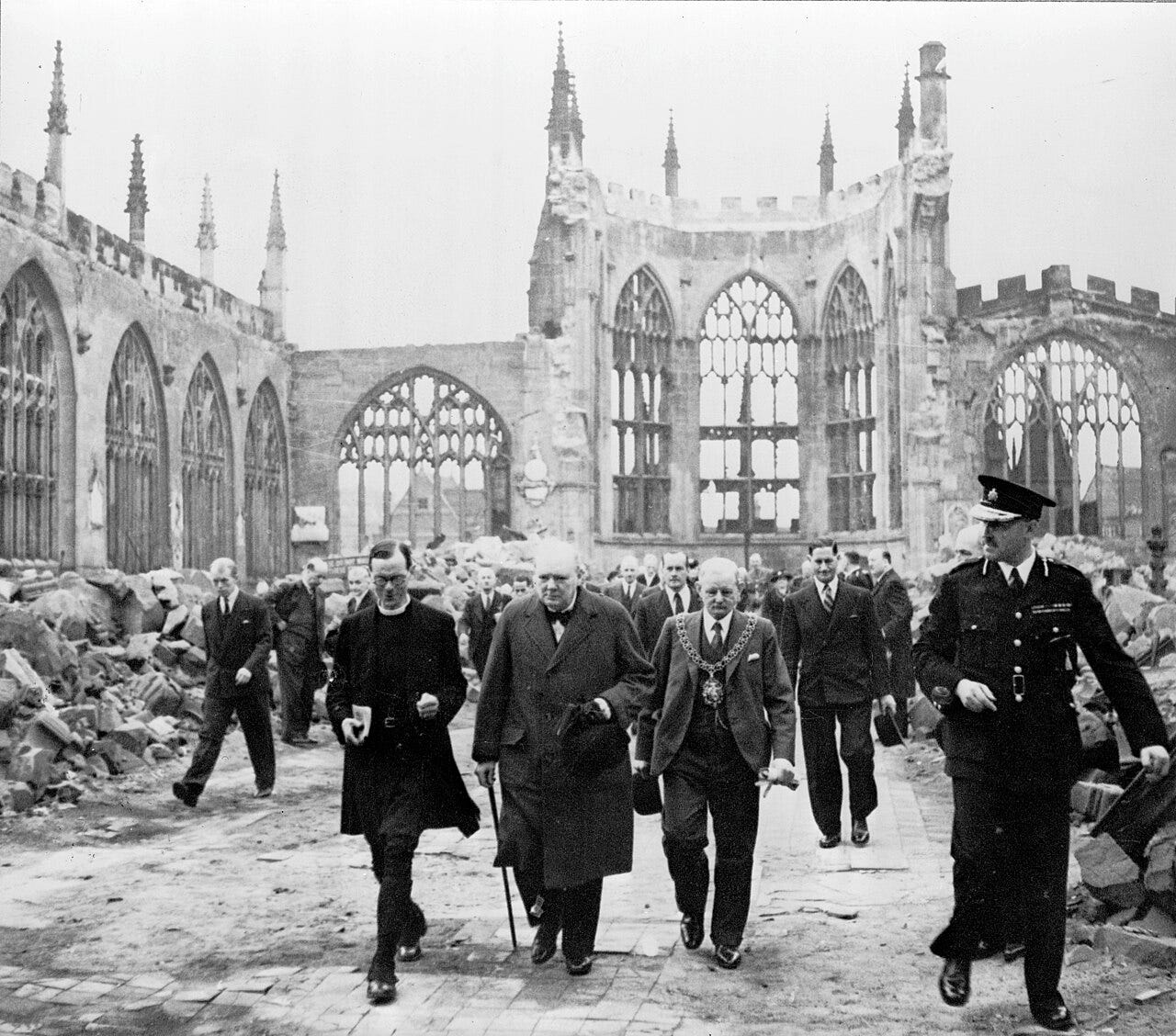
On the evening of 14 November, a terrible air raid began, with 515 German bombers dropping 500 tons of high explosives on the city. The cathedral was hit and burnt out almost to destruction. To stand in that space as a German 86 years later and address a British audience feels like a huge weight of responsibility, but it is also a great honour and a moving sign of how far we have come.
Yesterday evening has given me much to think about as I prepare for my visit to Coventry in November. One snapshot from last night that has stayed with me was British military musicians playing in harmony with a Bundeswehr brass band while a descendant of the Moltke family drank wine with a British mayor. We’ve come a long way on the road to reconciliation, but we should never think we’ve reached the end of that journey.
As a son of Staffordshire, and one who spent hundreds of hours on the Chase, this resonates with me - I passed the entrance to the cemetery dozens of times, but never entered……as a youth you just don’t do you?
Of the 5,000, roughly 40% are WWI - including four Zeppelin crews, reinterred in four large graves on their own ‘Zeppelin Terrace’.
Naturally many of the WWII graves belong to aircrew too, whilst quite a few are those of POWs who died of natural causes and accidents.
What is significant is that there are good spaces between the gravestones - this is because there are two names on most gravestones with two men buried side-by-side underneath.
Such were the times just 15-20 years after the war, the British government could not be seen to give better (or the same) treatment to ‘the enemy’. When I was a teenager, there were still many blokes who would not buy Japanese or German cars (not that most could have afforded the latter).
Genuine reconciliation took time - particularly as Britain lost the peace.
That is not to say that there were not strenuous efforts on behalf of some to reconciliation during the war itself - certainly during the reconstruction after the Blitz……which brings us to Coventry; the glow of which, 25 miles away, my 7yr old father - still here - was dragged out of bed to witness.
I won’t go on at length, but offer two pieces you may care to read: one about the city’s destruction….
https://jwthedilettantepolymath.substack.com/p/photo-of-the-week-8f8
…..and another about the reconstruction of St Michael’s Cathedral….
https://jwthedilettantepolymath.substack.com/p/photo-of-the-week-may-4
A very powerful piece on reconciliation. Thanks for your insights Katya