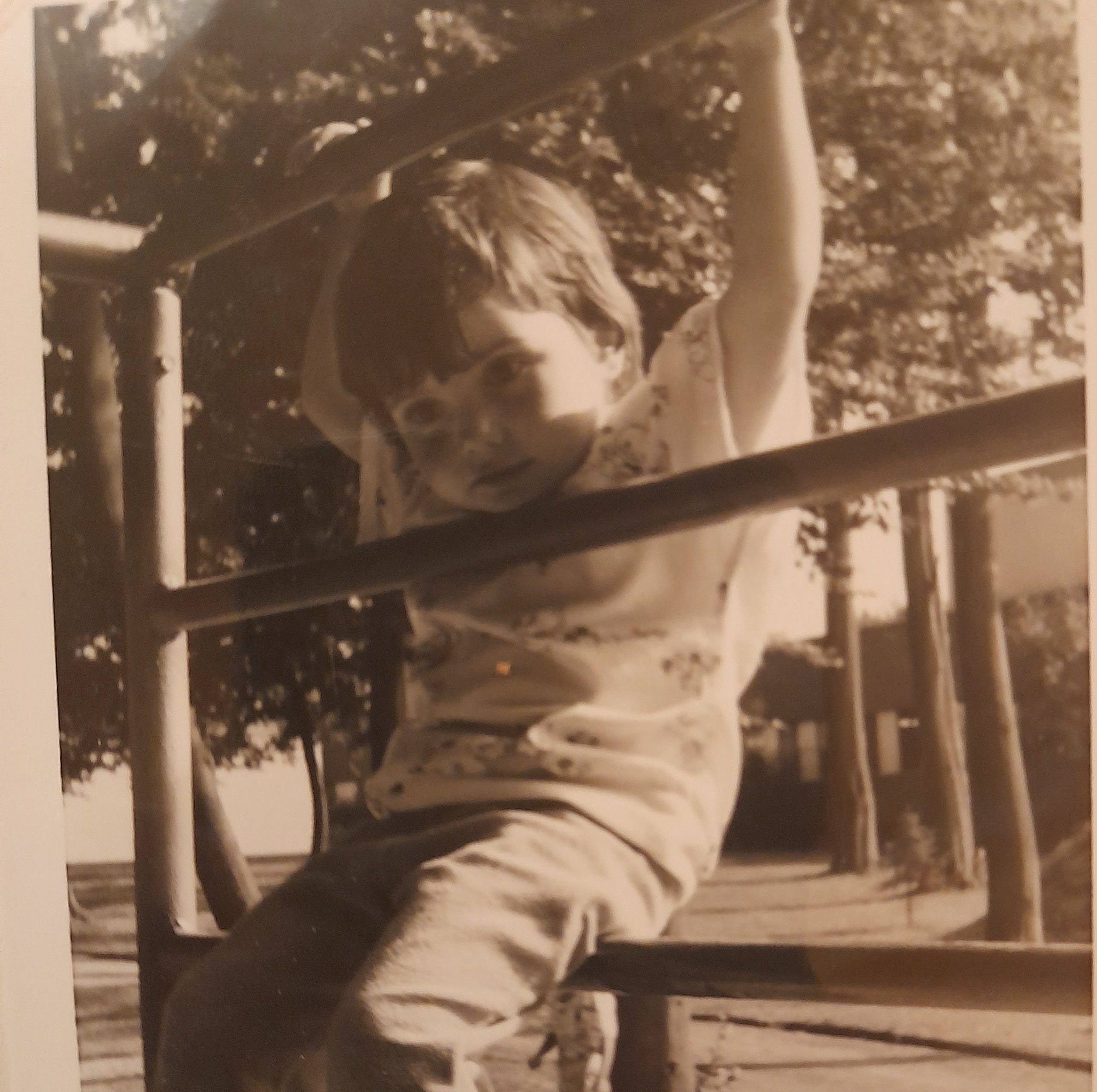
Growing Up Communist
What we can learn from the children of the Eastern Bloc
Greetings from Ireland! By the time this text drops in your inbox, I’m most likely still sleeping off that last pint of Guinness in a charmingly old-fashioned, somewhat Fawlty-Towers-esque hotel in Dalkey, a pretty little town on the southeastern outskirts of Dublin.
To give you a bit of a sense of the location: Dalkey has been crowned Ireland’s Tidiest Large Town 2025, which a sign jollily announces as you drive in. It’s one of the wealthiest parts of the country and home to many celebrities. It’s hosted the likes of George Clooney, Brad Pitt, Julia Roberts, Olivia Wilde, Pierce Brosnan and Russell Crowe. I have personally managed to embarrass myself in front of Chris de Burgh here and once spent a pleasant afternoon being regaled by Bono with stories about Angela Merkel.
Dalkey really is a remarkable place but maybe not the most likely location for a chat about communism. Well, the organisers of the Dalkey Book Festival begged to differ. They scheduled me in to talk about many things this weekend, including on how to Make Europe Great Again, what fascism looks like, Weimar — and “Growing Up Communist.”
For the latter, they put a panel of authors together who had all been born behind the Iron Curtain. There was Jana Bakunina, who spent her childhood in the Soviet Union – check out her book Bird’s Milk if you’d like to find out more about that. Then there was Lea Ypi from Albania, who tells her stories in her books Free and Indignity. The third woman on stage was novelist and playwright Ivana Sajko, who was born in Yugoslavia. And lastly, a certain East German called Katja Hoyer joined the merry collective.
The first thing that struck me is that we were all very young when the regimes we were born into collapsed. I was born in 1985, the other three authors in the mid to late 1970s. Realistically, how much would we even be able to tell about what “growing up communist” entailed?
In practice, though, the first few years of your life have a huge impact on your life, as does the background your parents and other adults bring to the table. So that was a conversation well worth having. After all, there are tens of millions of people like Jana, Lea, Ivana and me, people whose lives in a post-Soviet world were unimaginable and who, in turn, have unique and valuable experiences and perspectives.
Let me give you some examples from my own upbringing. East German family life was very different from West Germany and most other Western countries in that housewives weren’t really a thing. By the 1980s, over 90 per cent of women in the GDR were in employment, the vast majority full-time. In West Germany, it was 30 per cent, the majority of were part-timers. The figures for the other Western states varied a bit, but none were anywhere near as high as the GDR, which had the highest rate of female employment in the world.

Whether that’s a good or a bad thing depends on your perspective, but it certainly was and is noteworthy because the long-term impact is huge. On the one hand, there is a social dimension. We grew up differently. Both my parents continued working full-time after the fall of the Berlin Wall because ideas about one’s role in society didn’t change overnight. East German women had jobs. Many were university-educated (women made up half of the student population). Most had no concept of being a housewife. After all, most of their mothers had also worked their entire lives. If they stayed at home, it was usually out of necessity. They would have considered themselves “unemployed”.
I was only four years old when the Berlin Wall fell, and my sister was born in 1990. Still, our mother not only continued working full-time but also returned to university on weekend days to ensure her qualifications would be recognised under the new system. It was an enormous challenge for her and took its toll, but for us kids it also meant that we had to be more independent.
This was made possible by childcare provision. Kindergartens were open from 6 am until 6 pm, and primary schools also offered after-school activities. But from the age of about 10 or 11, I’d get home straight from school on my bike or on foot, make myself something to eat, do some homework and play with friends. The family would usually only get together for dinner.
Children like me were called “Schlüsselkinder” — “Latchkey Children” — and in the 1990s there were many studies amplified by the media on how we were supposedly lonelier, poorer, more susceptible to peer pressure, etc. In other words, this wasn’t considered a lifestyle choice but an undesirable situation arising from economic necessity.
That may be the case in Western societies where whether mothers stay at home or not is still somewhat of a class indicator. But in the East, being a Latchkey Child wasn’t a class thing. Both my parents were middle-class on paper (if not culturally): well-educated, they had full-time jobs, took us on holidays and made sure we were alright. But they also knew from their own experience that spending some time on your own or with friends as a child wasn’t neglect. It was normal.
Today, this legacy is still visible. Now, 74 percent of German women work, and there’s almost no difference in that figure between East and West. But look at the details, and you see the lingering afterimage of East Germany’s gender policy: There’s a 16 percent pay gap between men and women in the old West Germany, while in the East, it’s just five percent. In some eastern regions, the pay gap has even been reversed at times, with women earning more than men.
The other panellists, all a bit older than me, also made very interesting points about education under socialism. Jana talked about holiday camps and heavily subsidised culture in the Soviet Union. She said she was confused when she first moved to London, and people talked about opera and theatre as elitist things. To her, they were just normal spare time activities that most people took up.
Lea added another dimension to this by pointing out that because education was so universal, socialist and communist societies actually ended up with pretty well-read and -informed citizens. This is a point that’s also often made about the GDR where people read so much that it’s now often called a “Leseland” — “Reading Country”.
Both Lea and Ivana spoke about how this made people want to argue, discuss, think and experiment. Lea remembered how the kids in Albanian holiday camps used to compare how many books they had read or how many languages they could speak or recite literature from.
I think the education and deliberate politicisation of young people also backfired on the GDR regime because young East Germans were intellectually confident and alert to the fact that any attempt at reform was blocked by a stubborn set of old men who came from a different era. So they began to protest or engage in subcultures. It’s a fascinating contrast to Western societies, where we’ve recently seen a decline in educational standards and pretty strong and worrying links between social background and educational achievement.
It should go without saying that none of this was intended to glorify communism or life behind the Iron Curtain. But I strongly feel that we were wrong to write off all the experiences and experiments that happened there as useless because the West won the Cold War. Thinking about things like different approaches to childcare and education, for instance, isn’t a call to revive the Stasi. Nor is a discussion of access to culture and leisure activities a demand to reinstate censorship and propaganda.
I think the experiences of millions of people who grew up under different systems are well worth listening to and debating even if that isn’t always easy or comfortable. Not only were they part of the European experience of the 20th century, but they also have much to offer us today. Perhaps my initial quip about discussing communist childhoods in a sunny marquee in Dalkey Bay wasn’t so far off the mark. Sometimes a bit of distance in time, space and life experience can bring a degree of fearlessness to debates like this.


I am sure that more support for poor, marginalised families would help solve the UK’s worrying social divide. Educating and encouraging independence in children from all social classes would eventually create a mire skilled and caring society.