

Well, here I am, back at work. After my lovely holiday in Italy, I was right back in the swing of things, flying to Ireland to discuss WEIMAR. Mind you, there are worse ways to readjust to work than finding yourself in a rather nice hotel room in Dublin with a strong cup of tea on the desk, getting ready for an evening discussion of your own book.
And what an enjoyable evening it was. My event took place at Mansion House, which has been the official residence of the Lord Mayor of Dublin since 1715. It was in the Round Room, which has seen a mind-boggling amount of history. It was built in 1821 to give George IV, King of the United Kingdom of Great Britain and Ireland and King of Hanover, a suitably grand reception. On 21 January 1919, the First Dáil, the first meeting of the parliament of the revolutionary Irish Republic was convened there to proclaim the Irish Declaration of Independence.
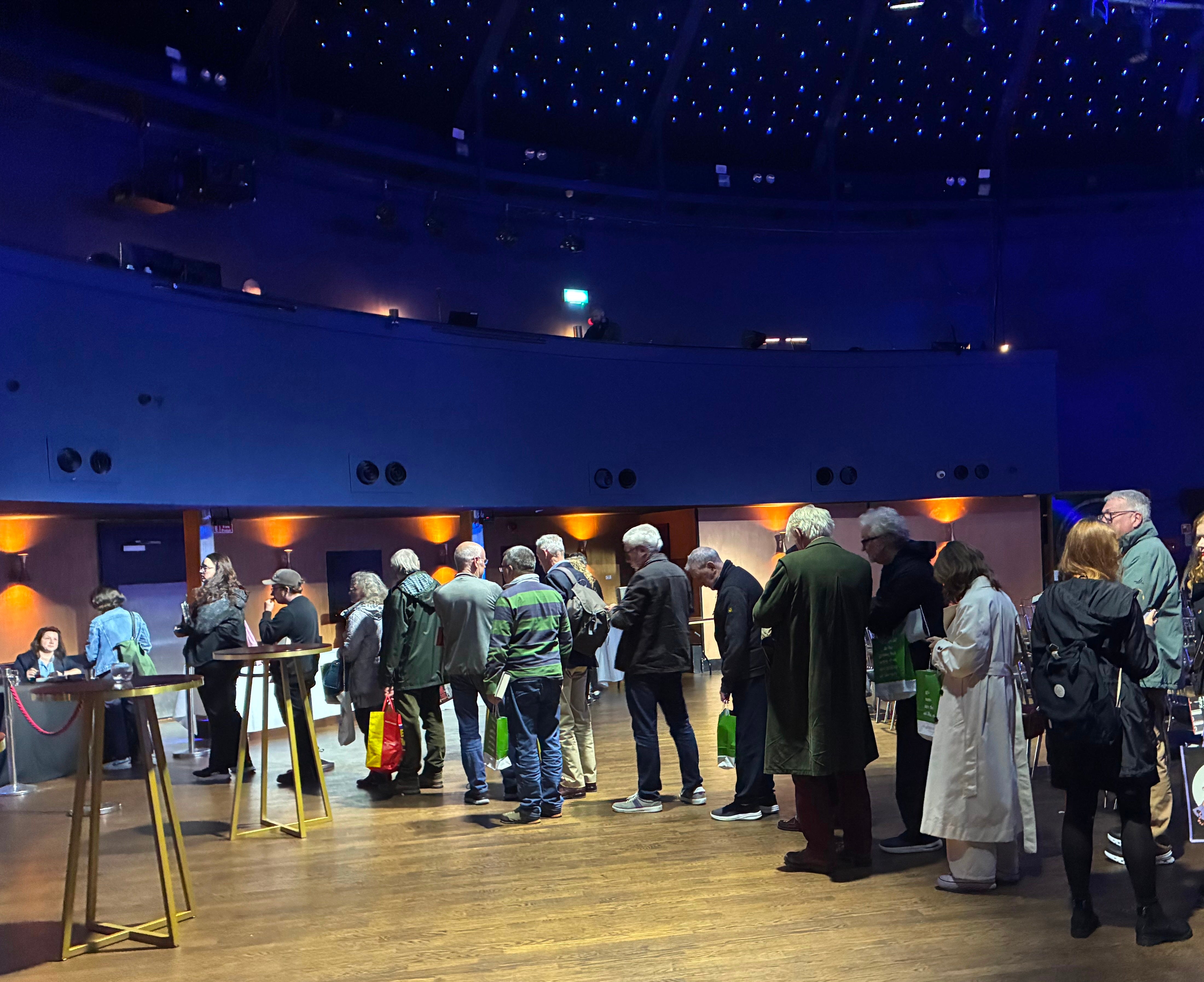
It might have felt a bit jarring for me to address a full house of a mostly Irish audience in this space to talk about German history, but it didn’t. There’s so much in German history that Irish audiences seem to find captivating. They tell me that’s because it resonates with their own experiences — from political violence, republicanism and religious conflict between Catholics and Protestants to the role of the European Union. But the question I get asked the most in Ireland, and that conversation turned to very soon at the post-talk dinner, is:
What can Ireland learn from the reunification of Germany?
It’s a good question and, given the historic venue we were in, a rather fitting one. But it’s also one that I find very difficult to answer. One reason is that I don’t feel I know enough about Ireland and Northern Ireland to discuss the matter confidently. Given how sensitive issues around Ireland’s past and present are, I’d rather tread lightly. But the other, bigger problem is that I don’t see that there is much comparative ground here. A United Ireland would have to come about under very different circumstances compared to what happened in Germany in 1990.
Let’s start with the most obvious difference: the historical context of reunification. In Germany in 1990, a state disappeared. The Soviet Union, which had for so long backed the GDR was itself disintegrating. Change was afoot across Eastern Europe, and eventually the Berlin Wall itself collapsed after pressure from large-scale demonstrations in East Germany helped bring about change.
German reunification unfolded amid a unique political climate in which most East Germans felt they wanted to join a successful alternative version of Germany. West Germany wasn’t negotiating over the future of an established democratic territory where large parts of the population had a deeply rooted alternative national identity.
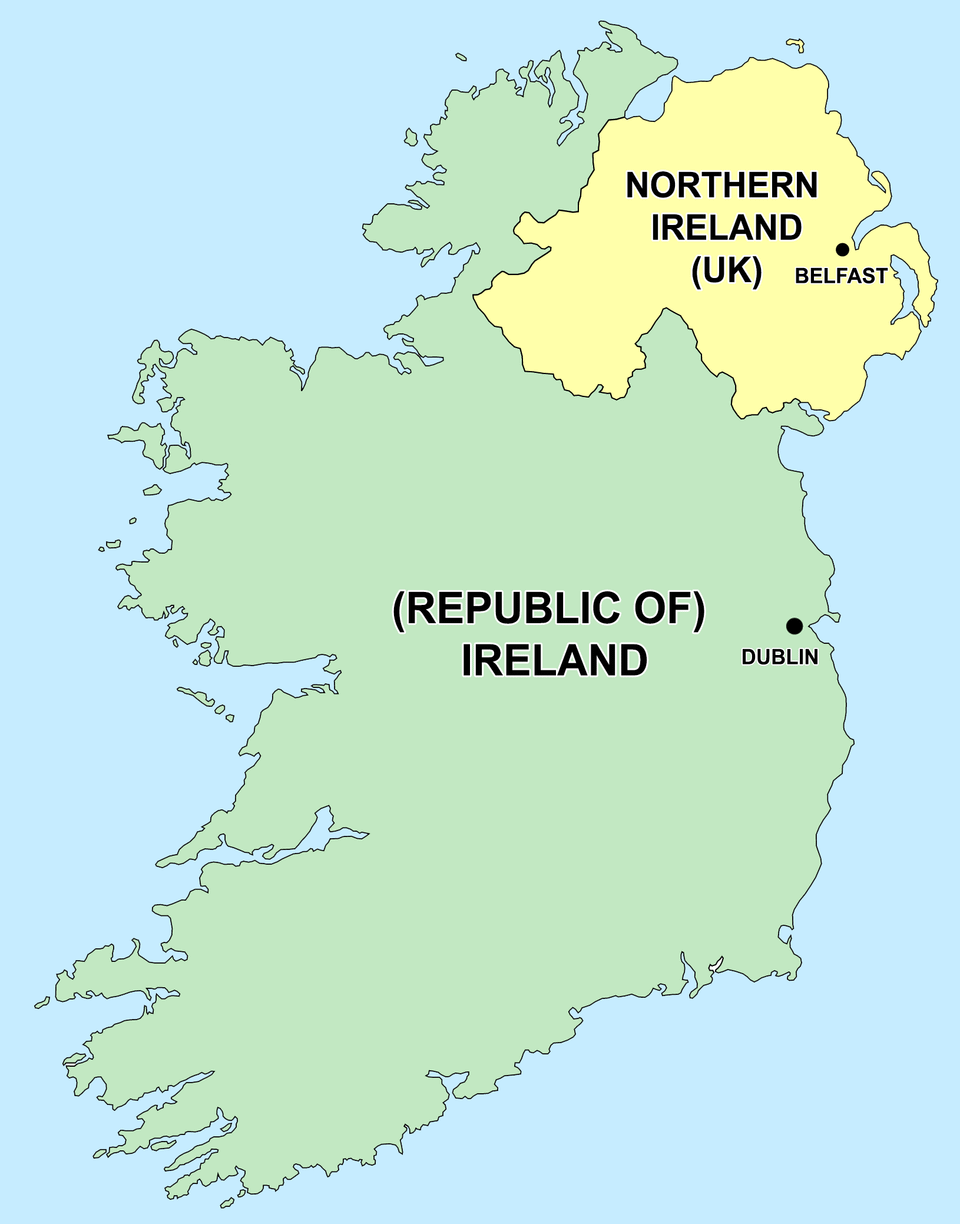
Ireland is in a completely different position. Northern Ireland is a constituent part of the UK, and its constitutional position is determined by consent. The 1998 Good Friday Agreement says that Northern Ireland remains in the UK unless a majority of its people choose to change that. If a majority wants a United Ireland, the British and Irish governments are committed to help bring that about.
East Germany had no such mechanism, not least because it was run by a dictatorship intent on self-preservation. Irish unification would and should be a planned democratic process rather than a revolution. I think there’s a lot of power in that and I find it encouraging that people have been thinking about this and discussing various ideas for years rather than rushing headlong into something that has the potential to disrupt a carefully established peace.
Another crucial difference is that Northern Ireland’s population isn’t idolising the Republic of Ireland from afar as was the case for many East Germans imagining a West they couldn’t freely travel to. It’s relationship with the Republic of Ireland is complex. Northern Island contains people with British, Irish and other identities. The Good Friday Agreement acknolwegdes that, guaranteeing people’s right to identify as British, Irish or both and to hold British and Irish citizenship.
Germans, on the other hand, mostly saw themselves as Germans — East or West. Of course there were arguments in 1989/90 over whether reunification was the way to go. Plenty of reformers argued for a different process, for instance, some form of German-German confederation, but they were a relatively small minority.
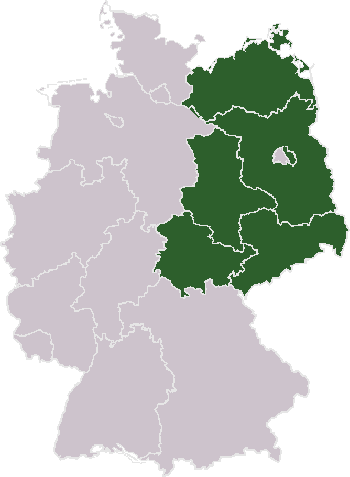
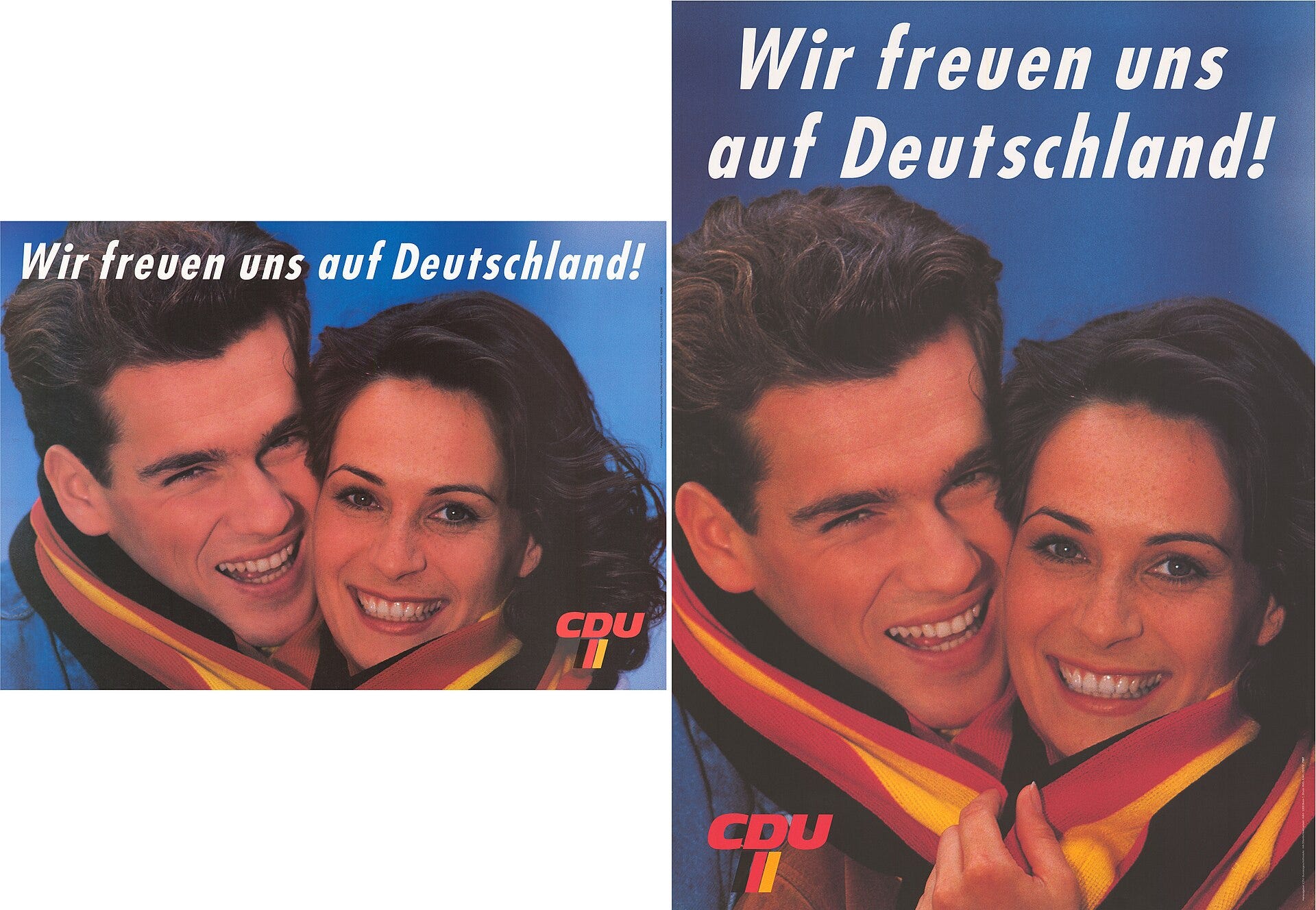
Germany soon decided that its united country would be an extended version of West Germany. To this day, I roll my eyes when people talk of the regions where I’m from as the “new states”. They weren’t new to the people who lived there. But that phrase encapsulates what happened: East Germany simply joined West Germany.
In Ireland the template seems less obvious. Would Northern Ireland become part of the existing Irish state or would there be a new constitution? One of the things we discussed in Dublin on Sunday was healthcare. One of the dinner guests said that Northern Irish people used to point to the NHS, the publicly funded healthcare system of the United Kingdom, as a thing they were proud of that they wanted to keep. She felt this had changed because of the problems and dysfunction of it, but it was still an issue. And what about education and policing? Or symbols and national identities? What would be the position of people who continued to think of themselves as British? These are all debates Ireland has time to have before it plunges into a process of unification.
The economic circumstances are also very different. I’m well aware that Ireland has become a prosperous country, but it’s still a small economy compared to the giant that was West Germany. German reunification involved the enormous task of integrating two economies with vastly different levels of productivity and living standards. The process has cost an estimated €1.5 trillion to €2 trillion since 1990.
A United Ireland would involve economic integration too, but not as a merger of a centrally planned economy and a capitalist one. Northern Ireland and the Republic already have extensive economic links, with people, goods and services having crossed the border for decades. Equally, though, Northern Ireland still has huge economic and social challenges that even the bigger UK economy is struggling to address. For unification to appear as a success, people’s lives would need to get visibly better and that might prove a huge challenge.
On the plus side, there’s a difference that would have been almost unimaginable in 1990 Germany: The island of Ireland’s two jurisdictions have already spent decades developing cooperation mechanisms. The North/South Ministerial Council, for example, was created as part of the Good Friday Agreement, alongside British-Irish institutions. Brexit has also highlighted how intertwined the two parts of the island remain, with the post-referendum arrangements specifically designed to avoid a hard border.
Demography would also make the situation different. The island of Ireland has a population of around 7.3 million. That is a relatively small population by European standards and might make the process more manageable than Germany’s 80 million in 1990.
The biggest difference, though, is history. German reunification was fundamentally about overcoming a Cold War split that existed for four decades. Irish reunification would be about negotiating much older identities. Ireland would have to devise a settlement capable of making people who identify as belonging to different nations feel that they have a place within the same state, and that’s a very different beast from German reunification, which brought together people who by and large thought of themselves as Germans.
I’m not saying Germany 1990 isn’t an illuminating comparison, but it can’t serve as a blueprint for Ireland. Having said that, I feel there’s a positive message in this: Irish reunification can take its time. It can and must be built on carefully negotiated consent and compromise. So that’s the only advice, really, that I can give as a historian of Germany and someone whose life was directly shaped by German reunification: Take your time, Ireland.
I agree that there are not many overlaps. If the Republic of Ireland wanted to rejoin the United Kingdom that might be a closer analogy. (They don"t of course.That divorce is final) I imagine that Brits visiting Ireland must feel like Germans visiting Austria. A foreign country - but also not one.