
Louise - Life and Legacy of a Prussian Legend
Or: The Only Man in Prussia

If you woke up on Tuesday and thought you could hear a faint, German-accented voice badly singing “Happy Birthday”, that was probably me celebrating one of the most intriguing women in German history.
On 10 March 1776, or 250 years ago, a girl called Louise was born. She was Duchess of Mecklenburg-Strelitz. She became Queen of Prussia. She died young, a heroine and a martyr. She became a legend, and then she became controversial. Her 250th birthday seems an excellent opportunity to take stock of the life and legacy of a woman, many may have considered a founding mother of Germany, had history not got in the way…
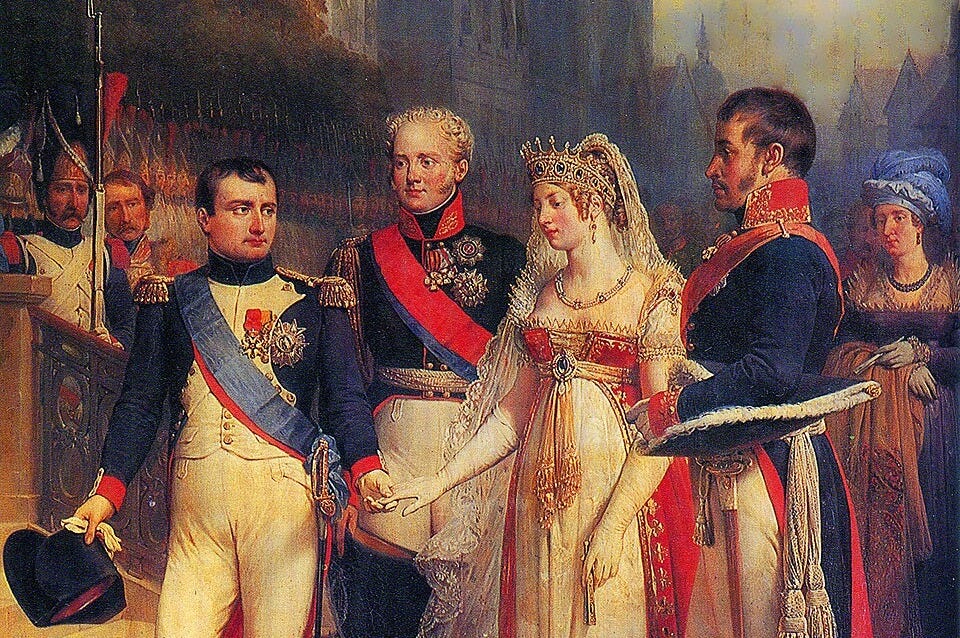
One moment shaped Louise’s place in the annals like no other. Nobody knows what exactly happened on that fateful summer day in 1807 when the Queen of Prussia stepped into a tent on the edge of her realm to meet Napoleon, Emperor of the French.
By all accounts, Louise was a strikingly beautiful woman. She was thirty years old and radiated boundless energy and optimism. But her large blue eyes, normally so full of life and humour, were filled with tears that day. She’d come to plead with Napoleon, this ‘monster’ as she habitually called him, for nothing less than her kingdom and her people’s dignity. She knew the fate of Prussia rested on her shoulders, and the responsibility weighed heavy on her.
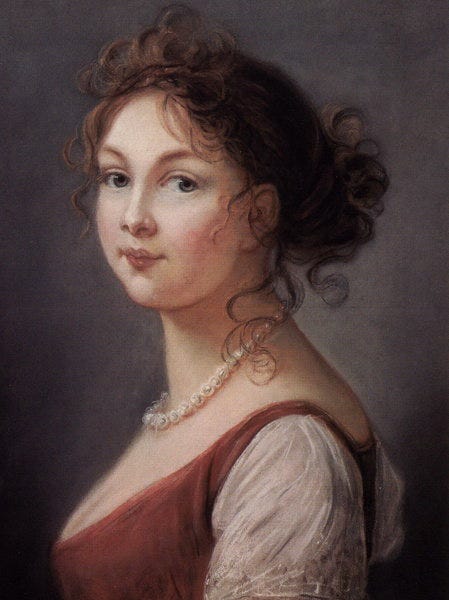
Napoleon had inflicted a series of painful and humiliating defeats on Prussia. While Louise was determined to fight back and began to assemble a war party of like-minded political figures, her husband, King Frederick William III, was more cautious, even timid. He’d reacted too late and handed Napoleon the military advantage. The French Emperor had used the situation to beat Prussia decisively, sack its capital Berlin and drive the royal couple to the edge of their realm.
Louise never blamed her husband for this. Unusually for their time, the couple had deep feelings of love, trust and respect for one another. They stuck to their traditional roles in that Frederick William ruled Prussia as king while Louise was his consort, focusing on charity, social issues and supporting her husband unconditionally. But Frederick William knew Louise was the more astute politician and the braver soul. He frequently asked her advice before making political decisions and gave her the space to act as a public figure in her own right.
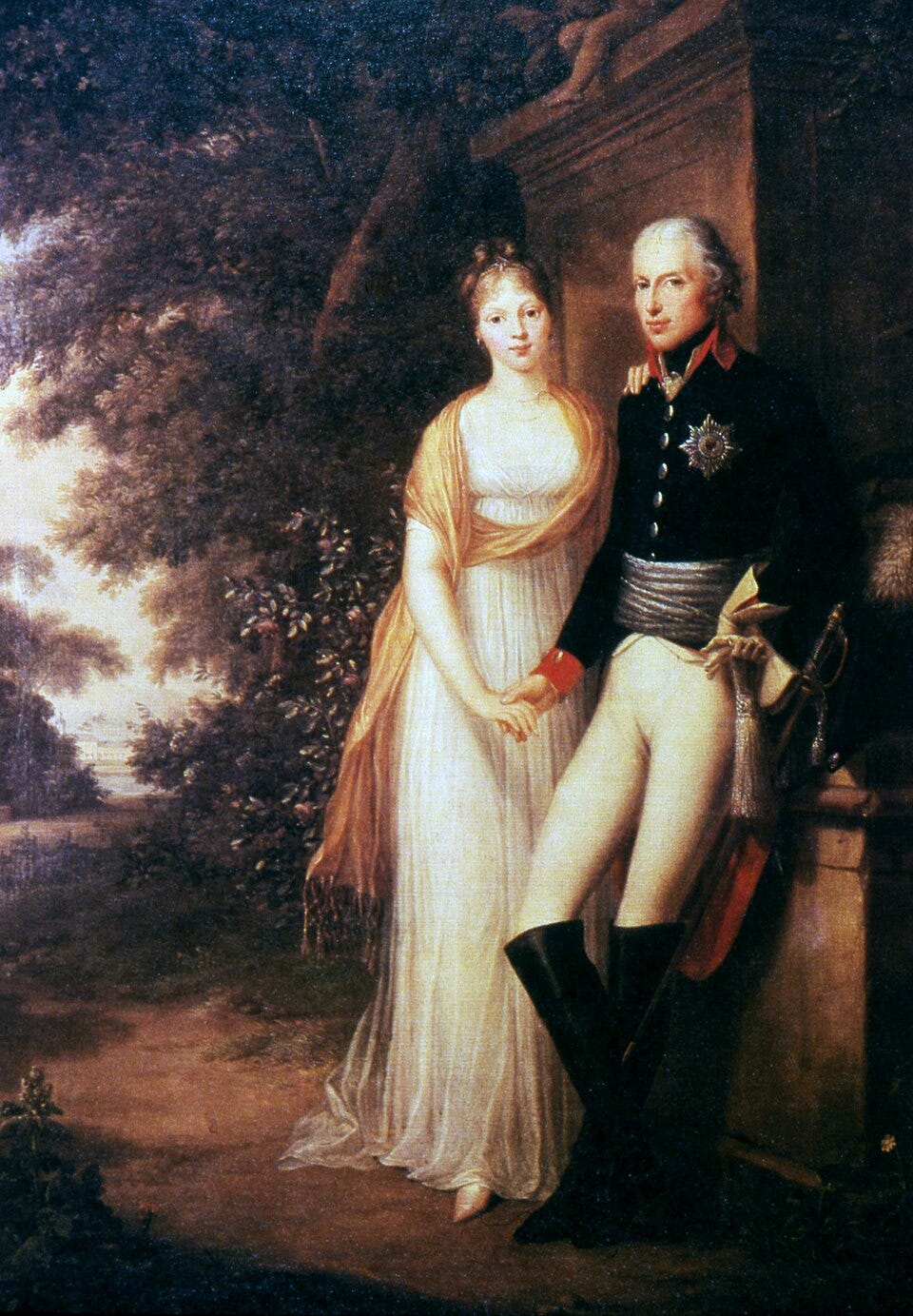
Generous, funny, beautiful and strong, Louise became a legend in her own time, ‘a female celebrity who in the mind of the public combined virtue, modesty and sovereign grace with kindness and sex appeal,’ as historian Christopher Clark put it. Nobody seemed to have a bad word to say about her.
As Prussia had reached its nadir, the French boot at its throat, King Frederick William knew there was only one last roll of the dice. He’d not go to speak to Napoleon. He knew the man had no respect for him. Instead, he’d send his formidable wife to negotiate with the French Emperor.
Napoleon couldn’t wait to meet the famous Prussian Queen. He was curious. What was it about her that inspired so many of her compatriots? He was indeed impressed by her when he met her at Tilsit. In a jibe that was as much intended to be an insult to her husband as a compliment to her, Napoleon referred to Louise as ‘the only real man in Prussia’.
Sensing that her aura still had the power to inspire rebellion in the conquered German lands, he set about destroying her reputation. He claimed what happened in the tent at Tilsit was a humiliating attempt by her to seduce him. Writing to his wife after the meeting, he boasted that the Prussian Queen had been ‘really charming and full of coquettishness toward me. But don’t be jealous...it would cost me too dearly to play the gallant.’ We’ll never know what really happened in the tent. What is certain, however, is that Louise got nothing from Napoleon that day. She would get her revenge eventually, even if she’d never know it.
But first, Prussia was subjected to a harsh peace treaty. It lost half its territory and was humiliated constantly by the occupation forces. Napoleon had even stolen the coach and horses from the Brandenburg Gate, leaving this Prussian triumphal arch naked, with just the iron rod sticking into the Berlin sky, literally needling the capital and its inhabitants every day.
Then an even greater tragedy struck the kingdom. Louise fell ill. She died suddenly and unexpectedly in her husband’s arms in 1810. Prussia was hit by a powerful wave of grief for its beloved queen. Rumours spread that she had died of a broken heart, not being able to bear the sorrows of her country any longer.
Public sadness turned to anger and then to grim determination. Louise’s death hardened Prussian hearts, including that of her distraught husband. The nation would finally stand up and fight in her honour.
And so it did. The war party Louise had begun to assemble stood ready when her husband finally plucked up the courage to try to liberate Prussia from the French yoke. The king seemed a new man. Deeply unhappy but cold and determined, he called upon his people to fight in a famous declaration of 1813. For the first time, the fractured people of his realm rallied together in the so-called Liberation Wars. As part of a large pan-European coalition, Prussia played a vital role in defeating Napoleon. The “Iron Kingdom” gained the respect of the Great Powers of Europe and was rewarded with land, power and status when the wars ended in 1815.
Over the course of the 19th century, Prussia would emerge as one of Europe’s most successful economies. It was to build much more than a powerful army, producing some of the most brilliant scientists, musicians, artists and scholars of the age. It was a modern superpower that eventually forged the first German nation-state. Louise’s son Wilhelm became the first German Kaiser in 1871.
In recognition of Louise’s legacy, her husband Frederick William founded a military decoration, the Iron Cross, in 1813. His wife was the first person to receive it. It was awarded to her posthumously, and its establishment was backdated to her birthday, 10 March. While Germany abolished the decoration after the Second World War, its modern military, the Bundeswehr, continues to use the symbol as its emblem to this day.
If Germany has such a thing as a founding figure, a good candidate for that role would be Louise, Queen of Prussia. As Kaiser Wilhelm I.’s mother, she was a literal mother to the first head of state, but she also remained a powerful symbol of hope, virtue, kindness and determination for future generations.
So why is she a sidelined figure in Germany’s national identity today? As far as I know, no comprehensive, recent biography of her exists.
One reason is that modern Germany is deeply uneasy about a founding figure who personified Prussia in her lifetime and well beyond. Prussia was abolished as a state in 1947 since its militarism and culture were widely blamed for both world wars. Exorcise the spirit of Prussia from Germany, so ran the argument at the time, and a better, peaceful country will emerge. Germany has no desire to conjure the spirit of Louise now.
It doesn’t help that Louise was not only idolised as a personification of Prussian attributes but also as the platonic ideal of a woman and a wife of her time. In her short life, she was mother to nine children and consistently subordinated her own needs to those of her husband and her country. She embodied traditional female values such as patience, generosity and loyalty. It is hardly surprising that the Nazis, too, valorised her as the ideal German woman.
But Louise has been unfairly consigned to the dustbin of history. She was a remarkable woman whose wit, skill and charisma made her one of the great historical figures of the 19th century. She played a central role in the unification process of the German nation-state. Today, one cannot begin to understand what Germany is and how it came about without understanding Louise, Queen of Prussia.
I think I see a biography coming from an excellent German historian who proves on these pages that she's an excellent writer.
A good read with my morning coffee, even earlier than usual as Sindy, who is staying with me decided 5:30 was an appropriate hour to wake me. I knew of Luise from reading Christopher Clark’s Iron Kingdom, one of the first books I read after reading Blood and Iron. I wonder if German discomfort with celebrating the birth of nation and Prussia’s poor PR is part of the reason she is lost in the mists of time. Once you have stepped from the promotional merry-go-round and taken a break may I suggest you dive back into the C18th and C19th and write that biography?