

It’s cold here in Warsaw. When I arrived in the Polish capital, the sun shone brightly in a clear blue sky, but a stiff breeze whipped mercilessly through the wide streets and boulevards. People were wrapped up warm in thick puffer coats as they hurried in and out of trams. Many sought refuge in cafes, which were brimming with chatter.
While the thought of hot, strong coffee appealed on a day that had begun in England with my alarm shouting at me at some ungodly hour and had not been improved by the experience of airline crew trying to sell sleepy passengers scratch cards before dawn, I resisted the allure of Warsaw’s bustling cafe culture for a while and went for a wander.
To me, Warsaw is an endlessly fascinating city. There is history everywhere. Memorials commemorate the events of the 1944 Warsaw Uprising. My 1950s hotel has all the hallmarks of the socialist classicism that marked the Stalinist era. Information plaques remind people of painful and proud moments in Polish history. I stumbled upon one that pointed out (in English first) that Polish mathematicians were the first to break the German Enigma cypher in the 1930s.
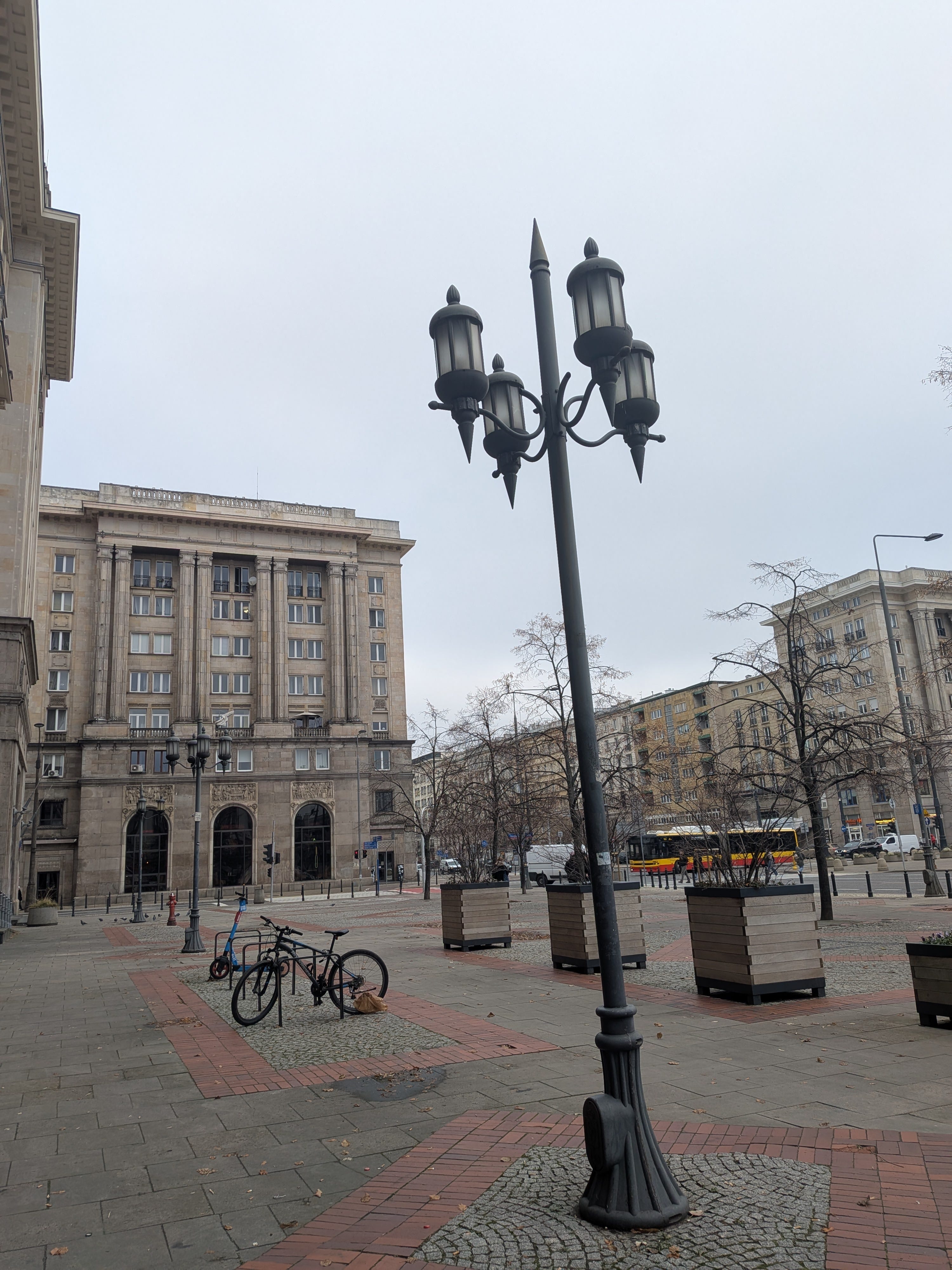
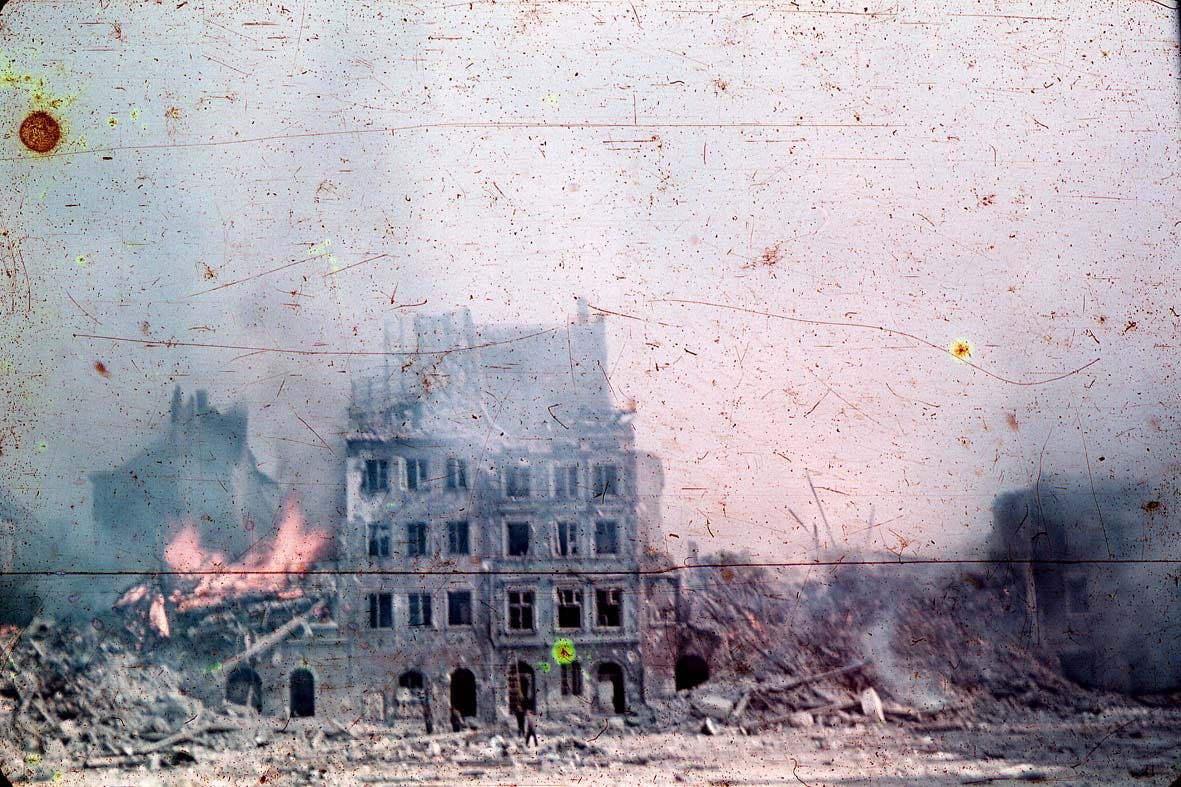
Warsaw’s strange but vibrant cityscape, a combination of historical restoration, neoclassicism and modern architecture, is the result of a decades-long, painstaking process of rebuilding the Polish capital. During the Second World War, it had been viciously and methodically destroyed by Nazi Germany, whose leaders sought to erase all traces of its Polishness and replace it with a provincial German town. The city we find here today speaks of trauma, pain and survival, but also of courage and defiance.
It’s often claimed that the destruction of buildings and entire towns and cities is par for the course in war. Arguments over the bombing of places like Dresden or Coventry often revolve around the distinction between legitimate military targets, excessive civilian deaths, terror bombing and so on. Basically, the question is to what extent, and in what ways, the destruction of cities is acceptable in order to win a war. But Warsaw was different. Germany didn’t raze it to win the war, nor, in the end, even to claim it as German territory. The destruction was carried out for its own sake.
There were three waves of destruction unleashed upon Warsaw. The first came immediately after Hitler’s troops invaded Poland on 1 September 1939, starting the Second World War. The city was subjected to heavy aerial bombardment from the very first hours of the war. A little over a week later, it came under direct attack before finally being besieged and occupied. In the process, an estimated 10 per cent of its buildings were destroyed and a further 40 per cent damaged. Cities can rebuild after that kind of damage, but Warsaw wasn’t supposed to.
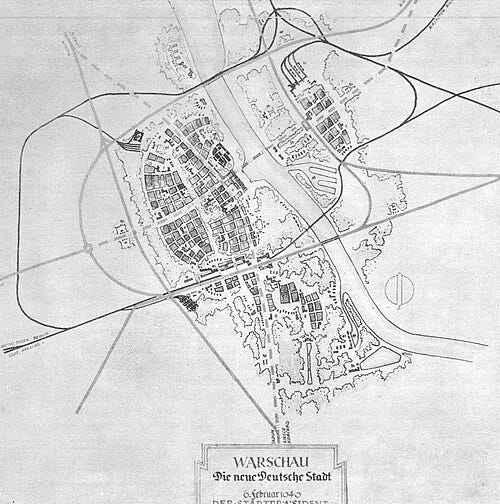
There had already been plans before the war to destroy the Polish city of Warsaw completely and replace it with a German town. On 20 June 1939, before the invasion had even begun, Hitler saw architectural plans for a replacement for Warsaw when he visited the German city of Würzburg. Under these plans, only a few selected historical buildings would be preserved, while the rest was to be demolished.
Warsaw’s population of 1.3 million people, consisting of Poles, Jews and various minorities, was to be removed entirely through displacement, slave labour and murder. In the end, Warsaw was to become a German-only town of 130,000 people on one side of the River Vistula, supported by a labour camp housing 80,000 Poles on the other.
Eventually, the plan evolved further (the planned population size was reduced to 40,000, for instance) and was named after the architect Friedrich Pabst. It included various maps, illustrations, photographs and a miniature model.
It’s important to recall here that the German war in the East was explicitly colonial and genocidal in nature. The aim wasn’t just to vanquish the enemy but to make Central and Eastern Europe ethnically German. The military campaigns were to be followed by ethnic cleansing and architectural replacement. The overarching plan for this was called Generalplan Ost, which was in turn based on the policy of Lebensraum – establishing “living space” for Germans in the East.
Once Warsaw was occupied, the operation began in a second wave of destruction. Jews were rounded up and forced to live in terrible conditions in a ghetto. Poles were also subjected to frequent round-ups and either shot outright in the streets (there are harrowing memorials to this all across Warsaw), taken to concentration camps or used for forced labour. Later, many were also sent to death camps such as Auschwitz.
Two courageous acts of resistance against Nazi occupation and genocide followed. The Warsaw Ghetto Uprising in 1943 is remembered as the largest revolt by Jews against the Nazis during the war. And then there was the Warsaw Uprising of 1944, which raged for 63 days, aiming to end Nazi occupation altogether. Both were brutally crushed and followed by reprisals and escalating systematic destruction. It’s estimated that a further 15 per cent of Warsaw was destroyed during the Ghetto Uprising and another 25 per cent during the Warsaw Uprising.
SS boss Heinrich Himmler then gave the order to bomb Warsaw mercilessly. On 17 October 1944, he told his officers: “The city must completely disappear from the surface of the earth and serve only as a transport station for the Wehrmacht. No stone can remain standing. Every building must be razed to its foundation.” The remaining residents — still around 650,000 people — were expelled and sent to a transit camp before being transported onwards to various destinations, including concentration and death camps.
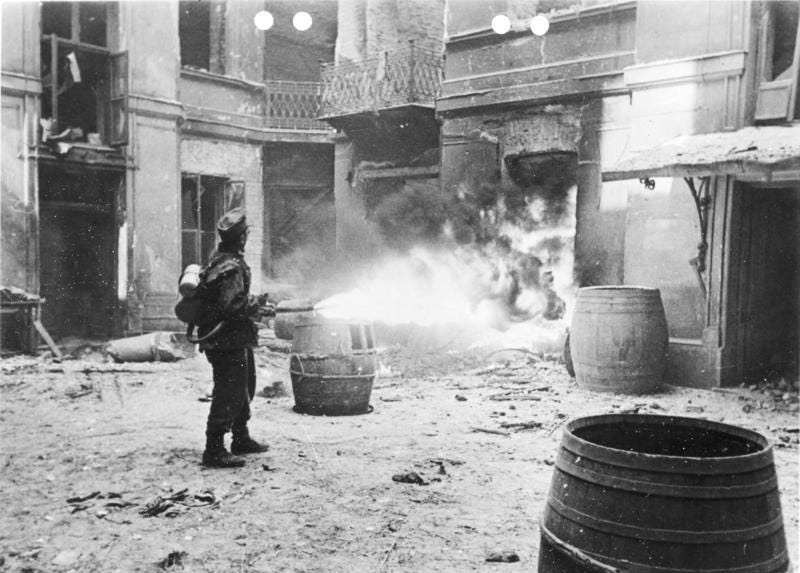
The German forces then set about systematically destroying the empty city with explosives, by burning and through looting. Nothing was spared: libraries, archives, universities, schools, hospitals and historical buildings were set on fire, bombed or pulled down.
By January 1945, up to 90 per cent of Warsaw lay in ash and ruin. It is regarded as a unique act of destruction in terms of both scale and intent. By this time, Nazi Germany was losing the war and had abandoned its colonialisation projects. The destruction of Warsaw happened purely for its own sake.
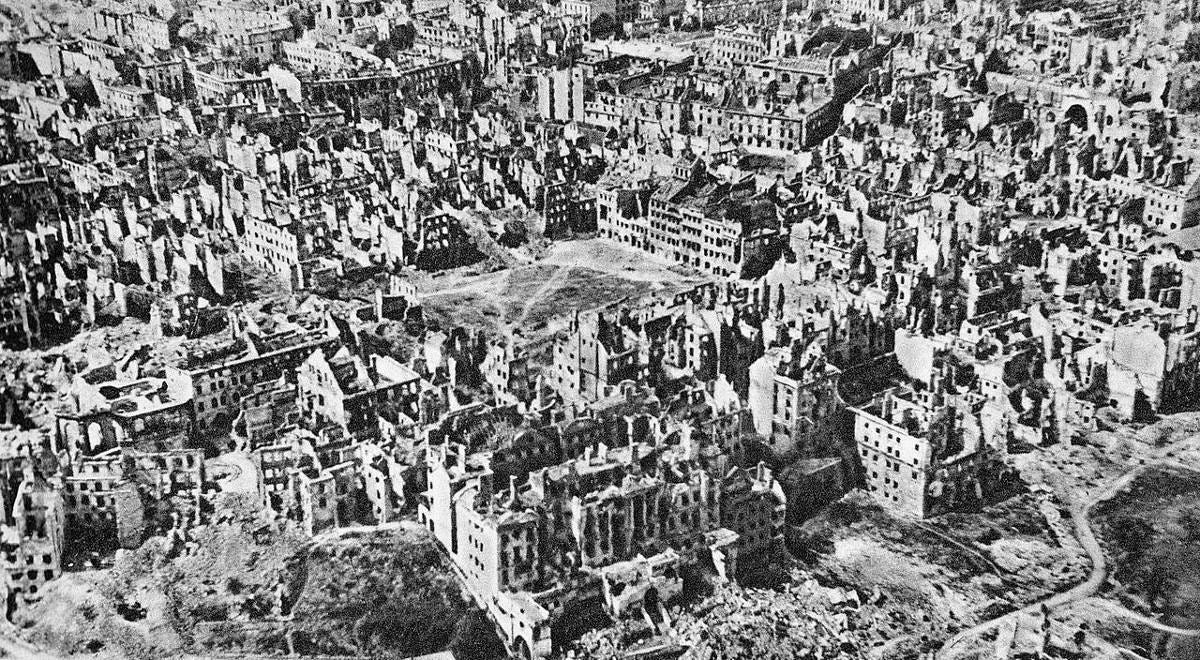
The fact that Warsaw exists at all today is the result of sheer will and determination to rebuild the Polish capital — not as it was, but as a city that shows all aspects of its past.
A faithfully restored Old Town gives residents and visitors a sense of the city as it once was. Severe, monumental Soviet-era buildings stand alongside extensive modern restoration and construction, fuelled by Poland’s dynamic economic growth, currently running at around 3.5 per cent of GDP per annum. Both the pain of the past and the optimism of the future are stamped on Warsaw’s streets today.
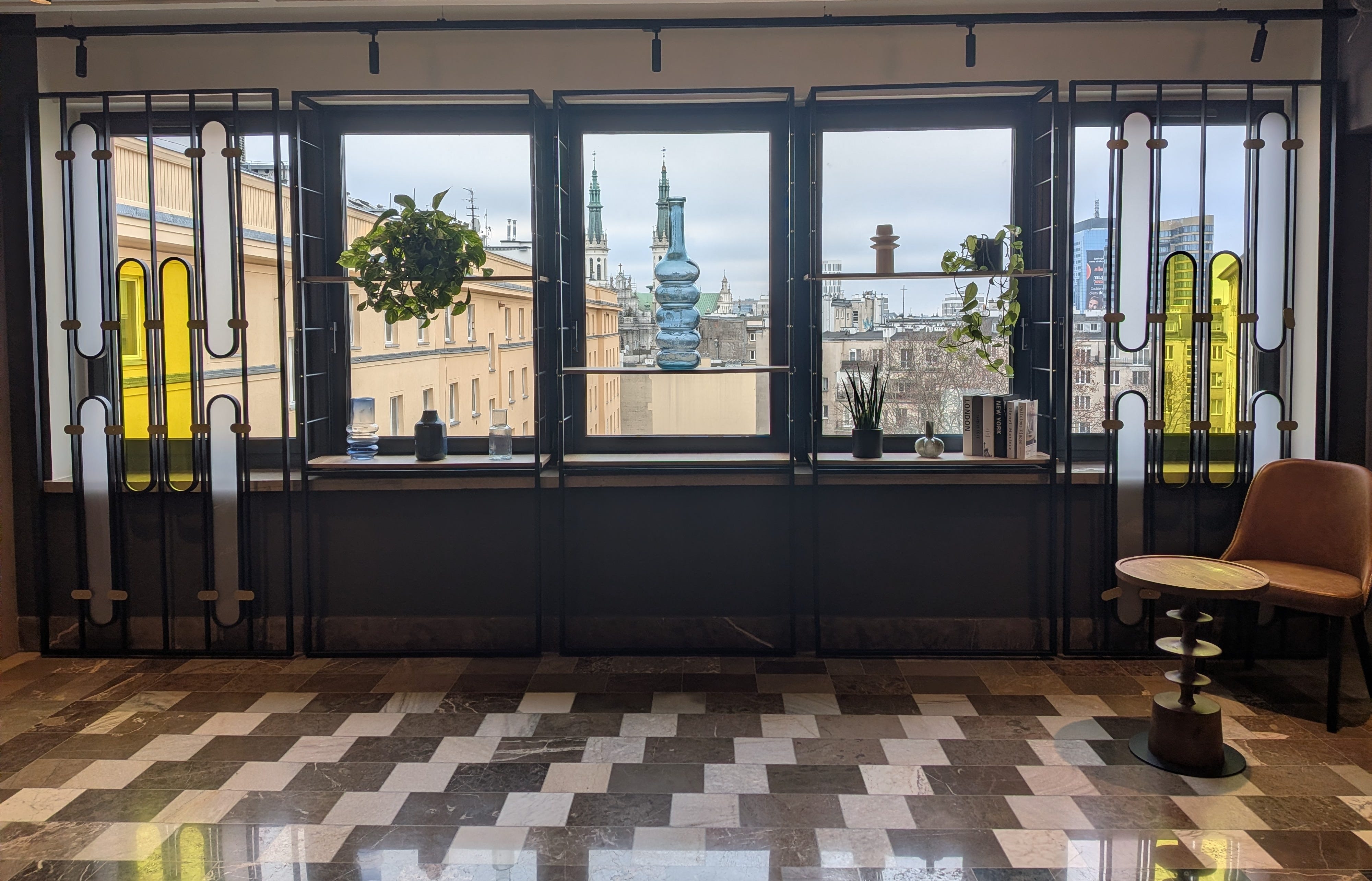
Coming here as a German to talk about German history or politics is always daunting. On a previous occasion, a lady from the Warsaw Uprising Museum was moved to tears as she showed me some of the artefacts held there and spoke about how the echoes of this history still reverberate around the city.
I have met many Polish historians keen to build links with German colleagues, but I have also encountered lingering anger, hurt and resentment. This remains a sensitive field, and I have often wished that education about Polish history played a bigger role in Germany.
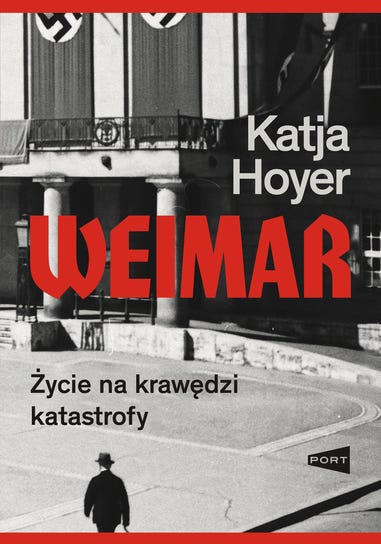
This time, I’m here to talk about WEIMAR, which came out in Polish translation a few weeks ago. I was amazed and humbled to see how many people turned up at the venue, wanting to get their books signed, asking questions and keen to hear more about Germany.
“It’s no use forever defining ourselves by past enmities,” one lady told me in lightly accented German. “We need to learn more about each other’s histories and also each other’s ways of making sense of the past, the present and the future.” I couldn’t agree more. Coming to Warsaw as a German historian will remain a difficult journey for some time, but I feel we’ve reached a point where that difficulty can become something constructive.
Good to know the event was successful. I have read a little of the history of the Nazi/Soviet invasion of Poland in 1939 so I am aware of the highlights so to speak. I think that one can safely say few if any nations suffered as much as Poland did in the SWW. Alexandra Ritchie’s book Warsaw 1944 is a remarkable account of the destruction of the city. Looming large on my to be read pile is Prit Buttar and his daughter’s book Warsaw A City at War 1939-1945. It’s easy for me as a Brit to say this but Europe needs to admit our difficult history while recognising the threat we all face. Good read with my second coffee of Sunday morning.
Congrats on the Polish edition. The Wiederaufbau of Warsaw is testament to Polish resilience and craftsmanship. The city also has some top class museums, especially the new Polin about the history of the Jews in Central Europe. After disappearing off the map and several boundary changes, today’s Poland is a prosperous, vibrant democracy. Germany is indeed a key partner and much good work is done by organisations such as the Stiftung fuer Polnisch-Deutsch Zusammenarbet.