
Notes from a Journey East
Or: The Other Germany

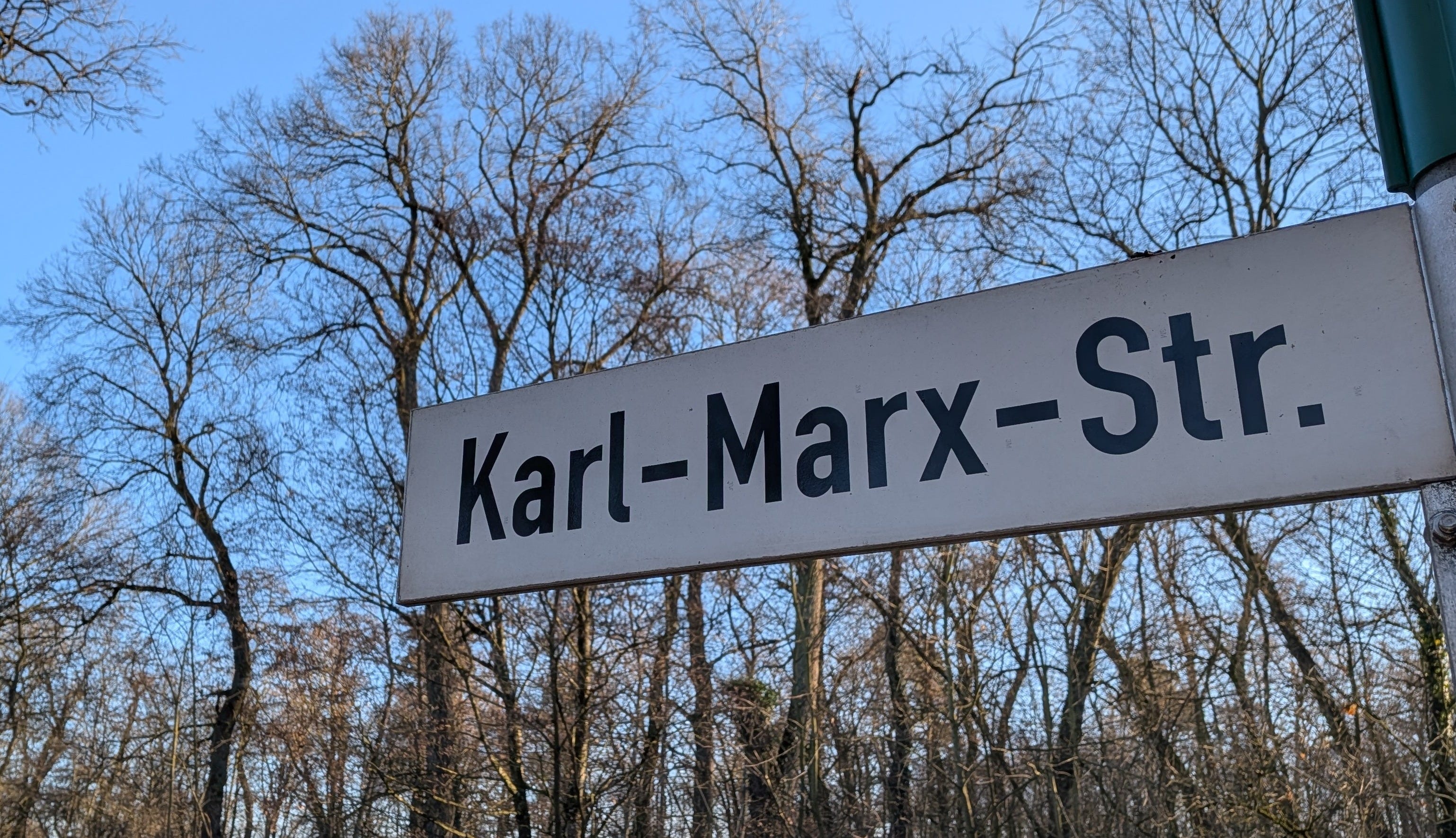
Eastern Germany is often spoken about as if it were a single place, a shorthand for history, division and current-day political polarisation. At the same time, it’s a place many foreign tourists never venture, and even around a fifth of West Germans have never been.
But having travelled the length of the former GDR, from north to south, over the last two weeks or so, reminded me how varied and rich this underappreciated part of Germany is. It’s not one landscape or one story, but many: coastal towns shaped by the Baltic, deep forests, quiet villages, wide agricultural plains and, of course, half of a German capital city that never stops reinventing itself.
Engaged in a mixture of research, work, and social Christmas visits, I travelled from Berlin to Greifswald, then on to Stralsund, Rügen, the Thuringian Forest, rural Brandenburg and finally back to Berlin over the last few days, reacquainting myself with Germany’s underexplored East.
Landing at Berlin airport, I immediately set off for the Baltic. I toyed with the idea of driving because German intercity trains are now notoriously unreliable, apparently even less punctual than the worst British operators. But I like going by train. You see more of the changing landscapes around you, and you often meet interesting people. I was right to chance it. My booked train was over an hour late, but the earlier train had a significant delay, so I caught it and arrived in Greifswald as planned.
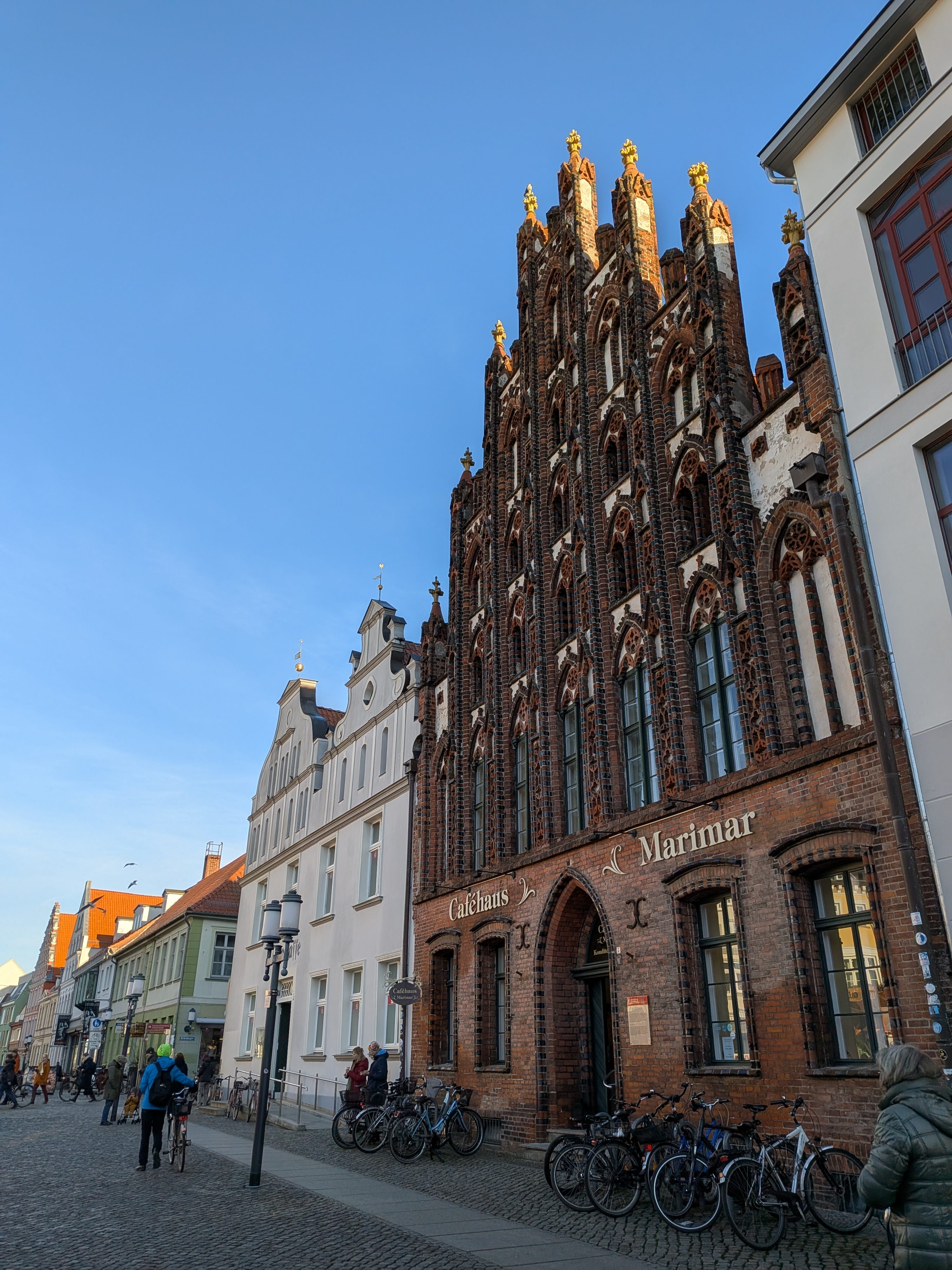
The moment I stepped off the train and began dragging my suitcase across the frozen earth of the former city defences, which have been turned into a leafy walkway around the old town centre, I was disarmed by Greifswald’s calm small-town flair. Students cycle past brick churches, and the air carries a faint hint of salt from the nearby coast. It all seemed wonderfully nautical and Hanseatic to me. The sun shone brightly in a clear, cold sky as I sauntered along the cobbled streets, flanked by colourful, gabled houses.
A few days later, a short train ride west brought me to Stralsund, a city that feels both maritime and monumental. Even the station was impressive. I found out later that it was named “train station of the year” in 2016 and wasn’t surprised. Opened in 1905, the main building is a tall, beamed structure with giant paintings of Stralsund and Rügen. It’s beautifully restored, making you feel as though you have arrived in another time.
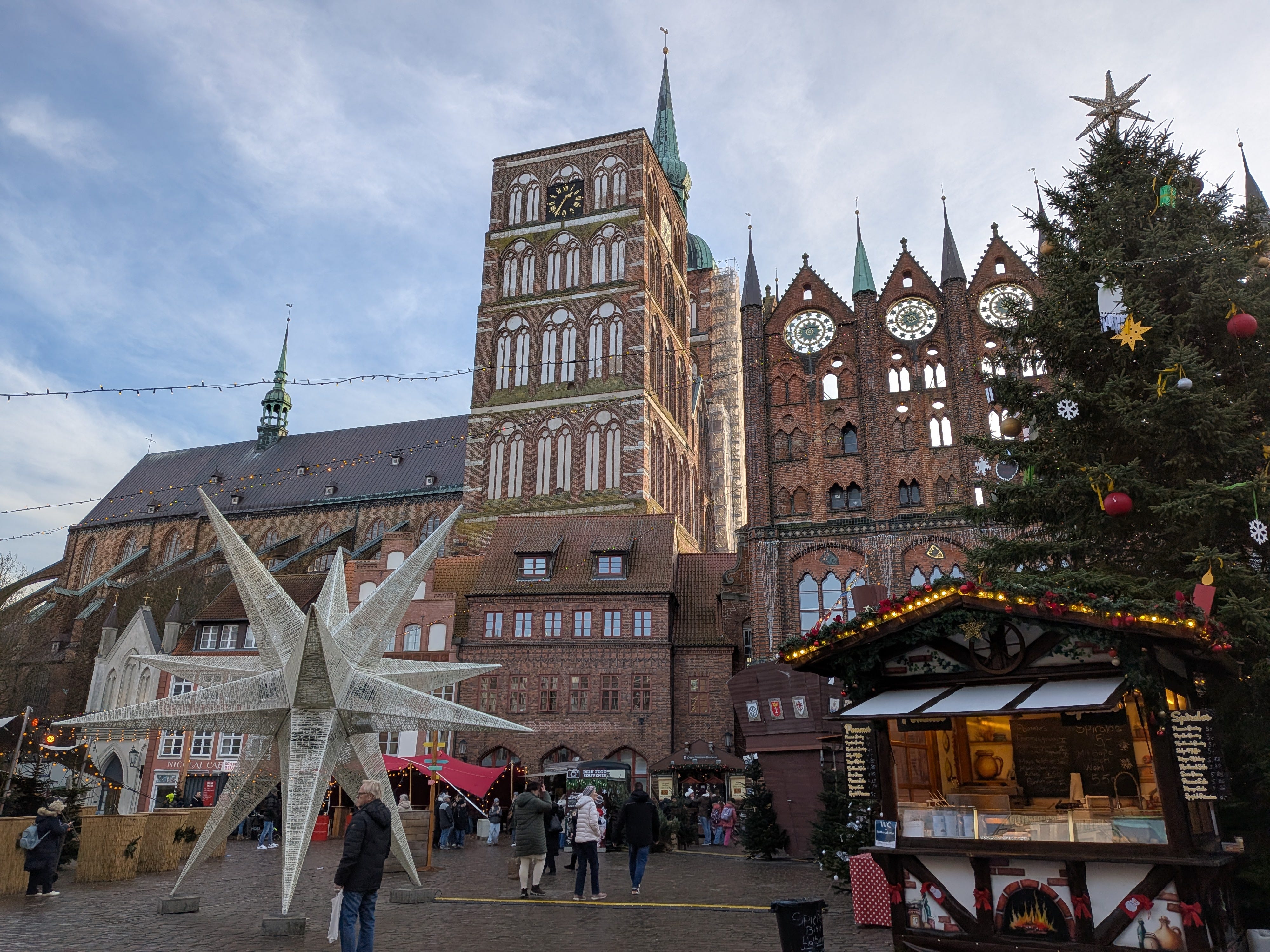
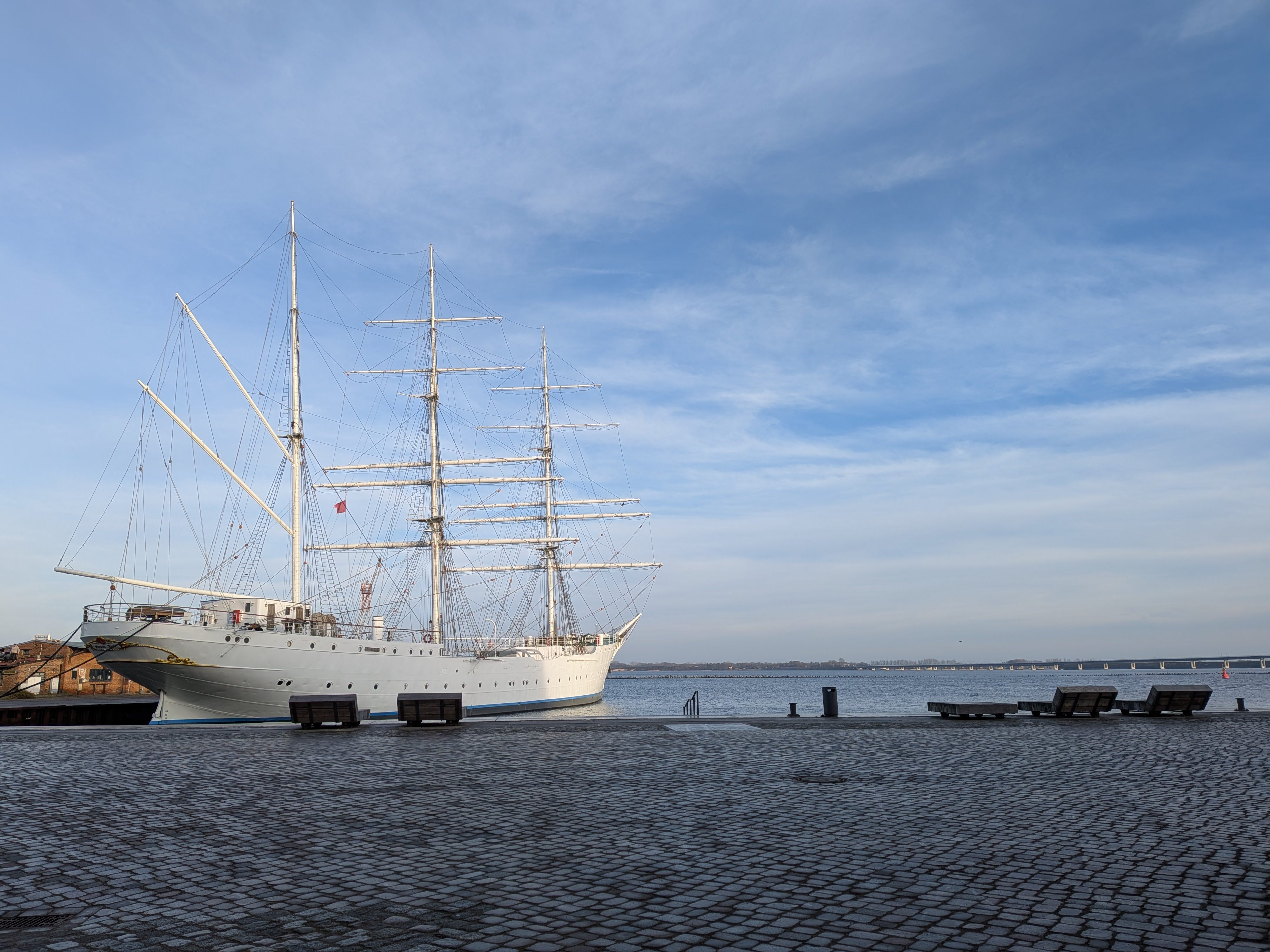
The same is true of Stralsund’s old town, a UNESCO World Heritage Site filled with towering brick churches and narrow streets that speak of centuries of trade and seafaring wealth. Stralsund is a reminder that this part of Germany has always been connected outward, across the Baltic to Scandinavia and beyond. Standing on the harbour, watching ships and boats move in and out, it becomes clear that this region has never been as isolated as stereotypes suggest.
From Stralsund, a Nazi-era causeway and a newer bridge, completed in 2007, lead to Rügen, Germany’s largest island and one of its most dramatic landscapes. This time, I decided to drive, since I had only a weekend and so many places and people to see.
Nonetheless, I walked a lot once on the island and also had the opportunity to take the narrow-gauge railway nicknamed “Raging Roland”, which first began operations in 1895. I’m glad I had the opportunity to see so much of the island and its occupants in such a short time. There is something very soul-pleasing about the place.
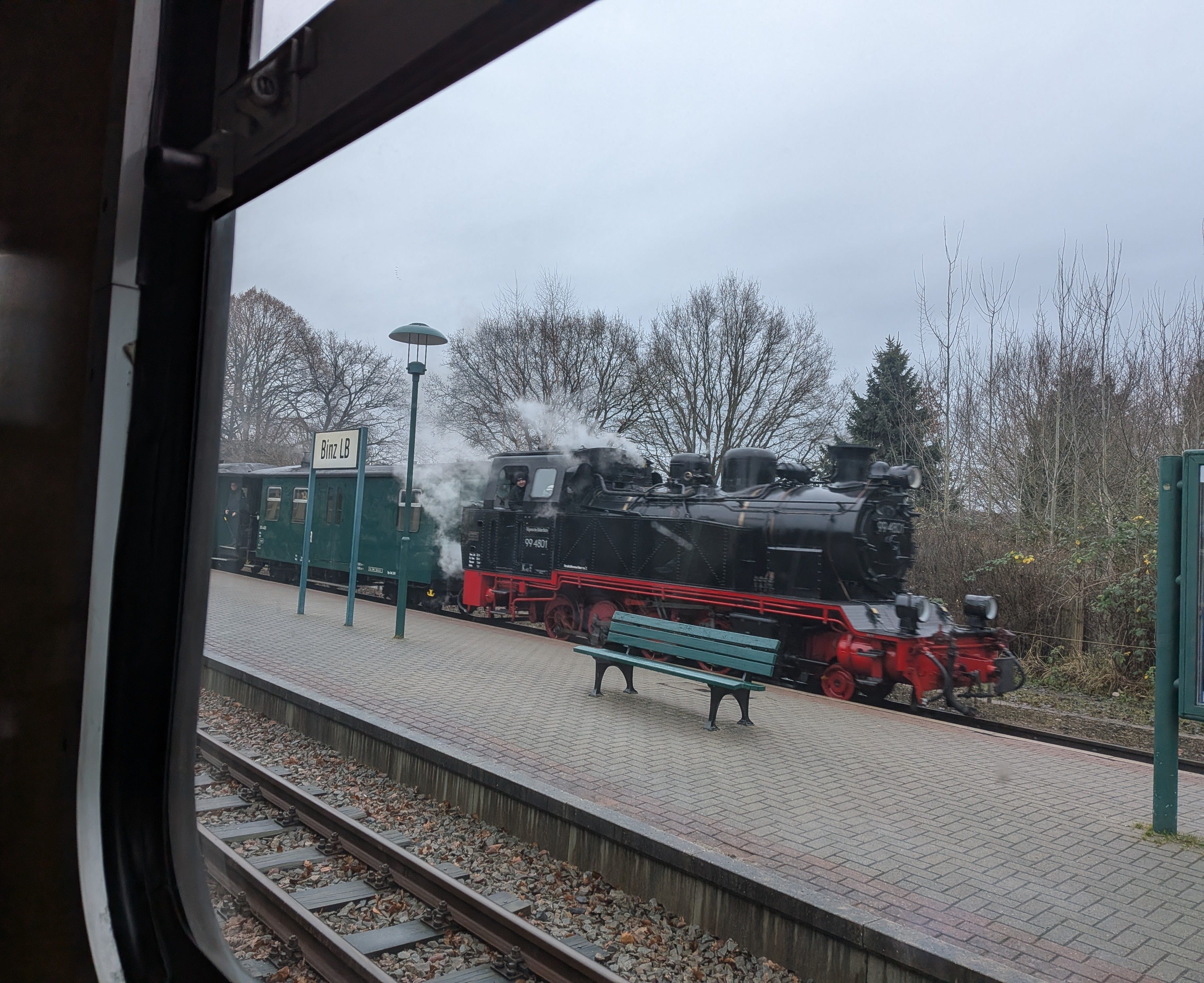
Chalk cliffs rise sharply from turquoise water, especially in Jasmund National Park, where ancient beech forests meet the sea. Rügen feels almost unreal at times, like a painting or a postcard. Yet alongside the natural beauty are traces of history: seaside resorts with elegant villas and the unfinished Nazi-era resort at Prora, a stark reminder that even the most beautiful places can carry heavy pasts. Rügen captures one of Eastern Germany’s defining tensions: the coexistence of beauty, history and unresolved memory.
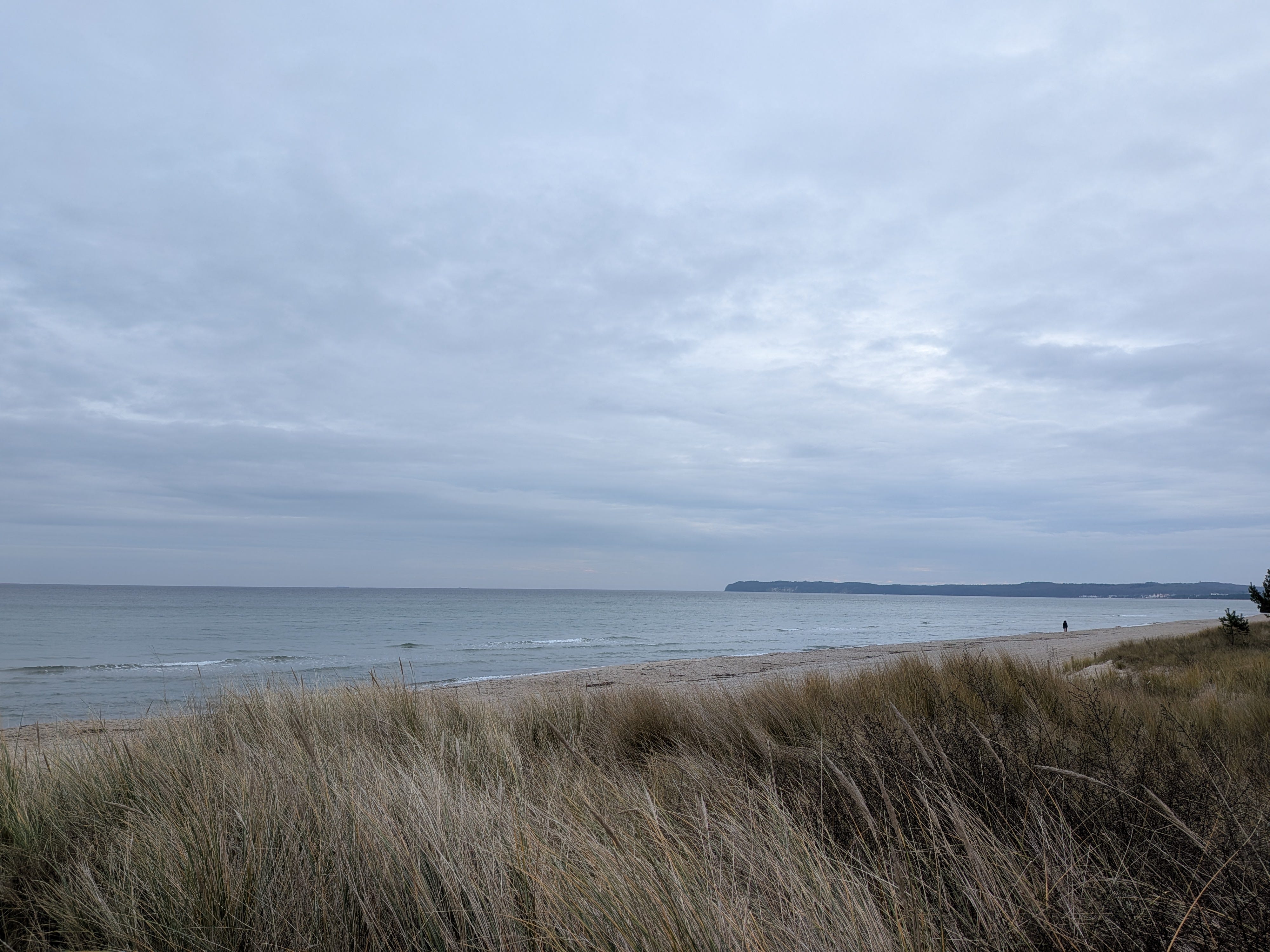
Soon, it was time to head south… all the way south. Back at Stralsund station, I was waiting for my train to Thuringia, the southernmost of the eastern states, which borders Bavaria. Around me, the platform was buzzing with pre-Christmas traffic. A fretting mother was kissing her teenage daughter goodbye, telling her for the fifth time not to forget to get off in Berlin, where her grandmother would be waiting for her. An elegant elderly lady asked if she was in the right place for first class. Having forked out on that myself, given the length of the journey ahead and the anticipated business of the train, I reassured her that she was and helped her heave her heavy suitcases onto the train.
As I settled into my seat, we rolled south at high speed, and the landscape began to change. Flat, wide horizons gave way to Berlin’s grey sprawl and then to more hilly terrain as we crossed into central Germany.
I had to change trains in the Thuringian capital of Erfurt, where the station was brimming with travellers. Naturally, my connecting train was late. This was “due to lateness of the driver”, came the announcement, accompanied by the groaning chorus of annoyed passengers on the platform. When the woman eventually turned up, she explained that her previous train had been late and that she had desperately needed the toilet before driving ours. More information than I had needed at that point, but she clearly felt better for having parted with it.
As my regional train entered the Thuringian Forest, the dense woodland surrounding us was barely visible in the dusk. I had to smile anyway. I know this landscape well, having spent many happy holidays there in childhood. My father’s side of the family is from this part of the world, and as someone raised on the flat, sandy plains of Brandenburg, I always thought of Thuringia’s green mountains that turn into a winter wonderland in December as pure magic.
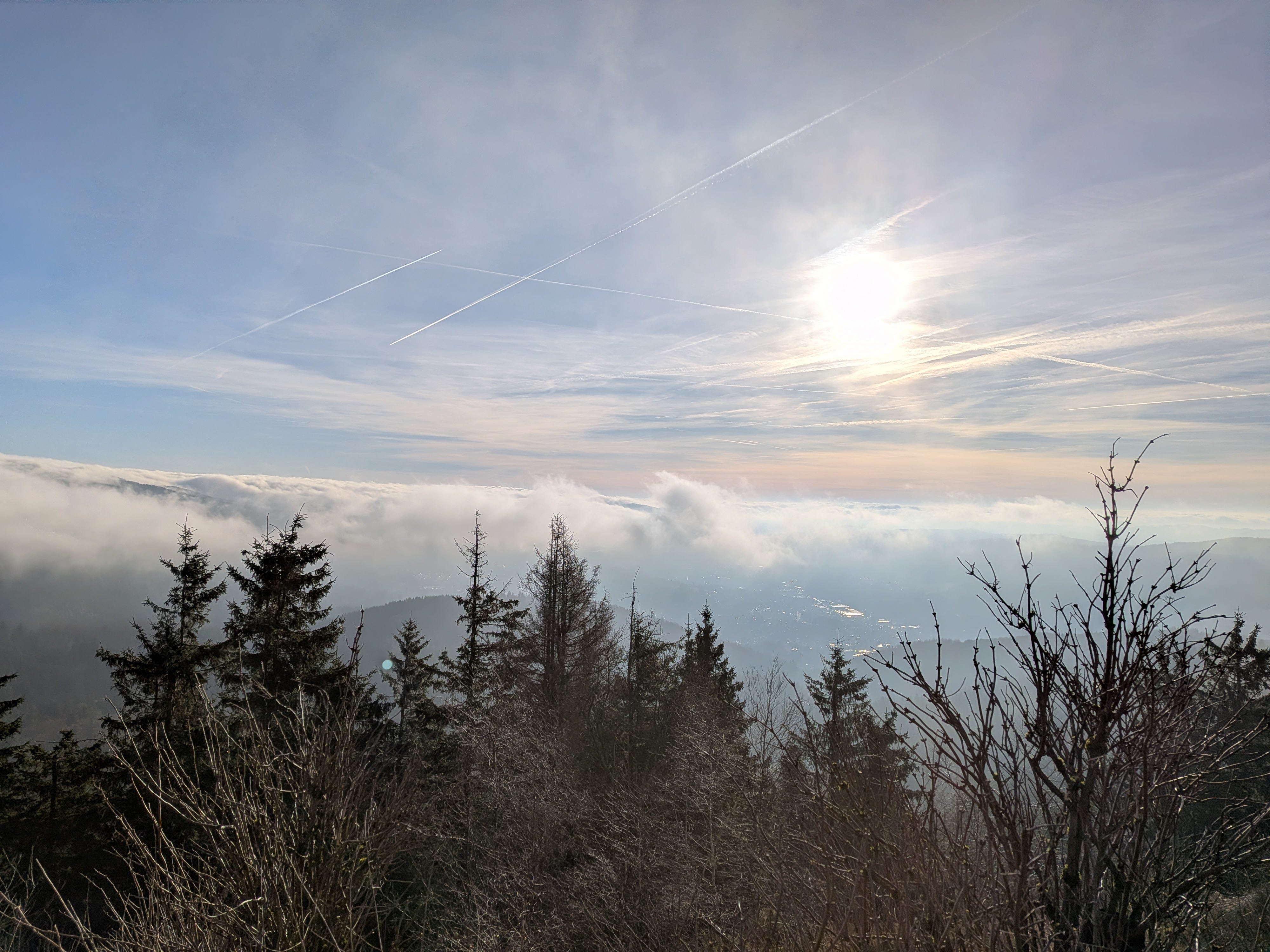
This is hiking country, where trails wind through spruce forests and small towns appear almost unexpectedly between valleys. Thuringia is sometimes called the “green heart of Germany,” and it earns the name. But it is also a cultural heart, the land of Bach, Goethe and Schiller. In nearby towns like Eisenach or Weimar, German cultural history feels close and tangible, not locked away in museums but woven into everyday life.
The forest itself feels grounding, a place where time stretches and modern urgency fades. As in so many years gone by, I spent a couple of days hiking with family. In the evening, we lit a large fire outside, enjoying mulled wine and each other’s company while wrapped up in blankets against the cold.
Then it was time to journey north again to the region east of Berlin, where I grew up. In contrast to Thuringia, rural Brandenburg offers vastness rather than enclosure. The land flattens out, and the sky seems to expand. Fields, lakes, and sleepy villages dominate the view, interrupted occasionally by wind turbines or abandoned farm buildings.
Brandenburg is often passed through on the way to Berlin, rarely treated as a destination in its own right, except by busy Berliners in need of a weekend retreat. Yet its stillness is its strength. There is space here, physical and mental, that is increasingly rare in Europe. People sometimes joke that even wolves have returned after years of extinction because they have enough space and their natural habitats to themselves. It is a place to understand the rhythms of rural life in the east, shaped as much by ancient farming as by socialist collectivisation and post-reunification change.
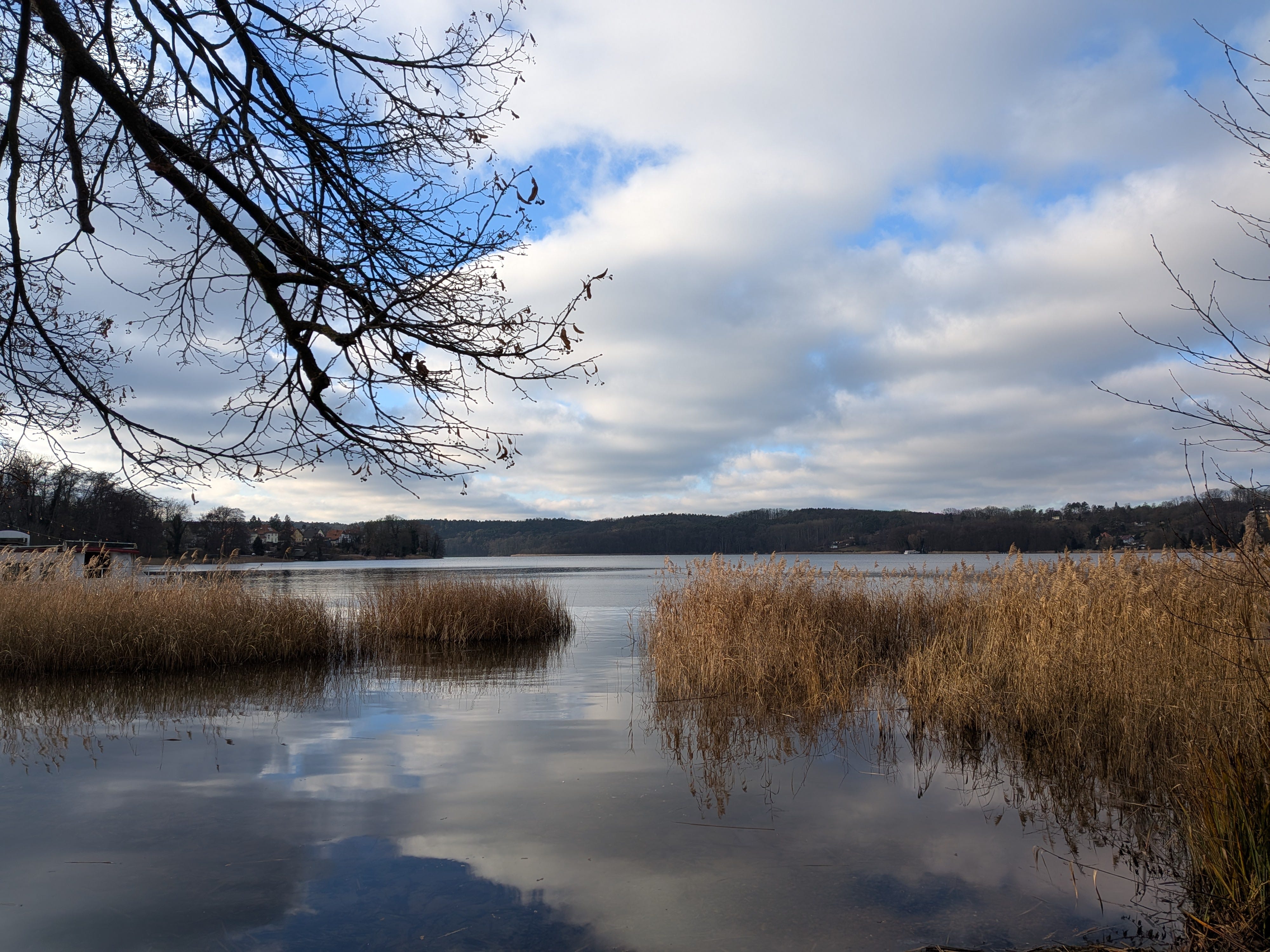
I borrowed my Mutti’s car and drove around to visit old friends as well as family. Happy days were spent walking, drinking, eating and chatting about times gone by and the future. As is often the case at Christmas, the familiarity of rituals and habits jarrs with change. Some things and people have gone, others remain, yet others have arrived. My dad died at Christmas two years ago, and there was much in the landscape of my youth that reminded me of him. But there were also buildings, roads and children he would never get to know. Brandenburg’s still, icy lakes and its barren winter fields have a way of capturing such bittersweet reflections.
My journey ended in Berlin, a city that sharpens all these contrasts within itself. Berlin, usually so restless, layered and endlessly discussed, appeared serene and quiet in the post-Christmas calm. Doused in bright winter sunshine, its streets were unusually devoid of people. With the temperature dropping well below zero, the crisp, fresh air cleared my head and burned my cheeks.
As I walked down the famous Unter den Linden boulevard, the Brandenburg Gate behind me, I looked forward to the warmth of the Einstein Cafe, which I was heading for. But seeing Berlin in this unusually quiet moment, without tourists, workers and locals rushing about, also gave me some room to contemplate how it fits into the East German landscape.
After travelling through smaller towns and landscapes, Berlin felt less like a culmination of my journey and more like an exception. Yes, its creativity, its scars and its openness are rooted in the wider region. The former East Berlin neighbourhoods, in particular, echo the broader journey: areas once overlooked and run-down now defining the city’s energy and appeal. Yet, as the German capital, it carries a different weight. It’s also changed faster and more deeply than anywhere else. But perhaps, it’s this that makes it exemplary again of a region that has undergone immense transformation since 1989.
Looking back now on a whirlwind of impressions, experiences, and encounters in the former East Germany, I think the conclusion I can draw is that it’s a region that defies simplification. It is coastal and forested, quiet and experimental, historically burdened yet forward-looking. Perhaps it remains underexplored precisely because it doesn’t fit neatly into a single narrative.
For those willing to look beyond clichés, Eastern Germany offers something increasingly rare: diversity without spectacle, depth without crowds and the sense of discovering places that are still, in some way, their own.
Yet again you provide excellent and evocative writing. So much so I've already read it twice.
Would it be fair to say that 110 plus years ago, some of these areas might have considered themselves as central rather than eastern Germany?
Fascinating travelogue, I wish I had travelled more in the east of Germany However, when I was living in West Berlin, I was in practice confined to East Berlin (haupstadt der DDR) though I did get to Potsdam. That had changed a great deal when I revisited some years after reunification. As for Berlin, it is an entirely different place, located in the east but not of it.