
On Holiday with the Stasi
How East Germany's secret police operated in Hungary

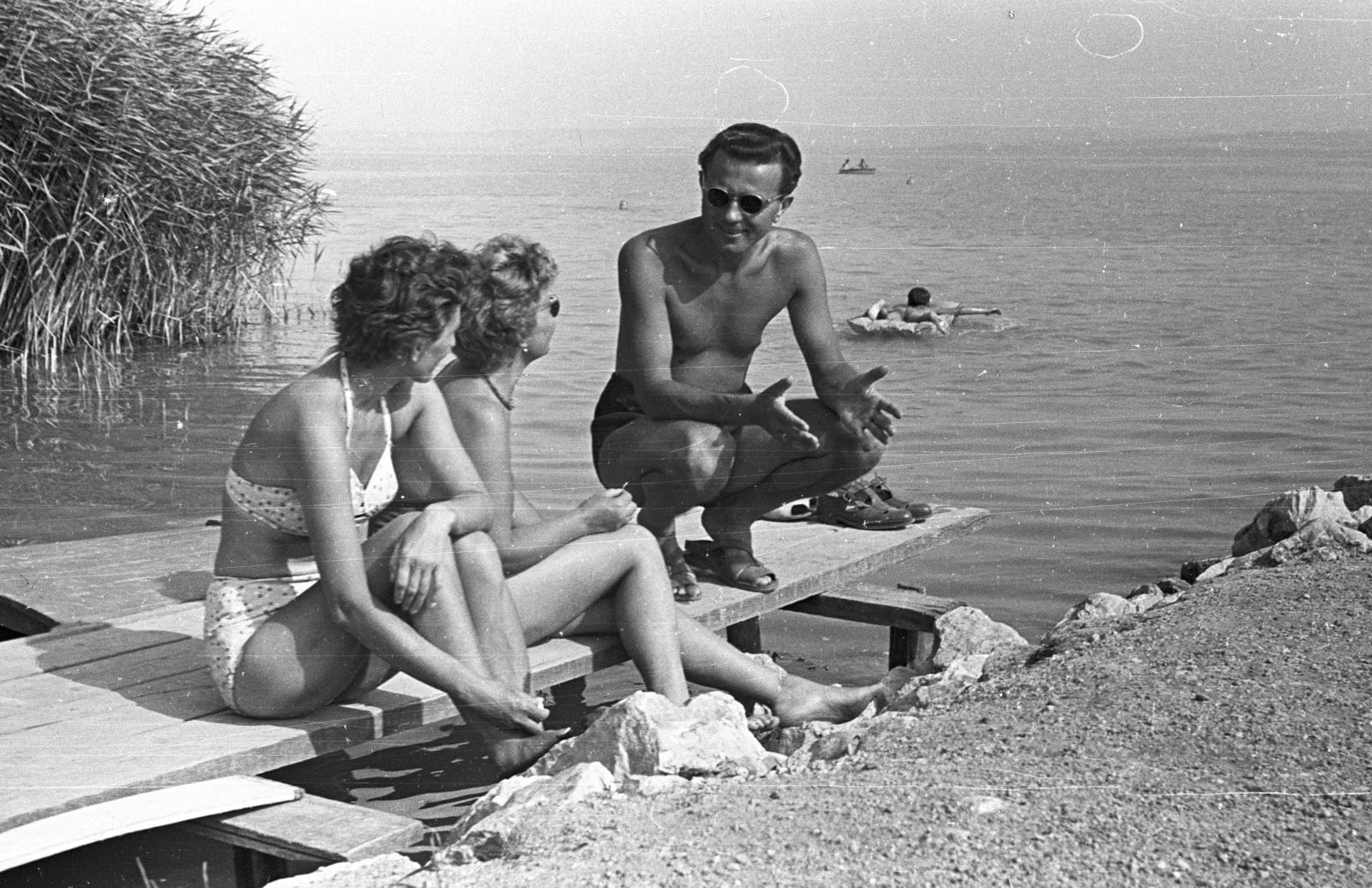
Picture a couple, say, a middle-aged man and woman. It’s the late 1970s. They are sitting on beach towels by the shores of Lake Balaton in Hungary, looking out over the flat, wide expanse of water as they apply sun cream and engage in idle chatter. That’s not how we usually picture Stasi agents, members of the East German Ministry for State Security.
Say “Stasi”, and what springs to mind are images of serious-looking men in horn-rimmed glasses operating out of grey rooms that are both window- and soulless as they eavesdrop on the lives of others. Indeed, surveying and controlling the East German population at home in the GDR was the Stasi’s core task. But there was a lesser-known branch, too, which spied on people where they felt most free: on holiday.
I wasn’t expecting to think about sunbathing spooks this week. After all, my head is currently firmly stuck in the interwar period, a time when the future Stasi leader Erich Mielke was still a young man, if already an extremist willing to commit acts of murder and terrorism in the name of his ideology. I’m still on a manic WEIMAR tour. Indeed, I’m writing this from my seat tens of thousands of feet above European soil on a plane from London to Hamburg, where I’ve been invited to talk about the book on one of Germany’s biggest TV talk shows: Markus Lanz.
Yet on Tuesday morning, I found myself in a wonderfully evocative “mid-century” building in Peckham, South London, filming for a documentary about the collapse of the Soviet Union. “Tell me about Stasi operations in Hungary,” said the director, and as I sat on my 1970s chair, surrounded by plywood-pannelled walls, images of East German agents in swimming trunks flooded my mind. Let me share some of those with you.
The fact that East Germans couldn’t freely travel to West Germany or anywhere else beyond the Iron Curtain is well known. But there were places within the Eastern Bloc one could go to experience different cultures, languages, currencies and cuisines. And one of the most appealing for East Germans was Hungary. For hundreds of thousands of tourists from the GDR, a summer trip to the capital, Budapest, or to Lake Balaton offered a sense of freedom and adventure.
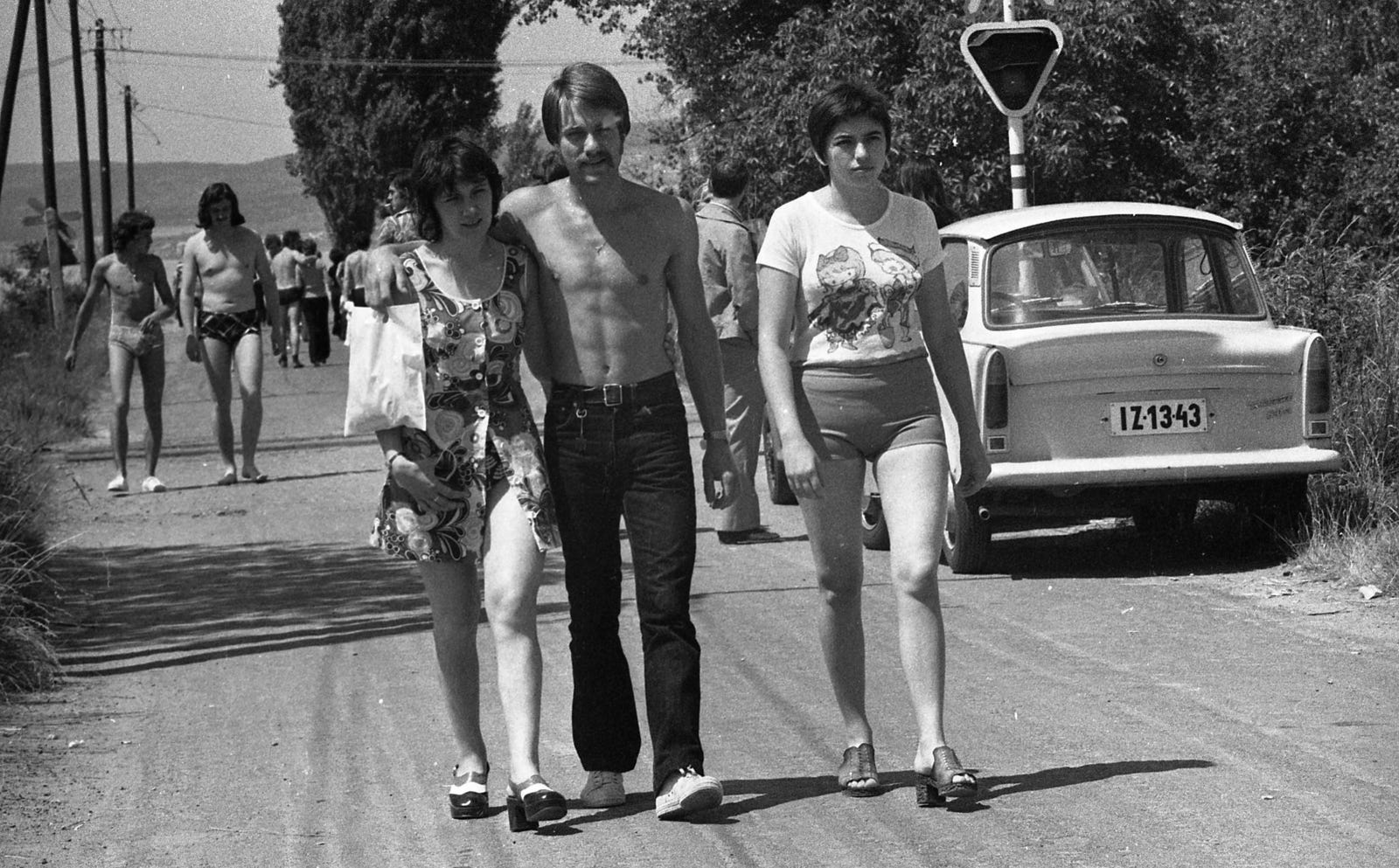
There were several reasons why Hungary was a firm favourite. For one thing, the country’s longstanding connection to Austria, and therefore to the German-speaking lands, allowed for a great mix of familiarity and exotic appeal. Goulash, a national dish of Hungary, for instance, is also an all-time favourite in Germany.
In addition, by the 1970s and 80s, Hungary had gained a reputation for being one of the more liberal countries in the Eastern Bloc. The term “Goulash Communism” is often applied to the period following the crushing of the Hungarian Revolution of 1956 by Soviet troops and tanks. This may sound a little counter-intuitive, but the regime attempted to avoid a repeat of unrest and implemented reforms to raise living standards and improve personal freedoms. Those reforms worked and earned Hungary a reputation as the “merriest barrack in the socialist camp”.
If you’re interested in learning more about that, you could listen to my interview with the Hungarian-born Nobel Prize laureate Katalin Karikó about growing up in a state that offered excellent education and childcare as well as brutal oppression and secret police surveillance.
For our purposes here, the important thing is that those Hungarian freedoms included a more porous membrane between East and West. There was economic trade between Hungary and Western Europe. Restrictions and bureaucratic hurdles were in place, but generally speaking, Hungarians also found it easier to travel to Western countries than East Germans did.
A key factor here was that Hungarians were more reluctant to leave permanently. For East Germans, there was another Germany on the other side of the Iron Curtain, but there was only one Hungary. Kati Karikó moved to the US during the Cold War and found that she never lost her love for her home country, sending her young daughter back there on her own for weeks and months each summer so that she would retain her Hungarian heritage and stay in touch with her roots.
This relative opening also meant that Hungary hosted many Western visitors during the holiday season. As a result, it was a great place for East and West Germans to meet. That aunt from Hamburg you rarely got to see if you lived in Dresden because the GDR regime didn’t trust you to come back? Well, you could hang around with her on the shores of Lake Balaton to catch up.
Hungary was a unique meeting place across the Iron Curtain, and therefore invariably a source of deep anxiety for rulers in East Berlin. So they did in Hungary what they did at home: spy on people. A Stasi “Balaton-Brigade” was established. Its mission in Hungary was to monitor East German holidaymakers, uncover contacts with West Germans, prevent potential defections and report home at regular intervals.
Initially, operations were seasonal. During the summer months, Stasi personnel were deployed to Hungary to keep watch over the growing number of East German tourists. Between 1970 and 1980, around one million people visited Hungary every year – a huge proportion of them from the GDR. As travel increased, so did the security apparatus. From 1975 onwards, the Stasi established a permanent presence in Hungary, with key centres of activity in Budapest and around Lake Balaton.
The Balaton Brigade consisted of professional intelligence officers, temporary operatives, civilian collaborators, and citizen spies known as unofficial informants (IMs). They were to mingle with the holiday makers while monitoring relationships between East and West German tourists. Who knew whether the aunt from Hamburg had brought more than coffee and hard currency for her eastern relations? What may look like an innocent campfire chat in the evening could be the sign of an escape plan being hatched.
Scenes like the one I described above were commonplace and the methods of the Stasi often remarkably mundane. Agents posed as holidaymakers, often travelling as married couples to avoid attracting attention. They stayed in hotels, campsites and holiday resorts, mingling with tourists while gathering information.
Because this was a pretty cushy posting, Stasi officials themselves referred to these assignments as a form of “operative holiday.” The agency even covered the travel expenses of both the operative and their partner, recognising that a convincing disguise was essential to successful surveillance. The more it felt like a real holiday, the more naturally the spies would blend in.
By the second half of the 1980s, the operation had grown considerably. During a typical summer season, between 50 and 60 agents and collaborators worked around Lake Balaton alone, accounting for more than half of the Stasi’s activities in Hungary. Yet despite this effort, the operation often struggled to achieve meaningful results.
Strangely enough, many East Germans were doing exactly what they said they were doing: being on holiday. Reports were compiled and sent home, but they often focused on regular tourists whose only suspicious behaviour was returning to Hungary in the summer.
But then the winds of change began to sweep across the Eastern Bloc. In Hungary, much of this change came from within as the ruling party began to open up and reform itself. Following a regime change in 1988, Hungary began making it easier for its citizens to travel to the West, aiming to break down its border with Austria, both physically and diplomatically, one step at a time. So what to do with the tens of thousands of East Germans who might want to use this route to get to Austria and then on to West Germany?
In 1989, Hungary became the centre of a growing refugee crisis. The pivotal moment came on 19 August 1989 when a so-called “Pan-European Picnic” was held near Sopron, close to the Austrian border. It was intended as a test to see if Hungary could open its borders to Austria without Soviet interference. Organised by Hungarian reformers, the event briefly opened a border gate between Hungary and Austria.
Hundreds of East German citizens seized the opportunity to cross into Austria, creating one of the most dramatic breaches of the Iron Curtain. The Picnic by Matthew Longo is worth reading if you’re interested in this incident.
As political reforms accelerated across Eastern Europe, thousands of East Germans travelled to Hungary hoping to find a route to the West. The Stasi responded by escalating its operations to an unprecedented level. Agents were inserted into refugee communities and camps with instructions to identify would-be escapees and determine who was organising or encouraging departures. They even tried to track down the owners of the many Trabant cars abandoned in Hungary as their drivers escaped. When they couldn’t, they had to organise their transfer back to the GDR. This was code-named Aktion “Sopron”.
Even as the Stasi intensified its efforts, the scale of the crisis overwhelmed its capacity to control events. The number of East Germans seeking to leave the GDR was simply too large. The Stasi had information about what was going on but not a clue what to do about it. The same applied to the political earthquake going through Hungary.
Stasi operatives had tracked reform movements, opposition groups, demonstrations and increasingly critical media coverage. They produced detailed reports, which were compiled at the East German embassy and forwarded to Berlin. They had titles such as “The Activities of Anti-Socialist Forces in Hungary” and “Alternative Political Forces and Groups in Hungary.” They reported on the collapse of socialist authority but remained unable to halt it.
By the summer of 1989, Hungary decided that it no longer wanted or needed to placate the GDR regime by allowing its own citizens to travel to Austria but not East Germans. It unilaterally ended the long-standing cooperation between Hungarian and East German security services. The consequences of the picnic were profound. What was the point in the Berlin Wall if East Germans could simply walk around it through Hungary and Austria? The refugee exodus was a key link in the chain of events that culminated in the fall of the Berlin Wall in November 1989.
The story of the Stasi in Hungary captures the inherent contradiction of dictatorships. No matter how far-reaching and extensive its surveillance network may be, it will never be enough to stem the tides of change once they have gathered enough force. The system could identify individuals and file reports, but it couldn’t suppress the desire for freedom.
So what happened to the Balaton Brigade? Well, it survived surprisingly long. The Stasi headquarters in East Berlin was stormed by people in January 1990. Only a month later, in February 1990, the Stasi’s operational group in Hungary was finally dissolved. Today, Hungary is visited by over 20 million people a year. The largest single group still comes from Germany.
Ooh that was such an interesting read ,just recently there was a TV programme on BBC Michael Portillo and his great European railway journeys, he basically goes to places by train whilst wearing some rather colourful outfits, anyway this particular episode he was in Hungary and actually went Sopron talked to someone about 'The picnic' so it hasn't been forgotten. Also I see 'The lives of others' is being made into a play with Keira Knightly.
That was fascinating. I did not realise about this widening hole in the Curtain and its significance for the eventual dismantling of the Wall. Thank you as always.