

“That’s the pleasant thing about travelling,” wrote the poet Johann Wolfgang von Goethe in his Italian Journey, “that even the ordinary, through being new and surprising, appears as an adventure.” That’s exactly how I felt this week. From eating simple but delicious pasta dishes to taking the train from Verona to Venice, passing through lovely Vicenza and Padova along the way, you can do some very ordinary things in northern Italy that appear utterly extraordinary to someone who sees their beauty with fresh eyes.
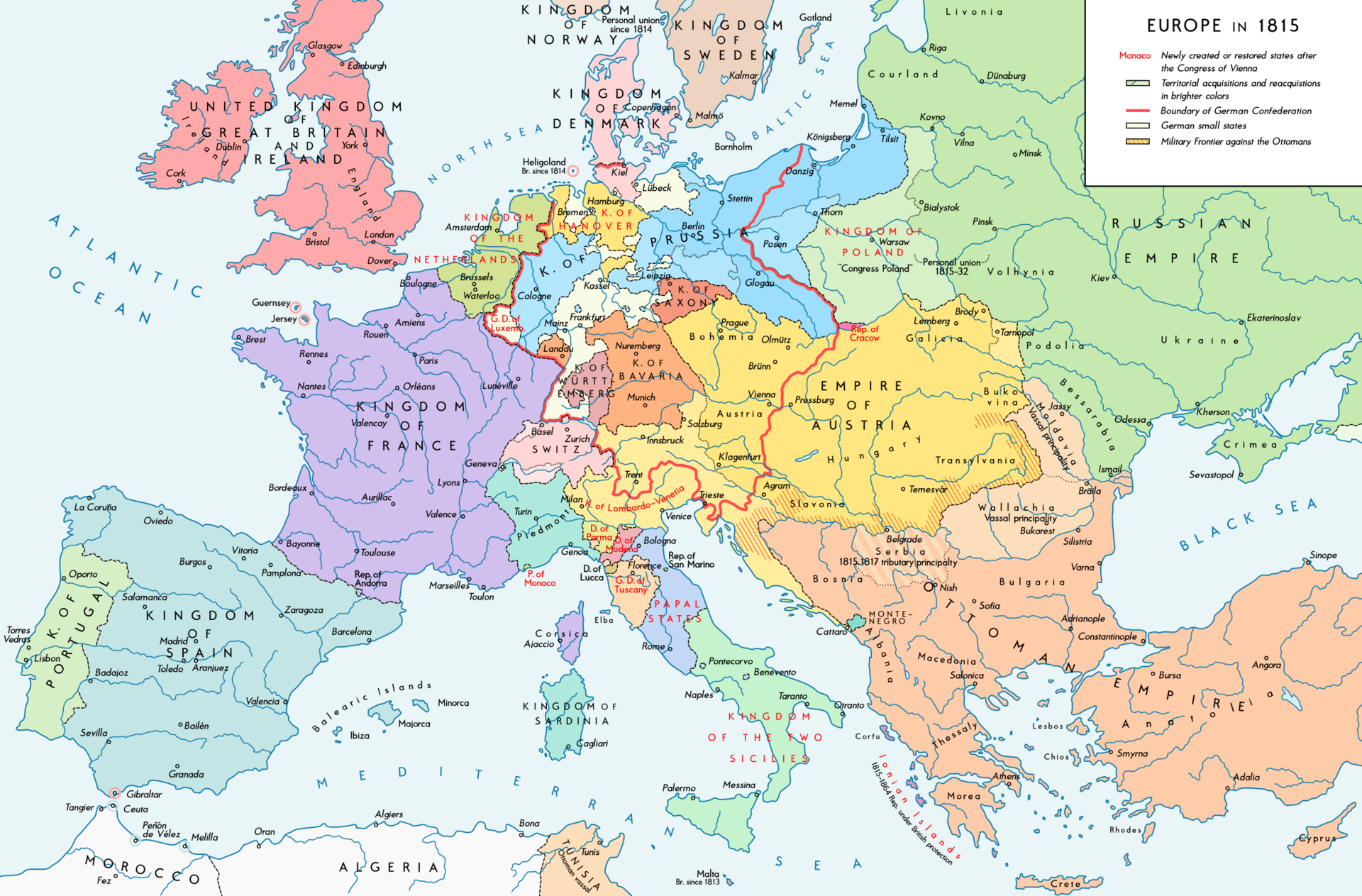
But I didn’t entirely escape my more familiar German territory. The northern Italian region that includes places like Verona, Venice, Milan and Bergamo was part of the Kingdom of Lombardy–Venetia, which was created in 1815 as part of the post-Napoleonic map of Europe drawn up at the Congress of Vienna. Until 1859, when it began to break away as part of the process of Italian Unification (also known as the Risorgimento), it was a constituent land of the Austrian Empire. It’s also very close to the majority German-speaking province of South Tyrol.
So there’s plenty of German/Austrian cultural influence on display everywhere, from the use of “speck” (a distinct type of dry-cured, lightly smoked ham) in pasta and pizza to the pale, lager-type beers made in local breweries.
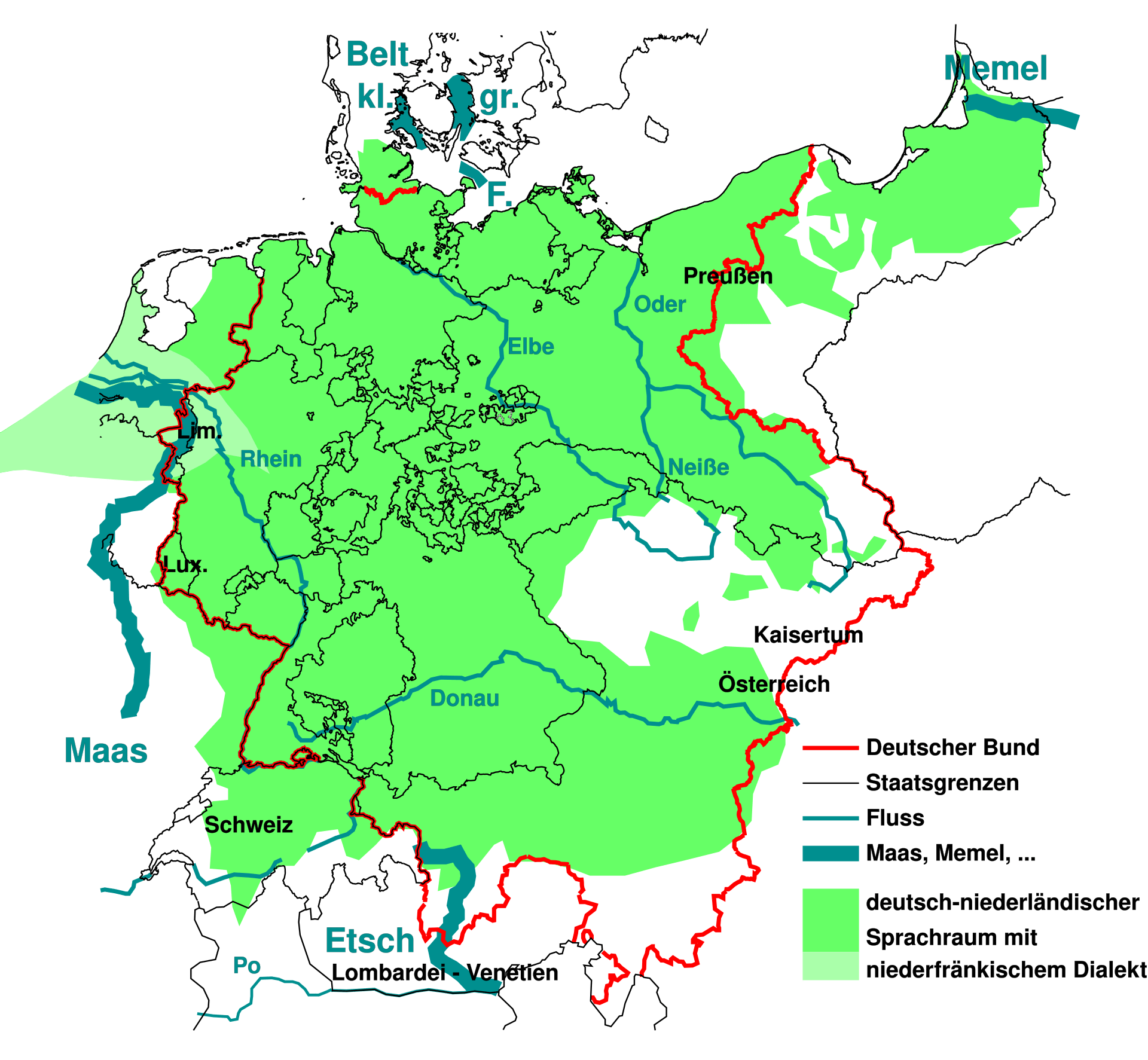
I also found myself standing on the banks of the Adige, Italy’s second-longest river, thinking about Germany. That’s not as far-fetched as it may sound. The German name of this river is Etsch, and it actually gets a mention in the German anthem… well, in the first stanza, the one that we don’t sing anymore because it starts with “Deutschland, Deutschland über alles” — “Germany, Germany above all” and was used alongside the “Horst-Wessel-Lied” during the Nazi regime.
In this part of the Deutschlandlied, Germany is defined as the land that reaches “From the Meuse to the Neman, From the Adige to the Little Belt.” The River Adige seems an odd demarcation of Germany when you’re looking at it from the Ponte Pietra bridge in Verona — a city that couldn’t be more Italian-looking if it tried. But it makes more sense when you consider its northern section in South Tyrol.
For any historian of Germany, northern Italy also offers plenty of medieval evocations. Due to the close political, religious and conceptual relationship between the Holy Roman Empire and the Italian lands, some of the most famous episodes of German history unfolded here. Take the Walk to Canossa.
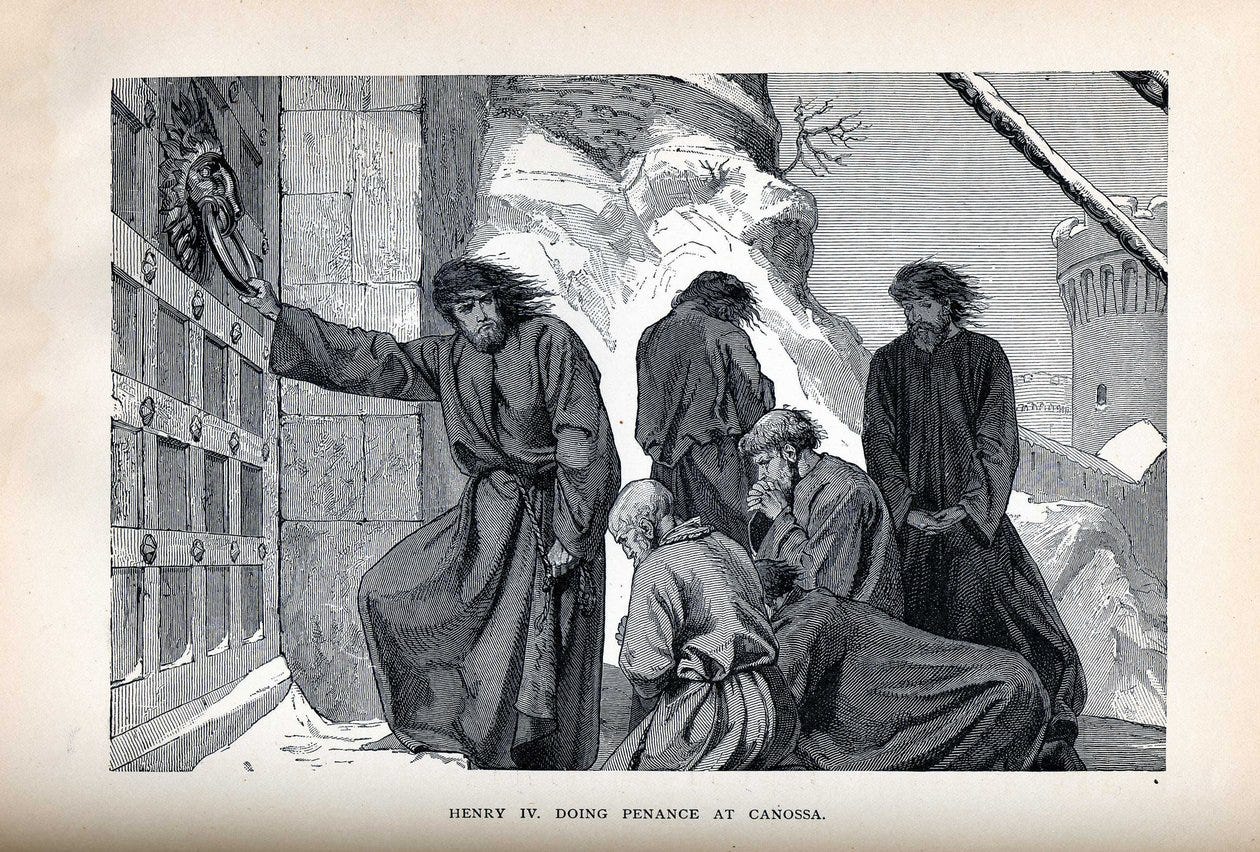
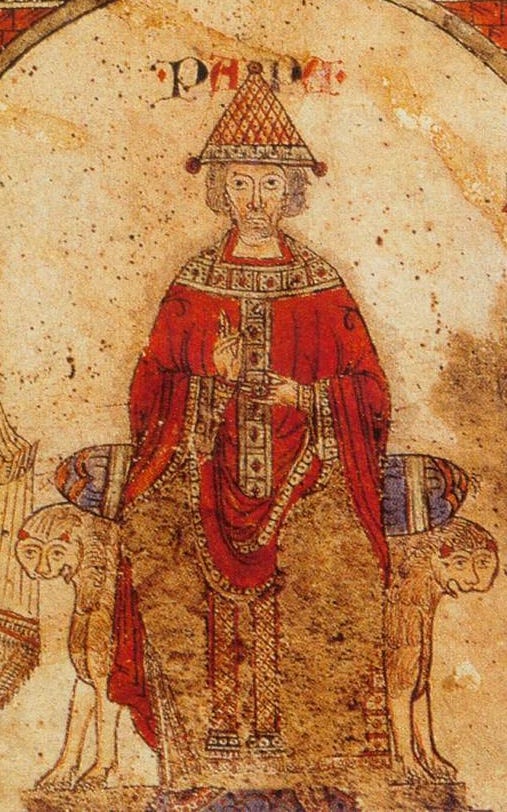
In the winter of 1076–77, the Holy Roman Emperor Henry IV crossed the Alps on one of the most reimagined journeys of the German Middle Ages. He made his arduous, dangerous way to Canossa Castle, now a ruin, in the province of Reggio Emilia in northern Italy. "There, he sought to meet Pope Gregory VII, who was being sheltered by the powerful Margravine Matilda of Tuscany. The journey brought Henry deep into northern Italy, along routes that had long connected the German kingdom with the territories south of the Alps.
The reason Henry undertook this perilous journey was a rapidly escalating struggle between him and the Pope over the authority of the Church and the right of rulers to appoint bishops. It was part of a wider “Investiture controversy” between the Church and worldly rulers over this issue. Henry and Gregory both stood their ground, each suffering grave consequences.
Gregory was being attacked, and Henry demanded his abdication as Pope. Gregory in turn excommunicated him. In a world dominated by Christian practices, such exile from the Catholic Church has all manner of consequences, not least that it put into question any oaths of allegiance sworn by Henry’s underlings and, finally, his very kingship, the right to which was, after all, derived from God. So this was bad for Henry, very bad. He needed to act fast.
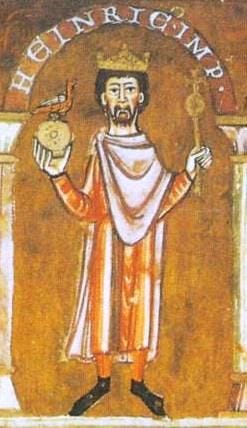
Henry needed to get back into the Church, which in turn meant securing reconciliation with Pope Gregory, who now appeared to hold all the cards. When he learned that Gregory was travelling towards Germany, Henry crossed the Alps to intercept him.
Finding the routes to the Alpine passes blocked by rebellious nobles, Henry had to take a dangerous detour through the western Alps, via Besançon and Geneva, and across the Mont Cenis into the Val di Susa. From there he travelled through Turin, Pavia and Piacenza before turning towards the Apennines and the territory controlled by Matilda of Canossa.
There’s some controversy over how dangerous this really was. On the one hand, these were established routes, used by other rulers, armies, churchmen and travellers moving between northern Europe and Italy. On the flip side, crossing the Alps in mid-winter and in great haste was never a good idea, and the chronicles of Lambert of Hersfeld claim Henry’s journey posed a risk to life.
Gregory, meanwhile, had reached Lombardy but, on hearing that Henry was approaching, withdrew to Canossa Castle. Henry finally arrived there with a small entourage on 25 January 1077. The Pope demanded that the King not be allowed entry. What happened next became the stuff of legend and burnt itself deep into Germany’s collective memory.
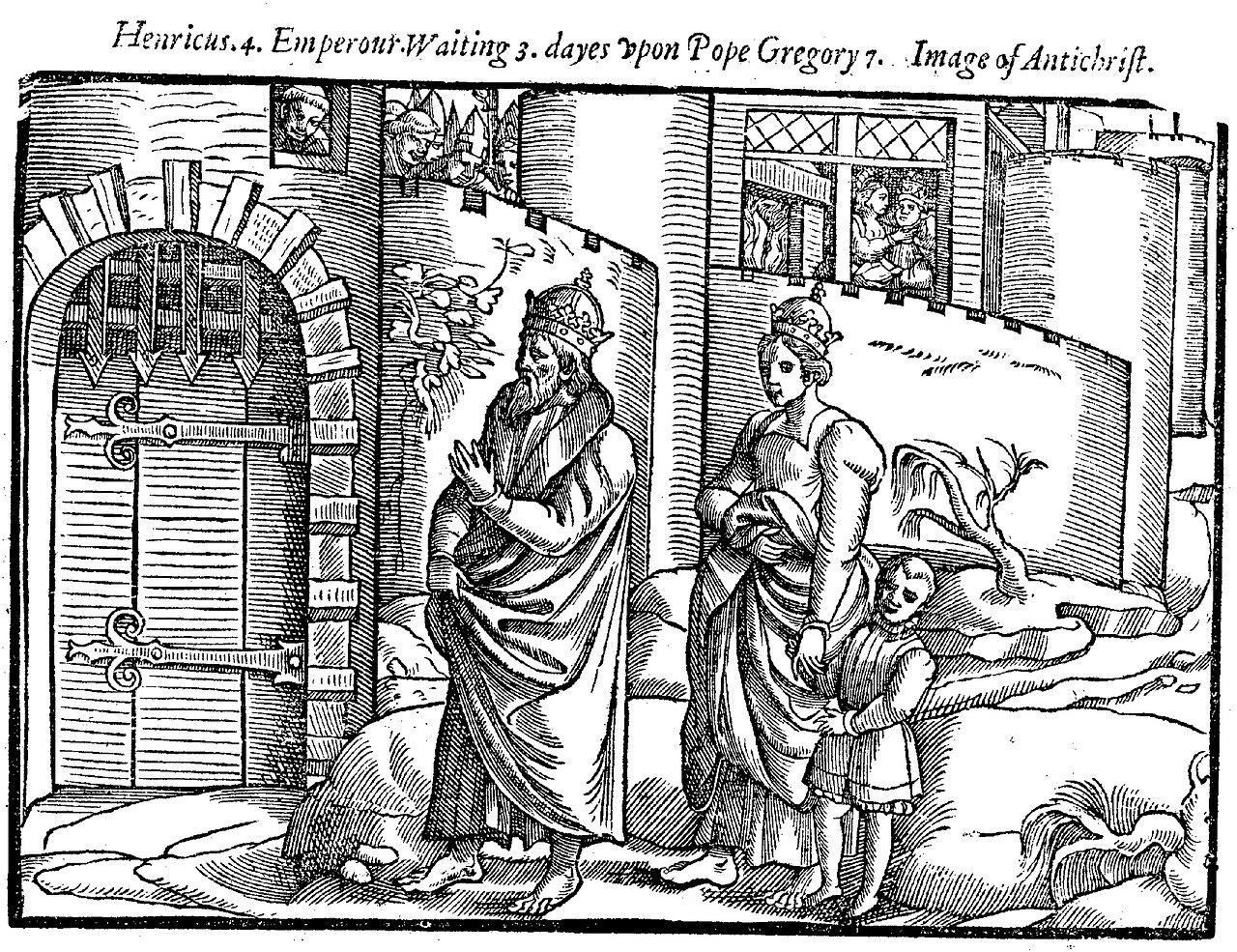
According to Gregory VII’s own account, Henry appeared as a humiliated penitent. Allegedly, he was barefoot on the freezing ground and dressed in a hairshirt, designed to irritate the skin and be supremely uncomfortable so that the wearer be reminded of their sinful ways. According to various accounts, Henry remained outside the castle without food for three full days, apparantly crying non-stop — oh, and there was a blizzard raging, too — before finally being admitted to see the Pope.
On 28 January, the gates of Canossa opened to admit Henry. The King is said to have been on his knees, pleading for forgiveness before the Pope finally absolved him and readmitted him to the Church.
The effects of this meeting and the precise details of what happened remain contested to this day, but that hasn’t stopped the episode from becoming one of the most referenced incidents in German history.
Many centuries later, the first German Chancellor Otto von Bismarck, embroiled in a bitter “Kulturkampf” or “Culture War” with Pope Pius IX over the future of religion in Germany, swore to stand firm against political influence from beyond the Alps. He told parliamentarians: “We will not go to Canossa – neither in body nor in spirit!”
To this day, “walking to Canossa” is a phrase used in German to invoke an act of humiliating submission — a fitting reminder that the political worlds of Germany and Italy were once inseparably connected.
And now, excuse me as I turn my back on Canossa and Italy — albeit not on Catholic Europe — as I make my way to Ireland, where I will be speaking tonight at the Big Weekend of the Dublin Festival of History. While it means saying goodbye to pizza and aperitivo and hello to work and manic travelling, I’m greatly looking forward to this, as my talk will be hosted by none other than the German historian Robert Gerwarth, whose books I highly recommend, especially The Vanquished: Why the First World War Failed to End, 1917–1923, which I found to be an eye-opening read about interwar Europe at the time.
So, Arrivederci and Auf Wiedersehen, Italia, until we meet again.
Safe travels and thanks for taking us your Italienische Reise!