

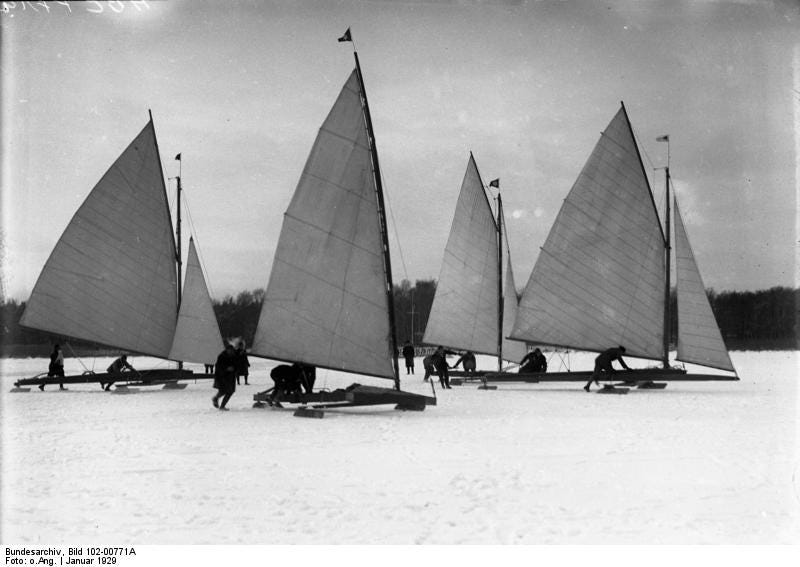
I’m getting lots of messages and images from Germany at the moment that seem to be from a different time. Or out of a storybook. They show children wrapped up in thick snowsuits, and they speak of adults ice-skating on lakes. People tell me they got their ski equipment down from the attic for the first time in years. Together, those impressions look like a nostalgic winter postcard in my head.
Schools have been closed in many places across the country, so that far more children are out and about than usual, enjoying the winter weather and the snow. And it’s clearly not just children enjoying themselves. The last voice message I had from a friend was interrupted mid-sentence by a long “wheeeee” as she decided to slide rather than walk from the iced-up car park to the front door of her office.
Of course, there is plenty of serious news too. Snowstorms have brought transport to a standstill, cancelled flights and trains and reminded communities from Berlin to Bavaria of just how powerful winter can be. This was particularly true when a five-day blackout, caused by an arson attack, hit the German capital last week, leaving people freezing in sub-zero temperatures.
Germany is in the grip of a remarkable winter that has grabbed headlines and disrupted lives. Yet, despite all these stories of upheaval and wonder, an annoying little part of my historian’s brain keeps pointing out unhelpfully: “There were even colder winters in the past, you know? And history does not much care for them. Even the coldest winter of the 20th century is now largely forgotten.”