

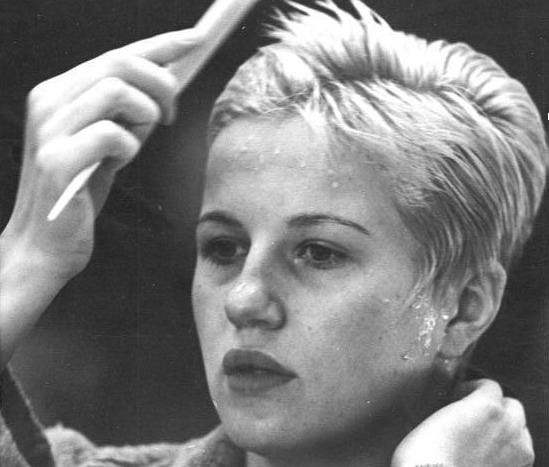
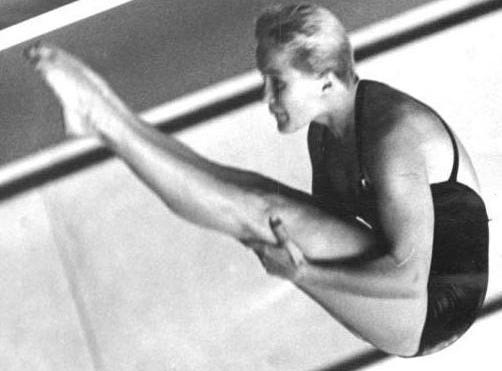
Ingrid Krämer-Gulbin is dead. “Who?” I hear you ask. Her name is largely forgotten today, but in the early 1960s, she was an international sporting sensation, winning Olympic gold and setting a record that would not be broken for three decades.
An East German athlete, she nonetheless competed for an all-German team, even carrying the black-red-gold tricolour – devoid of any symbols bar the Olympic rings – into the stadium in 1964, representing the whole nation rather than one of the two German states.
As an athlete, she was so spectacularly successful – and intensely charismatic to boot – that she remains the only person ever to be named sports personality of the year by both East and West Germany.
Her story reveals much about the Cold War and the role sports played in it. It’s a story about so much more than the lazy reduction to doping and politics often suggests. Following her death at the age of 83 a few weeks ago, the remarkable life of Ingrid Krämer-Gulbin and her role in elevating sports in East Germany to a national project is well worth revisiting.
It’s a story I’ve long been intrigued by, not least for personal reasons. I was barely more than a toddler, still in kindergarten, when I joined a gymnastics team in the late 1980s. This was the end phase of the GDR, but nobody knew that at the time. Sure, the state economy was on its last legs, and that much was obvious to many people. But sports was an area where East Germany continued to do well.
Figure skater Katarina or “Kati” Witt had become a global superstar after winning Olympic gold in 1984 and 1988. Where the country of her birth had a reputation for being grey, dull and underachieving, she was a radiant and confident young woman conscious of her success and charisma.
At the Games in Calgary, Canada, in 1988, she performed in a figure-hugging dress complemented by glossy red lipstick and bold eyeshadow, a look she hoped would maximise the “30 long seconds” she had “to flirt with the 9 judges and not just the 7 gentlemen”, as she put it. She clearly made an impression. Time magazine had called her “the most beautiful face of socialism”.
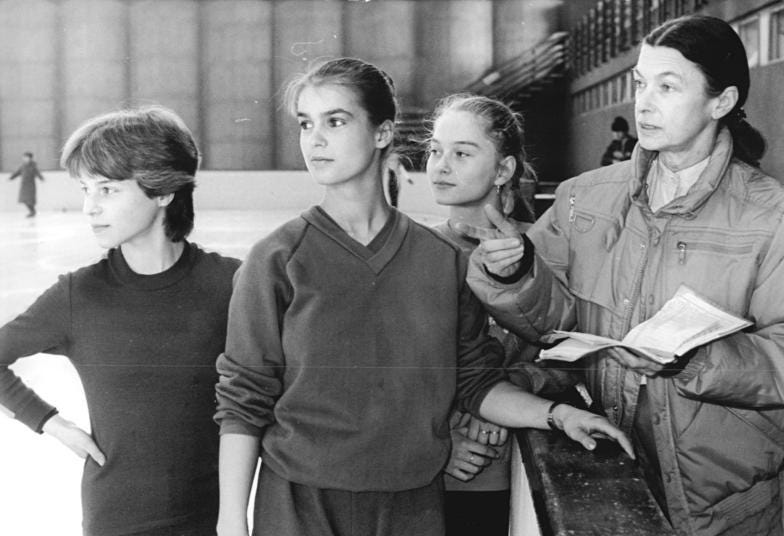
So competitive sports was very much a cool thing when I began to engage with it as a child. As far as I know, it’s not a decision I or my parents consciously made. Physical activities were a big part of kindergarten life, and teachers always kept an eye out for kids who had the right physique or showed early talent in a particular field.
Apparently, I have a high proportion of fast-twitch muscle fibres, which is good for gymnastics. One of my best friends was also in the programme, so we could attend the gruelling training sessions together. While I continued this for years after German Reunification, I’ve often wondered how this hobby might have panned out if I’d been born a few years earlier. The GDR’s sporting culture was ambitious and enormously successful, but it came at a very high cost to many athletes, especially young women.