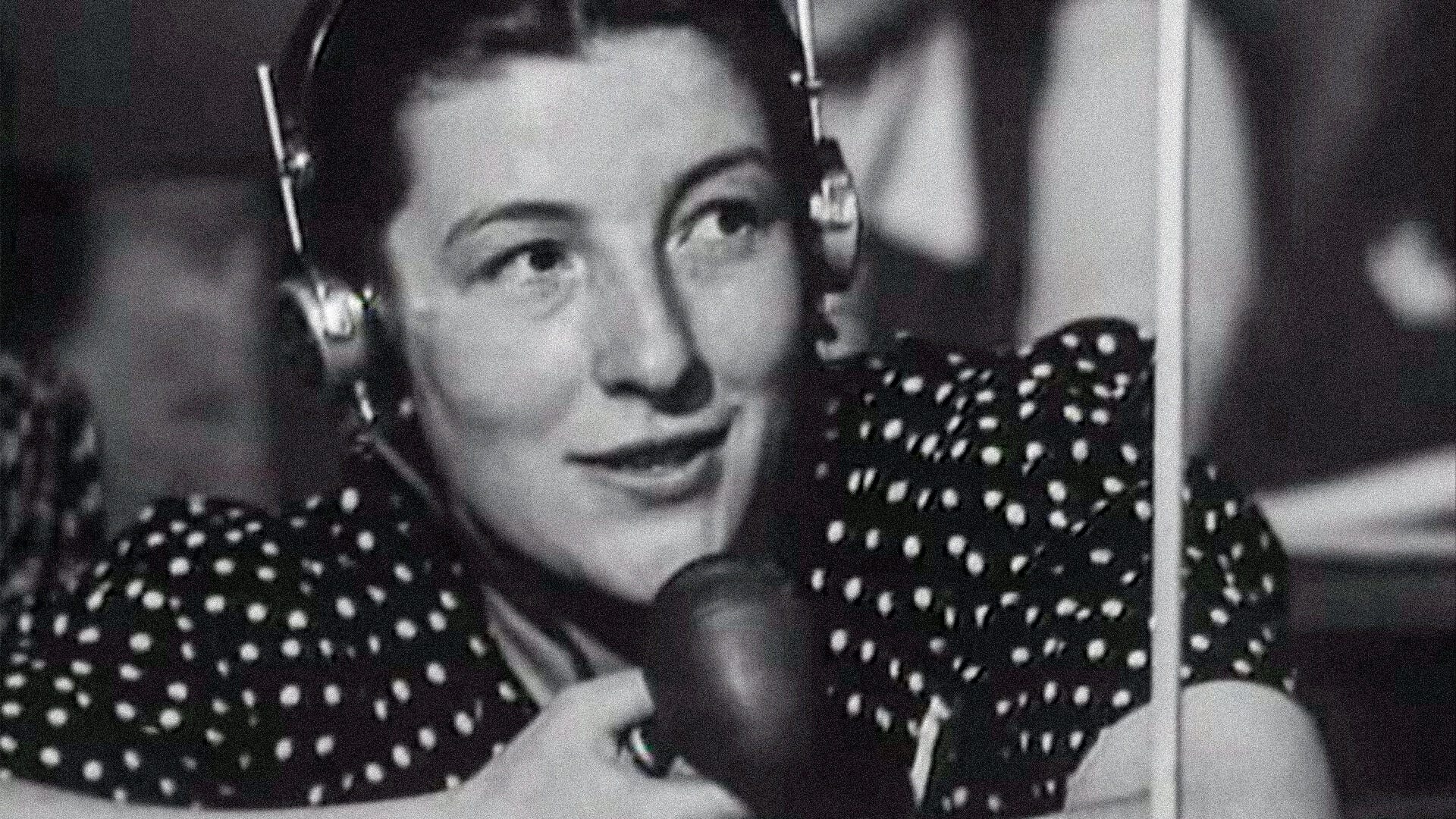
The Other Faces of Nuremberg
A new book shines a light on the forgotten architects of justice
The Nuremberg trials have always fascinated me. Intended to bring key members of the leadership of Nazi Germany to justice following the defeat of their country in war, they came up against a raft of challenges.
First, many of the Nazi leaders, including Adolf Hitler himself, were dead. Legally, there was the issue that prosecuting the remaining defendants would mean dealing with crimes of a scale and nature unprecedented in history. New concepts like “crimes against humanity” and “genocide” had to be defined in legal terms. Morally, the trials had to tread a careful line, being seen to administer justice but not victor’s justice. Politically, the international set-up saw powers working together that were ideologically opposed and would soon become bitter enemies.

How and indeed whether justice was achieved at the Nuremberg trials is an endlessly fascinating question that has kept generations of historians and legal scholars busy. Over the years, I read a number of books about them myself, including Ann and John Tusa’s 1980s classic: The Nuremberg Trial. Of course, 2025 and 2026 — being exactly 80 years after the trial — were going to spur a flurry of new publications on this topic, including the American film Nuremberg, with Russell Crowe as Hermann Göring (which I have yet to see, so no spoilers in the comments please).
So, at first glance, Natalie Livingstone’s new book seems to cover familiar ground: the Nuremberg Trials, a milestone of modern international criminal law, which took place between 20 November 1945 and 1 October 1946. But as the tribunals’ 80th anniversary takes place, she offers a fresh appraisal of their significance.
Rather than focusing on the prosecutors, judges and defendants, she turns her attention to the women who worked around and within the trials, revealing how indispensable they were not only to the practical functioning of postwar justice but also to the emotional and moral atmosphere surrounding the trials.

Much of what makes The Nuremberg Women a stand-out achievement is encapsulated in the story of the German journalist Erika Mann, the oldest child of the famous German writer Thomas Mann. “Even before arriving in Nuremberg,” writes Livingstone, she had “lived an extraordinary life”:
“She had raced cars, staged cabarets, written several books, struck a marriage of convenience with the English poet W. H. Auden and taken a string of glamorous lovers, including a photographer, a dancer and a charismatic actress. Throughout the 1930s Erika had been a scabrous polemicist, warning of the Nazi threat. When war broke out, she became an unrelenting political activist in exile. She came to Nuremberg full of anger at her fellow Germans and desperate to find some hope for the future buried beneath the legal process of Courtroom 600.”

Reporting for the London Evening Standard in the months before the trials, Mann found herself with access to “Camp Ashcan”, the prisoner-of-war interrogation facility in Luxembourg that held the surviving Nazis Wilhelm Keitel and Karl Dönitz, as well as the forced labour organisers Fritz Sauckel and Robert Ley.
“The Butcher of Poland was reading the Bible to the ex-champagne salesman”, she observed in August 1945. She was referring to the Governor-General of occupied Poland Hans Frank and Foreign Minister Joachim von Ribbentrop. “No spookier adventure could be imagined”, she wrote to her mother. As she looked at these figures, who were by now gaunt and spent their time doing mundane things like “reading aimlessly, writing or doing nothing at all”, the Ashcan seemed to her “a veritable insane asylum”.
This view was confirmed when Julius Streicher, the founder of the antisemitic and sexually explicit publication Der Stürmer, spotted her. “Ha! So you’ve come to gaze at all the wild beasts in the zoo!”, he exclaimed before dropping his trousers. Erika said nothing, just flicked ash from her cigarillo and turned to the next prisoner. She would see Streicher again in Nuremberg, where he would be tried for crimes against humanity, and she would attend every day as a journalist.
Livingstone argues that the women of Nuremberg experienced the aftermath of war in ways profoundly shaped by their gender; and that they faced dangers and pressures their male colleagues rarely had to consider, not least the threat of sexual violence. Take Ingeborg Kálnoky, a thirty-six-year-old countess with “an exquisitely aligned beauty – willowy, with feline, blue eyes and cool blonde hair styled in luxurious waves”. She spoke several languages fluently and ran what would later become known as the Witness House, a villa in which both the victims and the perpetrators of Nazi atrocities were housed while waiting to give evidence.

Officer Wilhelm Scheidt became fixated on Kálnoky, following her around the house. “I spent what time I could with him,” she later wrote, “although I felt considerably uneasy in his presence.” Even Allied soldiers could pose a threat. In February 1945, an American major ushered her into his room and locked the door behind them, saying that they needed “a little privacy”, before pulling her onto a sofa and pressing a drink on her. A struggle ensued as she tried to get away. He unlocked the door only when Kálnoky panicked and smashed a window with her fists, drawing blood. Women barricaded themselves in their rooms overnight, and – threats of assault apart – there were the usual anxieties around reputation, respectability and pregnancy.
The story of the lawyer Harriet Zetterberg illustrates the precariousness of women’s professional lives even as some found the trials gave them a unique opportunity to shine. Livingstone describes Zetterberg as “one of the most consequential brains on the American prosecution team”. But “women working in roles like hers in Nuremberg knew themselves to be second-class staff, however brilliant their work was”.
When Zetterberg became pregnant two years into her marriage, the news effectively ended her position. “Having managed to negotiate her way through the patriarchal gauntlets of law school, the State Department, the American Embassy and the International Military Tribunal,” writes Livingstone, “Harriet had now come up against an immovable obstacle: the reproductive politics of her time.”
Yet the Nuremberg Women in Livingstone’s account were no passive victims, and she shows that many of them carried out vital work that men could perhaps not have done in the same way. Once again, Erika Mann emerges as a compelling figure here, both insider and outsider: German by birth, but morally and politically alienated from her homeland. Mann elicited remarkably candid responses from figures such as Ilse Hess, wife of the former Deputy to the Führer, Rudolf Hess. Ilse expressed, for example, “her creeping disappointment with the unfulfilled promises of Nazism”.
Livingstone never turns Mann into a symbol of democratic renewal. Instead, she presents her as she was: deeply conflicted and uncertain whether Germans were genuinely capable of confronting the crimes committed in their name. Mann’s scepticism complicates any notion of postwar redemption and gives The Nuremberg Women much of its emotional depth.
A similar complexity attaches to the work of the young Soviet interpreter Tatiana Stupnikova. In balancing the demands of the trial with those of the ideological state she worked for, she embodied one of the chief internal contradictions of the Allied victory. She represented a regime capable of its own brutalities even while helping prosecute Nazi crimes.
A charged moment came when Joachim von Ribbentrop addressed the court. “I have omitted many details here”, wrote Stupnikova, “and recall only the anxiety that swept over us, the representatives of the Soviet Union, when we learnt for the first time of the existence of written evidence of the secret collusion between Stalin and Hitler.”
Livingstone uses Stupnikova’s story to reveal the political tensions simmering beneath the rhetoric of international justice, while also portraying Stupnikova as a perceptive and complex individual navigating an environment shaped by surveillance, suspicion and rivalry.
Despite the presence of figures like Stupnikova, the story remains predominantly Western in outlook. Given the Soviet Union’s contribution both to the defeat of Nazism and to the Nuremberg proceedings, more female Soviet perspectives on justice, guilt and reconstruction would have been fascinating. Soviet women occupied many different roles in society, and since the Russian Revolution had entered many previously male-dominated spheres of activity.
Their living standards and way of life also differed greatly from those of their Western counterparts. Livingstone hints at this with tantalising snippets (as when she notes, for example, that “people’s approaches to the bathroom were revealing of the broader political fault lines that ran between the Allied nations: while the Soviet women shared the room freely, writers from capitalist countries each sought to claim it as their private domain, even if only for a moment”). But Soviet sources are much harder to come by.
Livingstone has a gift for balancing rigour with narrative pace, and personal stories with the bigger picture. Her book also speaks powerfully to contemporary debates about gender and historical memory. By recovering the neglected stories of women involved in the machinery of the tribunals, Livingstone does more than add supplementary detail to the history of Nuremberg. She reshapes our understanding of it. This is a highly original, humane and compelling work that deserves a wide readership.
*
My review was first published in last week’s edition of the Times Literary Supplement.


Fascinating read with my first coffee on Thursday morning. I have a couple of books on the IMT: The Judgement of Nuremberg, 1946 published by The Stationery Office in 1999 and Nuremberg: Evil on Trial by James Owen (Headline Review 2006). I haven’t seen the film either. The BBC did a good multipart radio drama of the events. As I recall the difficulties faced by the women translators was covered. I have seen the book on the shelves but I have not picked it up; as ever Katja you have piqued my interest with another solid recommendation. I have to say I find these accounts of predatory sexual behaviour unseemly at a minimum if not outrageous. We were supposed to be the good guys, trying to get the Germans on side. Good read Katja. If I get out on the Triumph today I’ll try to find the book.
Thank you