
The Tall Engländer: Germany’s Legendary First Train Driver
And other Anglo-German Musings

To say it in the words of the great Rod Stewart: I don’t wanna talk about it… But I will, briefly, just to get it out of the way. So, Germany lost to Paraguay this week and went out of the Football World Cup. I watched the game in its full abysmal length. All the way from the terrible start through extra time and penalties, which Germany lost in a World Cup for the first time ever.
I felt almost a little masochistic as I spent over two hours watching it unfold on the BBC like a terrible car crash with Alan Shearer’s Geordie accent conveying ever more incredulity at how bad this German team was performing — and that’s coming from someone who played on the England team that had cause for some very bitter feelings about the German national team back in the 1990s. So far, no English person has had the heart to wind me up about it. I’ve mostly had pity and expressions of condolences. That’s almost worse than schadenfreude.
So now that the German part of my Anglo-German soul has curled itself up in a ball of self-pity somewhere at the back of my mind, the Anglo part has decided that this isn’t so bad. The dilemma of which team to support has temporarily dissipated. And besides, now that England has a German manager in Thomas Tuchel, surely that’s even more of a reason to support England guilt-free? That almost makes it an Anglo-German campaign, and those have often been quite fruitful. Think Waterloo, Hanover, Victoria and Albert or BMW Minis.
Strangely enough, this has been a bit of a theme for me this week. For one thing, I’m writing this on the train back from an event on “strengthening British-German ties” at the Goethe-Institut in London, which was attended by the Ambassadors of both countries to one another and by a roomful of people like myself who deeply care about that relationship. There was broad agreement on the goodwill on all sides towards strengthening political, economic, cultural and academic links in a world where UK-Germany ties seem almost always tightly aligned. So that was quite heartening.
On the same theme, I’m also currently immersed in a new book on Anglo-German relations. It’s called Great Powers: A History of Britain and Germany by Jan Rüger, Professor of History at Birkbeck and will come out in October. One of the many perks of my job is that I get to read things early. So I’m already about 150 pages into this 720-page tome, which starts with George I and then takes you through centuries’ worth of Anglo-German stuff. At the moment I’m hanging out with Marx and Engels in London, a city which Rüger wittily describes as “a waiting room for the future of German socialism.” I won’t say too much here since I’m reviewing the book formally when I’ve finished reading it, but it’s provided an effective distraction from my football misery.
Even when I did some research this week into the emergence of the German train system in the early 19th century (as one does), I discovered that its origin story is steeped in Anglo-Germanness.
On the surface, it looked like a very Bavarian moment when, on 7 December 1835, the first steam-powered railway on German soil set off to carry around 200 invited passengers from Nuremberg to Fürth. Countless small blue-and-white flags — the colours of Bavaria — fluttered in the wind. Thousands of onlookers had gathered to celebrate the historic event from specially erected stands and tents along the six-kilometre route of the “Ludwigsbahn” (Ludwig Railway), named after the Bavarian king, Ludwig I. In Nuremberg, a commemorative stone was ceremoniously unveiled bearing the inscription: “Germany’s first steam-powered railway, 1835.”
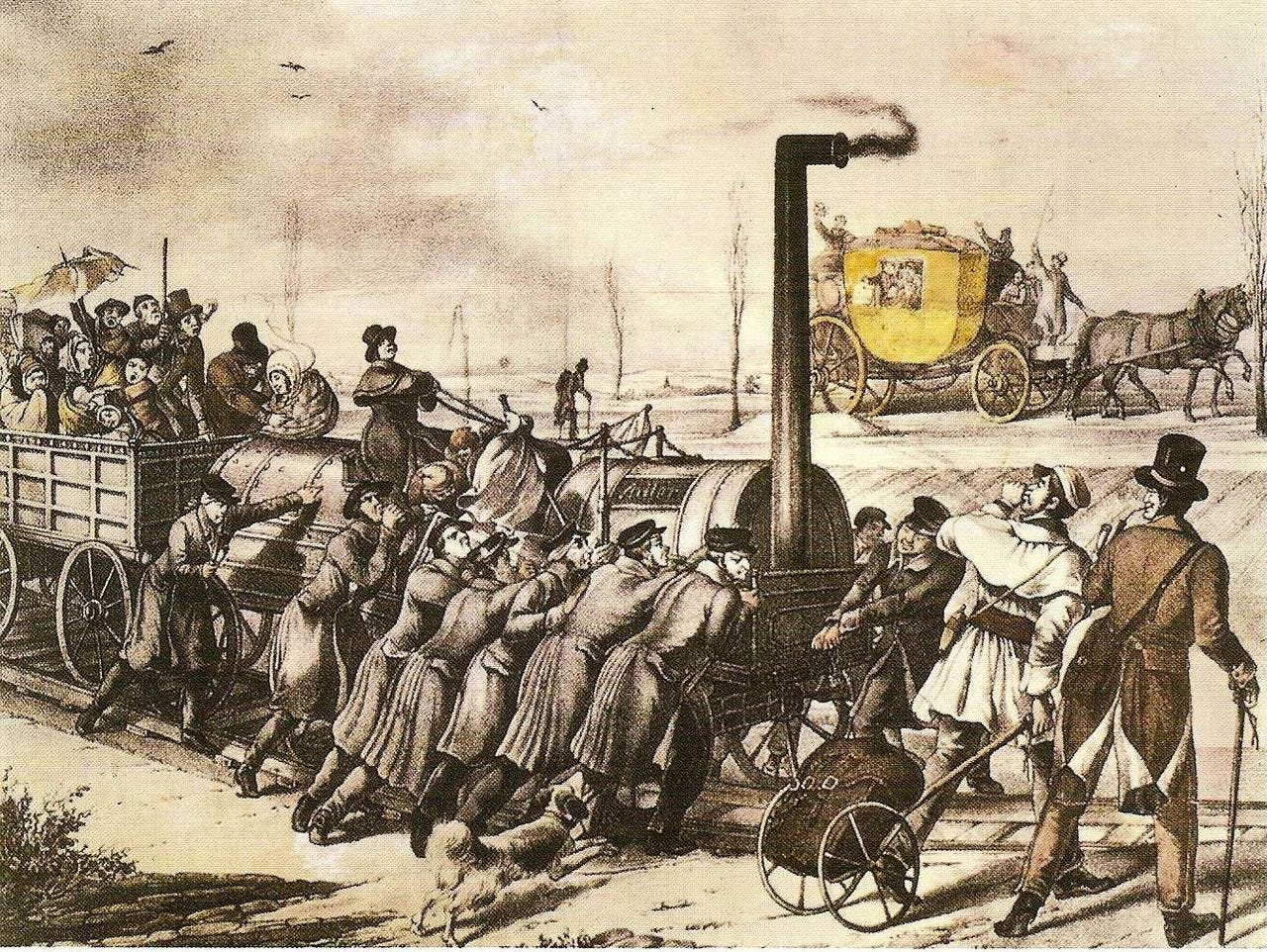
For the purposes of my research, this marked the beginning of an incredible German success story. The railway project generated substantial profits in its very first year of operation — including a 20 percent dividend for shareholders — and was considered a venture with a promising future. Just five years after its debut, the rail network spanned 500 kilometres. By 1914, on the eve of the First World War, railway lines across the German Reich totalled over 64,000 kilometres, forming the densest and most efficient network in Europe.
But Germany could not have done it in this way without England, which was miles ahead (no pun intended) in terms of railway technology. On that winter day in 1835, the first-ever steam train on German soil was pulled by a locomotive imported from England, operated by an Englishman who would soon become a local cult hero.
The development of steam train technology in Britain was closely watched by many in German-speaking Europe. The Bavarian King Ludwig, for instance, sent experts over to England to study what was happening there and report back. In the end, a group of private investors decided to take a chance and establish the first-ever steam-powered train line on German soil. They built it using English technology and gauge.
The locomotive, called Adler (Eagle) was imported from Robert Stephenson & Co in Newcastle. I can only imagine the excitement when 19 boxes containing 100 bits of a train arrived in Nuremberg after nine long weeks, ready to be assembled into a giant model kit. Robert Stephenson & Co had also sent an Englishman to drive the thing: William Wilson. He was supposed to undertake the first voyages so that nothing would go wrong, and then also train up German drivers, since there were none yet.
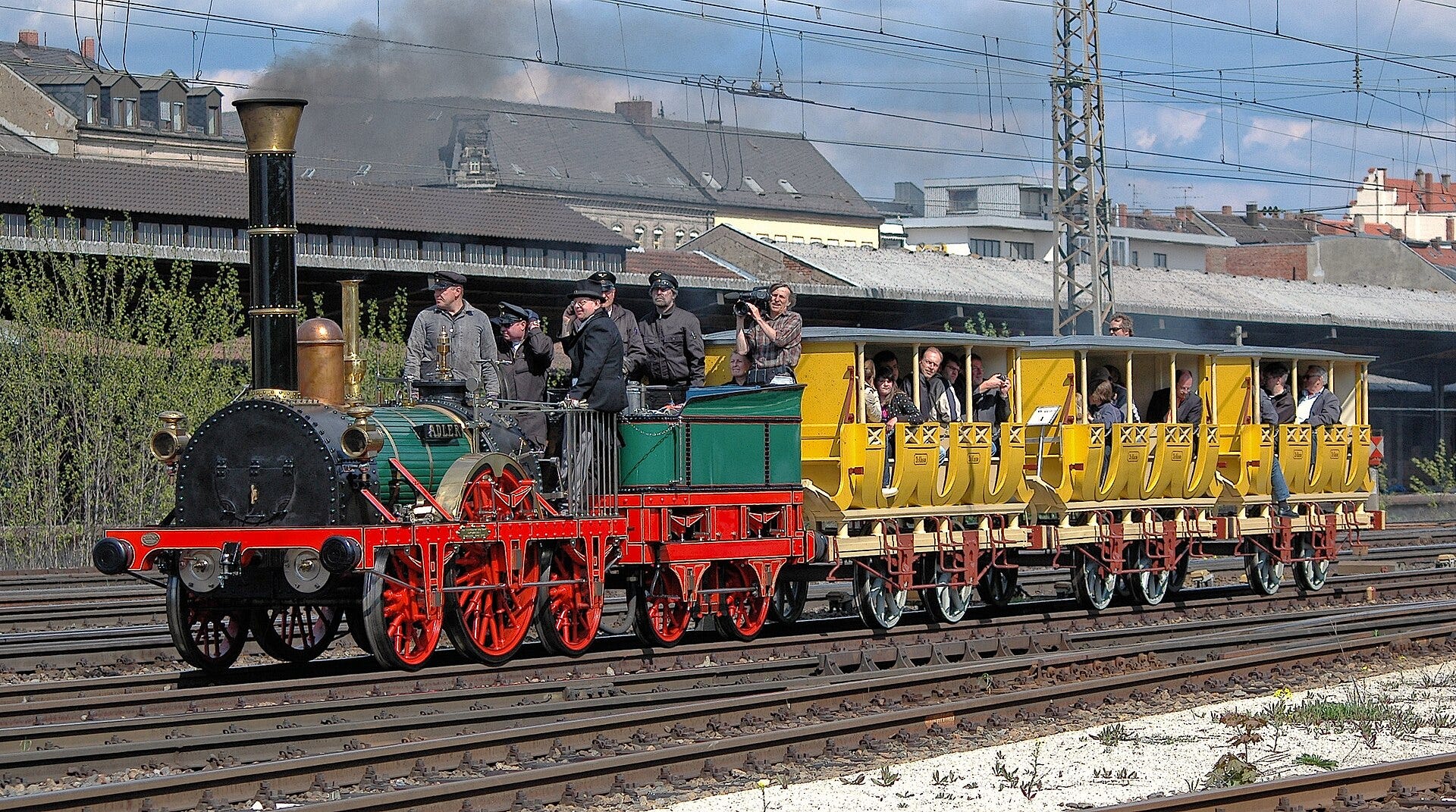
No expense was spared to get such English expertise to Germany. The Ludwigsbahn train company paid for his voyage to the continent, agreed not to work him for more than 12 hours a day and paid him such a handsome salary that he earned more than the director of the company that employed him. Wilson threw himself into the work with gusto and confidence. He helped assemble the train, undertook a few tests and then drove the Adler during the maiden voyage on 7 December 1835.
Tall, strawberry-blond and blue-eyed, Wilson cut a striking figure. Whatever the weather, he stood atop the locomotive in a black tailcoat, the starched upturned collar of his white shirt stiff against bearded cheeks and a top hat on his head. Passengers loved the eccentric Englishman for that and called him “langer Engländer”, the “tall Englishman”. He soon became an attraction in his own right. On the rare occasion when someone else took his shift, passenger numbers and revenue dropped. So his eight-month contract was extended again and again.
As other German train companies emerged, some tried to lure him away with better terms and conditions, but Wilson stayed in Nuremberg. He was enjoying himself far too much to leave. Being celebrated day in and day out by passengers was fun, and he’d also found himself a German girlfriend with whom he had a daughter.
Wilson had no reason to go home to England, and so he didn’t. From 1842 onwards, he’d allow his German assistant to drive some of the shifts. His health was beginning to take a toll. The drivers were entirely exposed to the elements. They eventually got warmer leather coats in 1845 (i.e. 10 years after the first journey), but roofs wouldn’t be installed for them for another eight years.
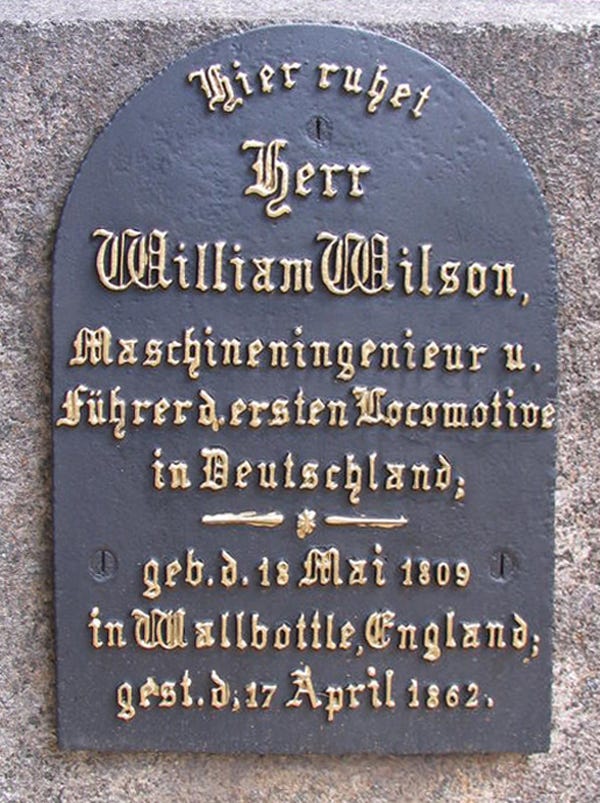
Wilson was the star of the 25th anniversary of the Ludwigsbahn in 1860, but by then, he was really beginning to struggle. In 1862, he died of illness – not in his homeland but in Nuremberg, where a huge crowd attended his funeral and where his grave remains today, honouring him as the “first train driver in Germany”.
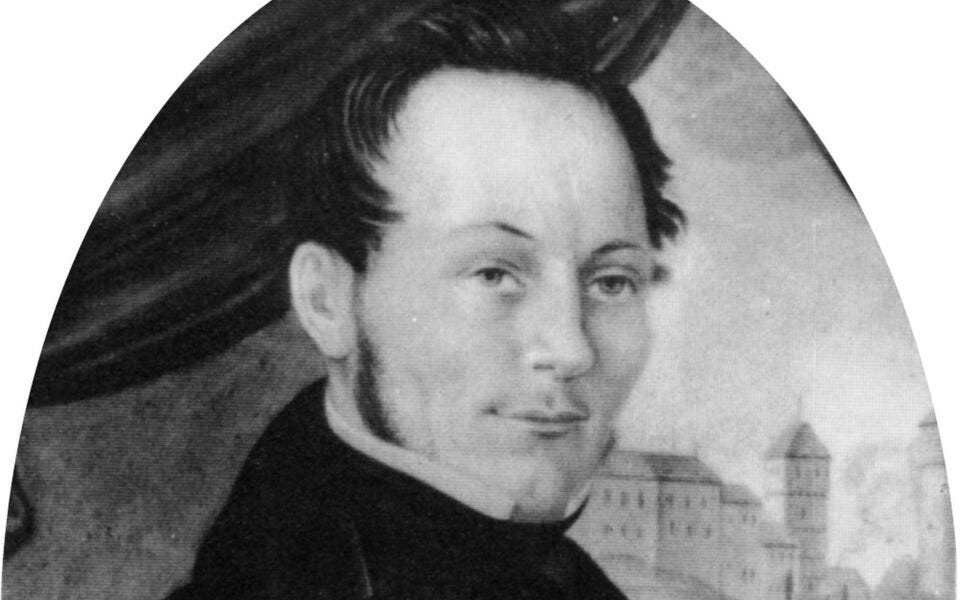
While researching, I came across another wonderful story about William Wilson. The German Rail Museum in Nürnberg recently received a mysterious parcel. It contained a cigar box with golden hinges. When museum staff opened it, the bright blue eyes of William Wilson stared back at them.
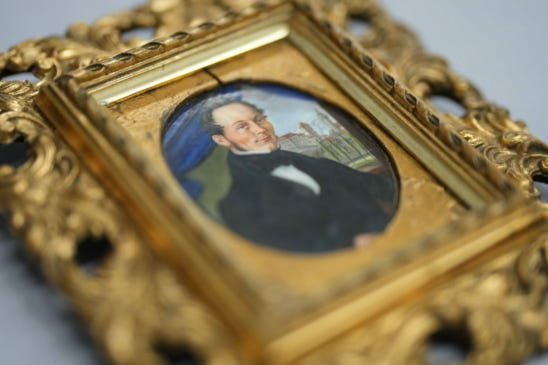
His great-great-grandson had decided that the tiny, exquisite, gold-framed portrait of him that they had kept in the family over generations should be passed on to the museum after his death. It shows a ruddy-cheeked Wilson in his formal attire in front of Nuremberg Castle and a poplar-lined railway avenue… Isn’t that marvellous? It was certainly enough to keep my mind off German defeats this week.
I wonder, though, which football team the Tall Engländer would have supported…
I wouldn't dare to take the piss after the Germany defeat a sly chuckle maybe 😆 Great unknown well to me train story,I was imagining the newly crated train arrives to Nuremberg as the locals set about to built it then find their metric spanners aren't a great fit for the Imperial nuts and bolts ,but I expect it came with spanners .