

There were some rather rude jokes in the pub quiz I attended last Saturday. I was in the quaint port town of Faaborg on the island of Funen in Denmark for its inaugural International History Festival, and speakers were treated to all-round entertainment for the weekend, including an English-language Second World War pub quiz run and attended by Danes. This turned out to be quite the experience.
The quizmaster was a burly bloke with a beard, encyclopedic knowledge of all things military history, and a wicked sense of humour, which led to jokes and banter with the audience between questions that made this German blush and say things like: “Are you still allowed to say that in Denmark?”
Suffice it to say, the experience indicated that I was in a country that seemed entirely at ease with its own history and national self-image. Casual references ranged from the Viking legacy to the Nazi occupation of Denmark and on to national stereotypes about Danes being a “tribe” that drank a lot, enjoyed good food and a lot of social cohesion.
This atmosphere made an interesting contrast to much of the rest of the Western world. Of course, Germany is a special case of its own, ultra-sensitive about its history and nationhood for obvious reasons. But other countries are also more self-critical than the Danes. Britain is currently seeing a renewal of the slavery debate while France discusses whether colonial grievances justify the outbreaks of unrest seen in recent days and weeks. By contrast, Denmark seemed remarkably happy with itself.
The most obvious signifier of Danish self-confidence is the Dannebrog, the flag of the Kingdom of Denmark – red with a white Nordic cross. Danes will tell you it’s the oldest continuously used national flag in the world, and they love it so much that they decorate not just public buildings with it but … well … everything.
When I arrived at Copenhagen Airport, people at arrivals were waving small and large Danish flags. They had formed a sort of red-and-white greeting committee. Could there have been some famous person on my flight for whom this sea of flags was intended, I wondered? Nope. As it turned out, the flagwavers were simply ordinary people welcoming granny back from her holiday or something.
In Faaborg, a small town of barely 7,000 inhabitants, flags fluttered from bicycle handlebars and were stuck onto Halloween pumpkins. Someone told me Danes sometimes simply call them “Hurrah” flags because they use them to celebrate anything from birthdays to Christmas.
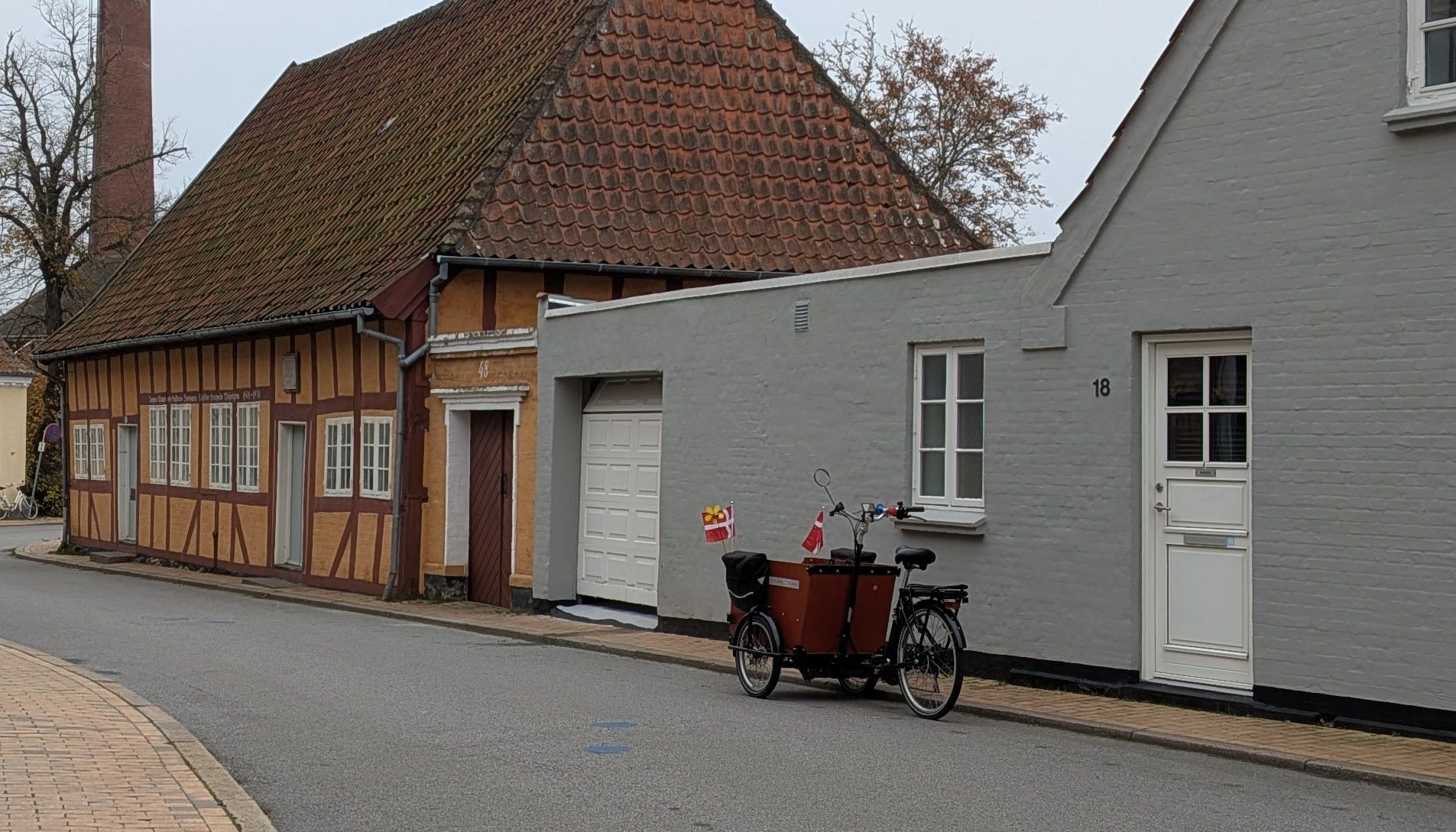
“Has it always been like this?” I asked during dinner with the other participants of the history festival. The Danes at the table nodded. It is completely normal for gifts to be wrapped in paper featuring Danish flag motifs, and for small flags to decorate sandwiches or birthday cakes.
A German professor married to a Dane shared that her in-laws once decorated a birthday cake for her with little German flags. “As someone who grew up in West Germany in the 1970s, this was more uncomfortable for me than my Danish family could have imagined,” she said.
On paper, this is odd. Unlike many other German symbols and institutions, the national tricolour of black, red and gold has sat out the Nazi period — and the period of the German Empire from 1871-1918, too. Those colours were chosen in 1949 — for both East and West Germany — because they pointed to German democratic traditions and ideals from the 19th century. It’s a rare example of modern Germany daring a bit of continuity with its history pre-1949 – and for good reason. The black, red and gold of the national flag symbolise a German democratic ambition that has deeper roots than the country sometimes dares to admit today.
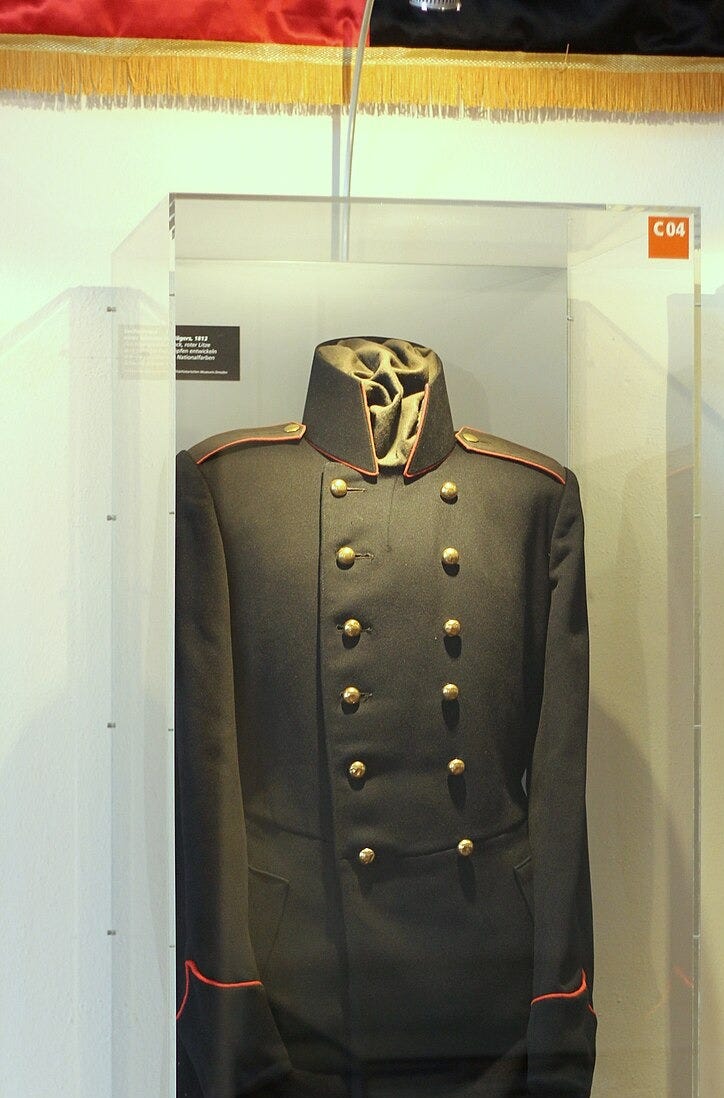
While black-red-gold was also used in the Holy Roman Empire, its modern usage is generally traced back to the so-called Liberation Wars, as the German states’ efforts to dispel Napoleon’s troops from their land between 1813 and 1815 are known in Germany. They were the colours of the famous Lützow volunteer corps, which eventually accounted for 12.5% of Prussia’s fighting force, and which would ultimately inspire a patriotic movement with a long-lasting legacy. They wore black cloth, red trim, and gold-coloured brass buttons.
After the Napoleonic Wars, the Congress of Vienna in 1815 redrew the map of Europe, but it did not create a unified German nation-state, as many German intellectuals had hoped. They saw it as a way to scale back monarchical power, leading to a more liberal society in which even the aristocracy had to abide by a constitution that set rules for all. When the dream of a German state seemed to evaporate, as monarchs everywhere restored their power, many organisations were founded that sought to work towards unification.
One example was the creation of Burschenschaften, nationalist student fraternities at German universities. My alma mater, the University of Jena, is the spiritual home of these societies. The Urburschenschaft, Germany’s first such organisation, was founded there in 1815 and adopted the black-red-gold banner as its colours. These fervent young intellectuals began to organise rallies and demonstrations that would ultimately contribute to the revolution of 1848/49.
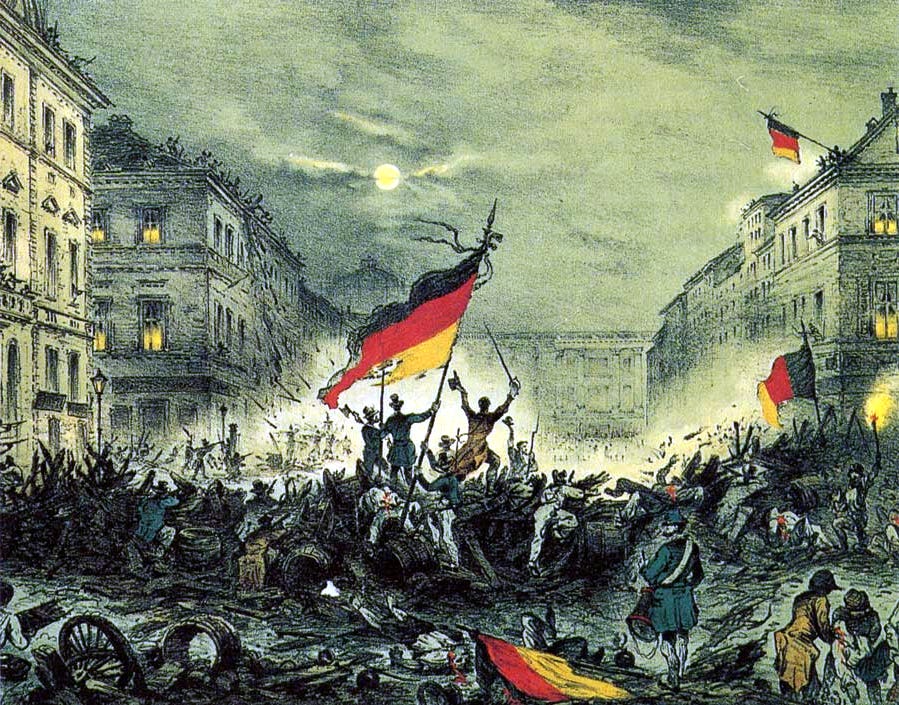
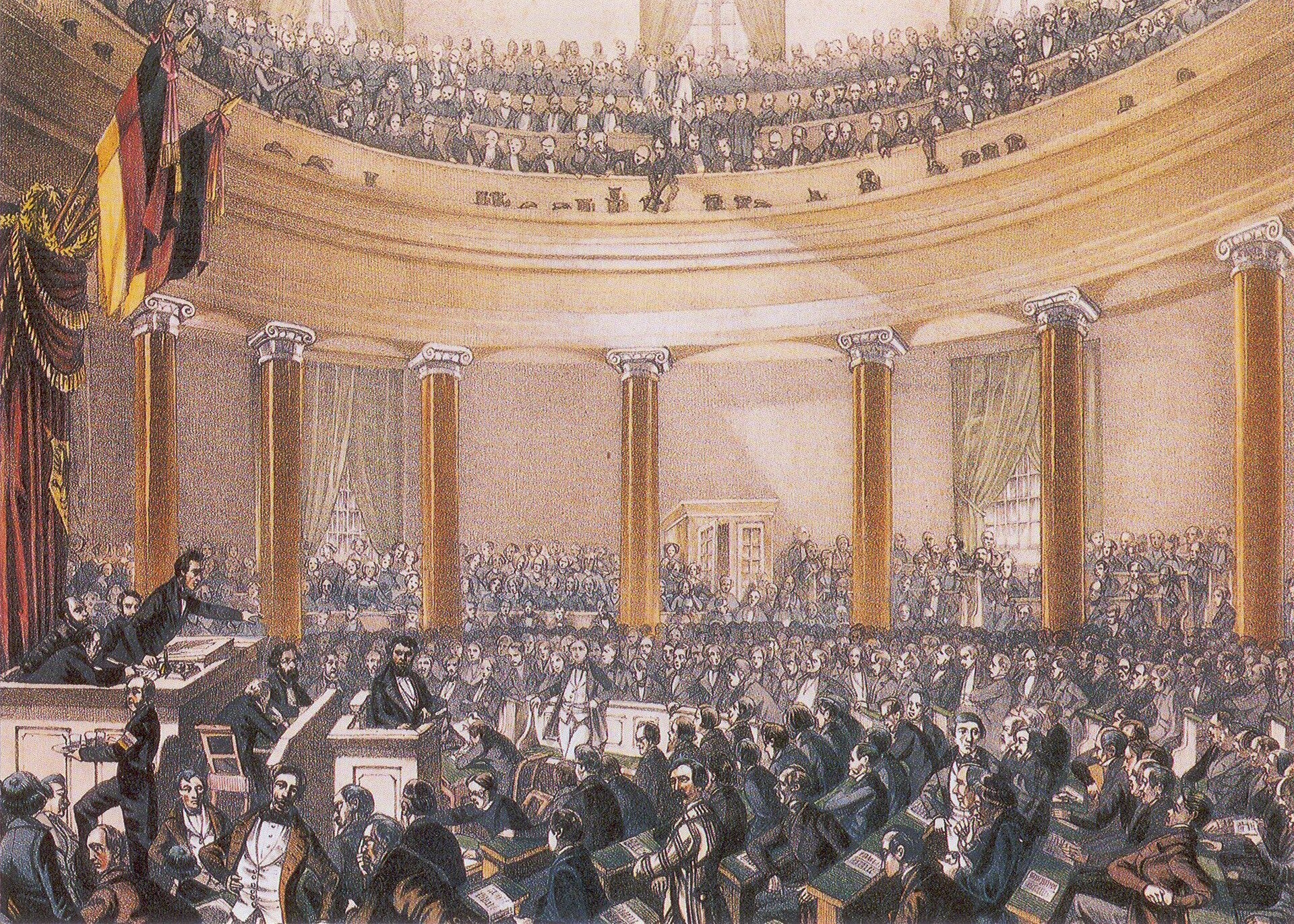
Those revolutions, which sought to establish a unified German state with a constitutional monarchy and a more democratic system, also used the black, red and gold tricolour. Plans were made to found a united Germany in Frankfurt. A constitution was drafted with plans for an all-German Kaiser at its head. The tricolour of the revolutions was to be its flag. But a fierce counter-revolution ultimately crushed that dream, restoring the old order once more — though with significant concessions that brought more than a whiff of democracy to the German-speaking lands.
The monarchs despised the black, red and gold colours of the democratic revolutionaries, especially the Prussian king. That’s why they didn’t become the colours of the German Empire when it was finally forged under Prussia’s leadership in 1871. But when that system and all its monarchs fell in 1918, the new system that emerged, the Weimar Republic, wanted to hark back to the democratic ideals of 1848 and adopted its tricolour as its colours. Anybody who despised Germany’s first full democracy, from monarchists to far-right groups like the Nazis, also rejected its colours, preferring the black-white-red of the Empire.
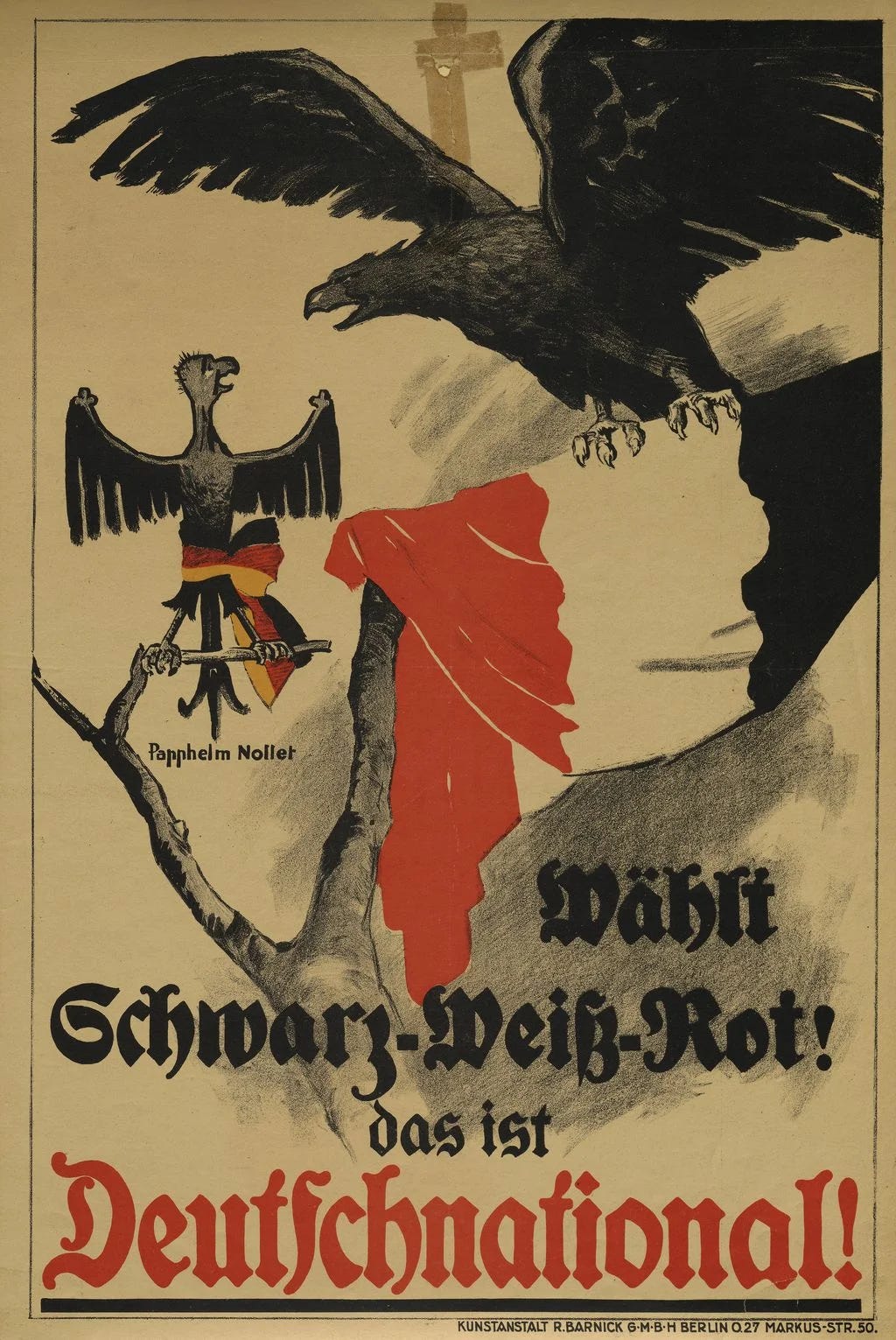
So when Hitler came into power, the colours of German democracy died with its ideals. This meant both East and West Germany could readopt them after the Second World War. They had remained untainted by Nazism — and indeed by Prussia, which was widely blamed for Germany’s destructive streak of autocracy and militarism. In other words, the Allies agreed that there was a German democratic tradition from the 19th century that was worth resurrecting.
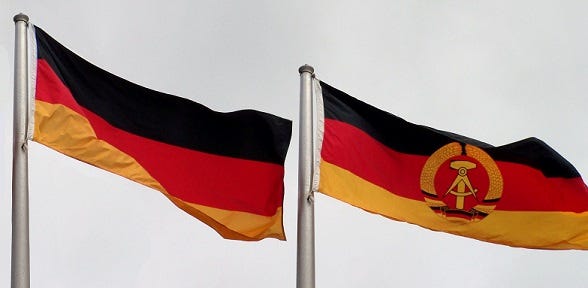
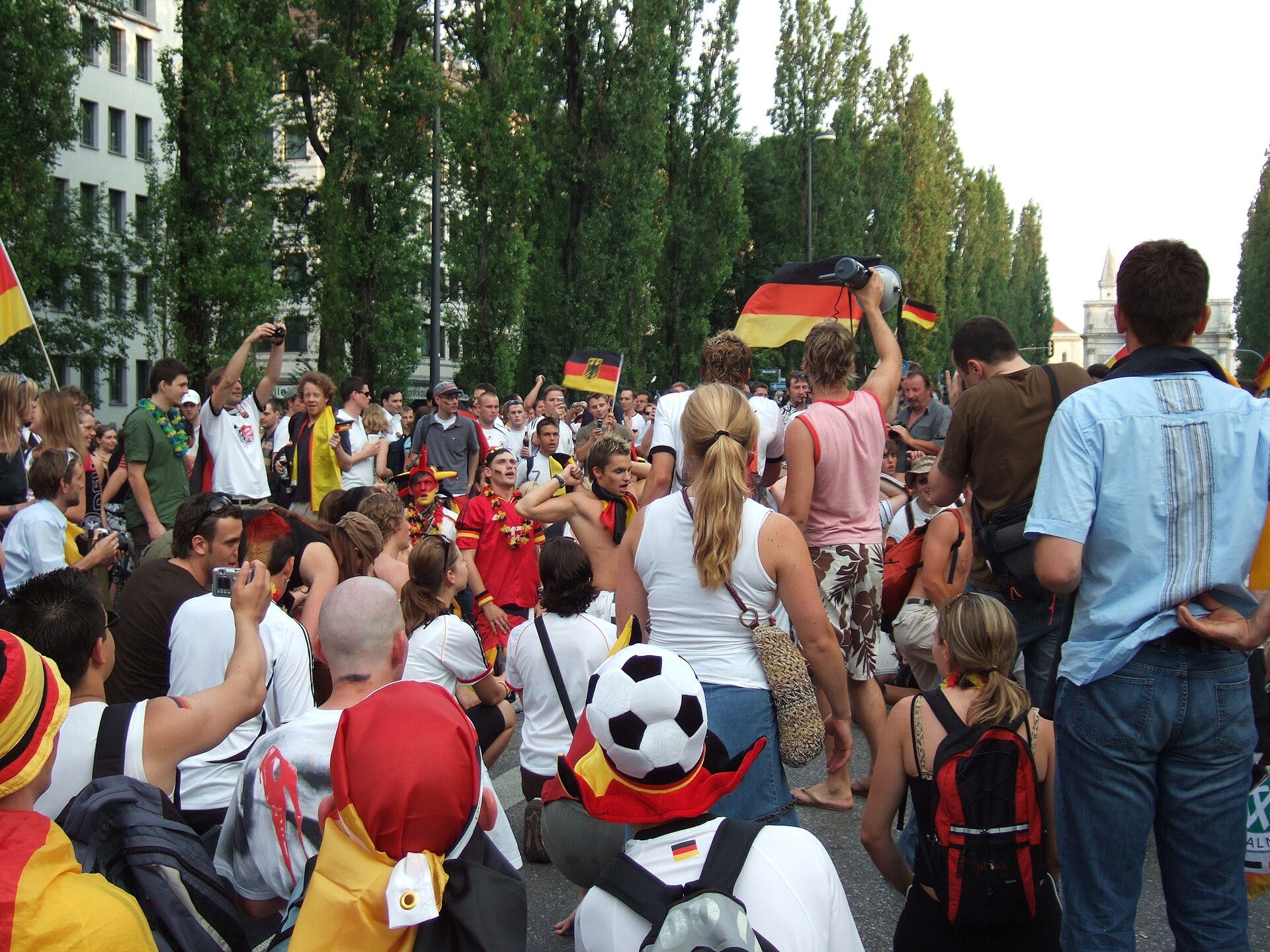
So Germans today could, in theory, all rally around that flag. It has been the flag of German democracy for over 200 years. And of building back from Nazism, East and West. And of reunification. And, of course, of footballing victories.
So why did my German colleague in Denmark feel uncomfortable when her Danish family thought they would cheer her up on her birthday with a flag cake? For the same reasons lots of Germans do, right up to the top. Angela Merkel famously once confiscated a German flag from the hands of a celebrating colleague after her party's election victory in 2013. “Merkel throws away German flag” came the headlines.
For all its democratic associations, the German flag is unlikely to become a “Hurrah-Flag” outside of sporting contexts anytime soon, decorating bicycles and Christmas baubles. German national identity is too complex and laden with too much dark history to inspire the kind of self-confidence and lightheartedness that the majority of Danes seem to feel.
But perhaps there is a happy medium. Jürgen Klopp, Germany’s new head coach of the national team, recently said he wants to “bring the flag back” for Germans, inspiring a “positive kind of patriotism” through football. I also think educating young Germans about their flag and its origins could help. I can’t remember being taught anything about it at school. Many people still seem to see it as a symbol of aggressive nationalism when its legacy is so much richer and more interesting than that.
A nation’s relationship with its flag, it seems to me, is determined by a lot of things: social cohesion, common roots and values, optimism for the future, identity and trust between the people and public institutions. Germany — and much of the West — is grappling with all these things at the moment in a way Denmark is not. I suspect that has something to do with overall citizen satisfaction. In annual happiness rankings, Denmark repeatedly comes in within the top spots. In the current one, Germany is No. 17.
So I’m afraid even spectacular sporting victories might not “bring back the flag” for Germans the way Klopp is hoping. Neither would my suggestion to teach its history better. Ultimately, the way a nation treats its flag goes deeper than historical knowledge and football. It’s about how a country feels about itself. And Germany is a long way away from feeling comfortable about its past and present. That’s not necessarily a bad thing, I hasten to add, as renegotiating these things may well lead to a better future.
But last weekend, as I sat between my new Danish pals and marvelled at their raucous laughter about terrible jokes, I couldn’t help but be a little envious of their comparative lightheartedness. “You know what the secret is?” asked one of them, slapping me so heartily on the shoulder that I spilt some of my beer. “We don’t take ourselves too seriously. You Germans should try it out some day.”
Am International History Festival? That's as cool an idea as James Holland's We Have Ways party. This American historian would love to see something like that here.
But at least we defeated domestic fascism yesterday almost as thoroughly as the Hungarians, Serbs and Brazilians.
Quite apt for me this article , just landed after being in Istanbul which if you want to see flag displays of the country they love then Turkey 🇹🇷 is the place to go , the ones that fly on the hills of the Bosporus are enormous, they don’t look real in fact , I like nations flags they should be flown at all times imo 👍