

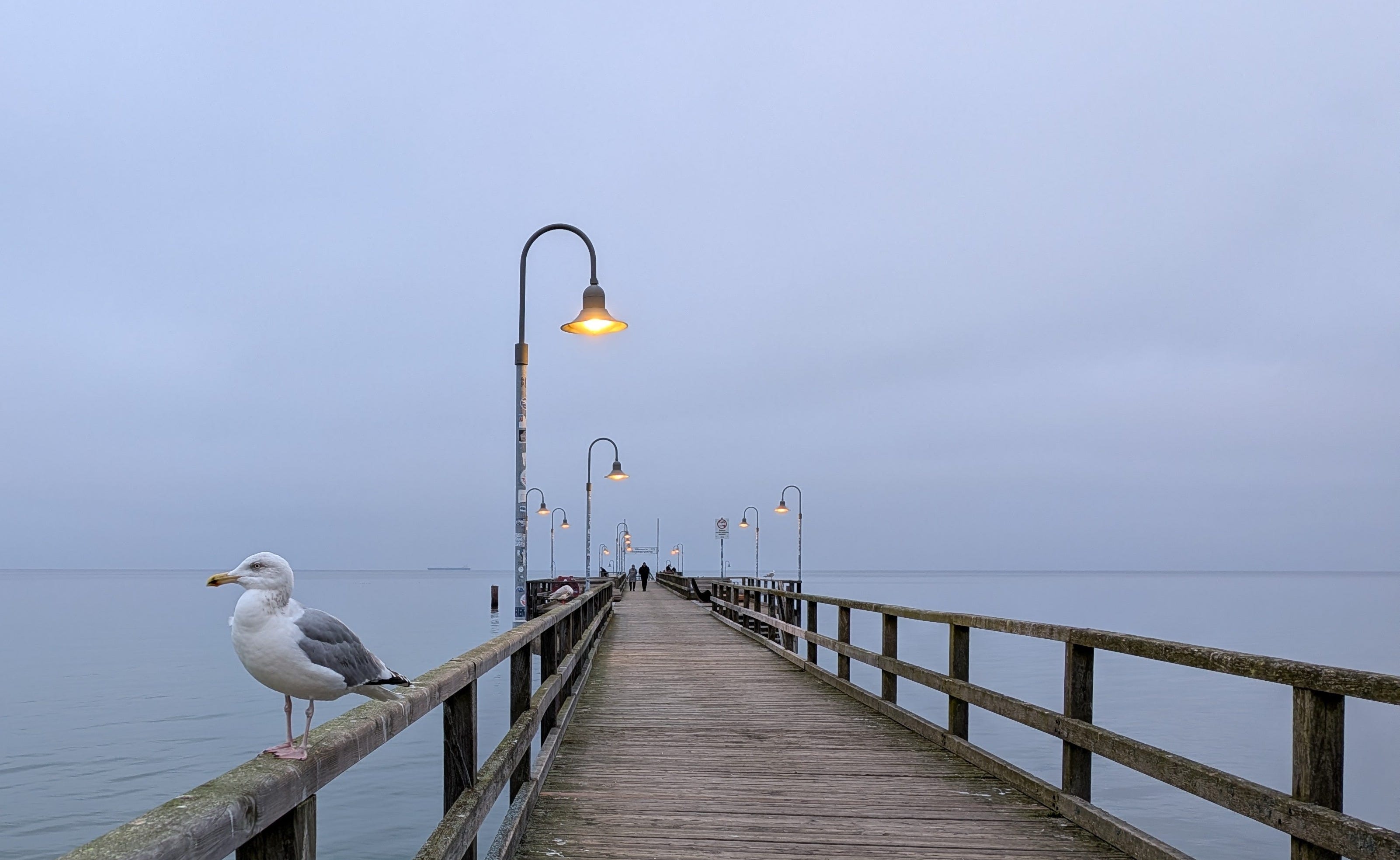
I’m living my best seaside life this weekend. First, seagulls stole the food I had stored on my hotel room balcony overnight. Then I got wet feet at the beach from not jumping back from a wave quickly enough. Now, I’m sitting down to write this, and every time I move my feet, I can hear the crunching of sand underneath.
But I love it. I’ve only been on the Baltic Sea island of Rügen for two days, and I’m already utterly taken with it. It’s not just the spectacular scenery and the bracing seaside air. There is an astonishing density of history in this place. From abandoned Nazi megastructures to elegant Kaiser-era villages and basic GDR holiday accommodation for the masses, every German regime took it upon itself to shape Germany’s largest island.
Luckily for me, I have plenty of room to explore and contemplate all of this. Not many people come here in December. As I’m finding out, this time of year, Rügen feels like a place out of time. Many shops and restaurants are shut, the piers stand empty against a grey Baltic and the wind coming off the sea has a sharpness that clears the head.
Walking along the sandy beaches or through a deserted seaside resort, it’s easy to think of the island as remote, as geographically on Germany’s edge, politically distant from Berlin, a refuge from whatever is happening on the mainland. And in some ways, that impression is right. For around two centuries, people have come here to rest, to breathe clean air, to look at nature and reset.
Yet the more I travel around and talk to people here, the clearer it becomes that Rügen is not a historical backwater at all. I spent Friday and Saturday exploring the island and talking to local historians, realising that, again and again, Germans have projected their biggest ideas onto this island: about art, health, leisure, ideology, and society itself. Far from being isolated from events, Rügen is one of the places where German history seems to converge.