

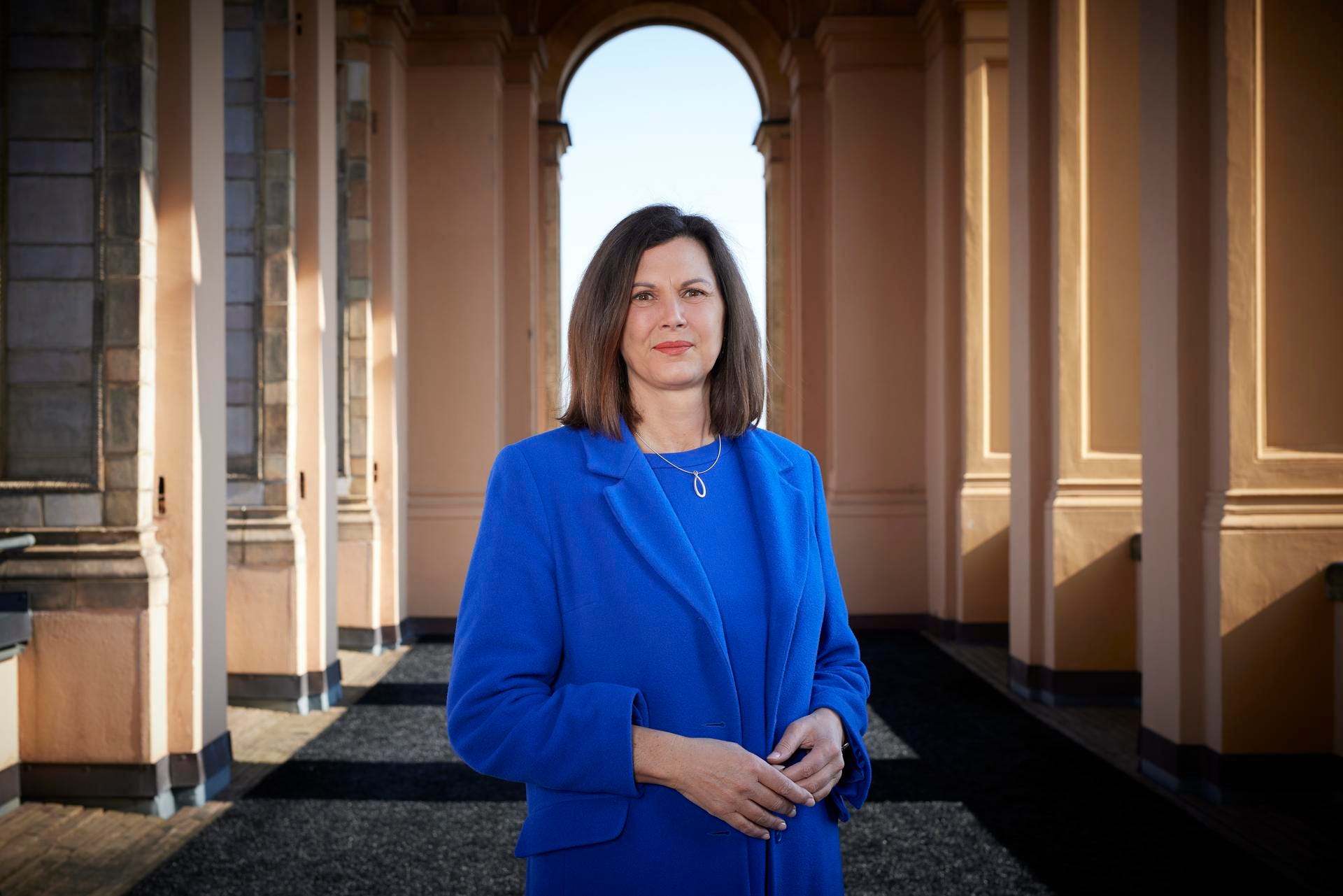
Well, now it’s official. Unless something drastic happens, Germany’s next President will be called Ilse Aigner. On 30 January 2027, Germany will elect its new head of state, and the process is laden with history. Much has been made of the fact that Aigner is a woman and will therefore be the first female President the country has ever had. But I think there are far more interesting things about her background that make her candidacy exceptional.
But let’s look at the history of the office first. In modern Germany, the President is a largely symbolic figure. Real political power lies with the Chancellor, who is the head of government. The incumbent President is Frank-Walter Steinmeier from the centre-left Social Democratic Party (SPD). The current Chancellor is Friedrich Merz from the centre-right Christian Democratic Union (CDU). You've likely heard and read more about the latter.
The President’s role is comparable to that of the monarch in Britain: they sign laws, represent the country abroad as a figurehead, and, in times of political instability, help steer a path through choppy waters. This is their remit under the constitution West Germany adopted in 1949, which remains in place for the reunified country today. However, it is a significant departure from the original office introduced in the Weimar Republic.
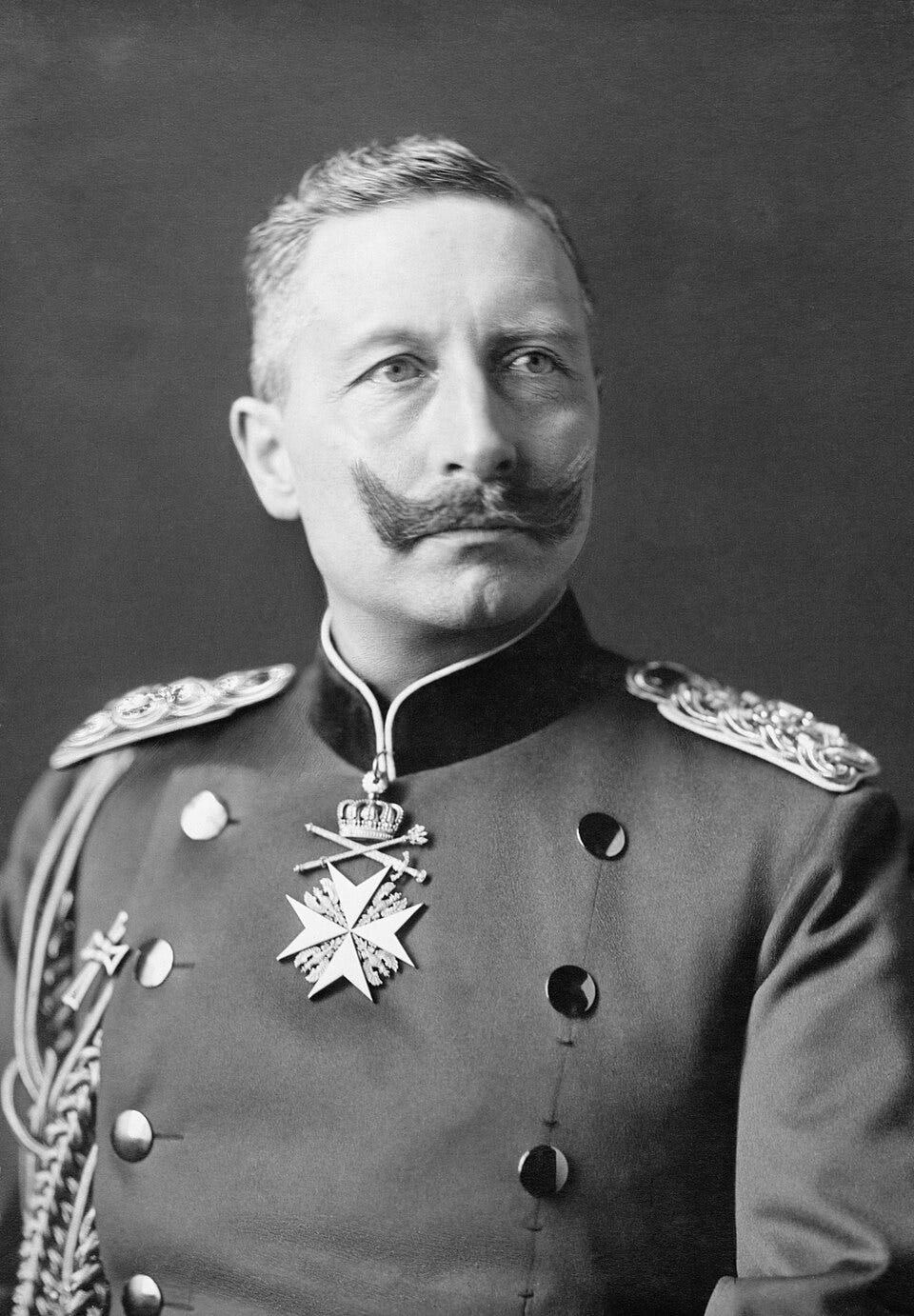
Before the end of the First World War, Germany had no President. The Kaiser was head of state, and with that came other responsibilities, such as serving as Commander-in-Chief of the German forces and appointing the Chancellor and government officials. It was an incredibly powerful position, even if the days of absolute monarchy lay in the past and the Kaiser was increasingly tied to other political forces. When the last incumbent, Wilhelm II, abdicated in 1918 and Germany became a republic, his role seemed to require a replacement.
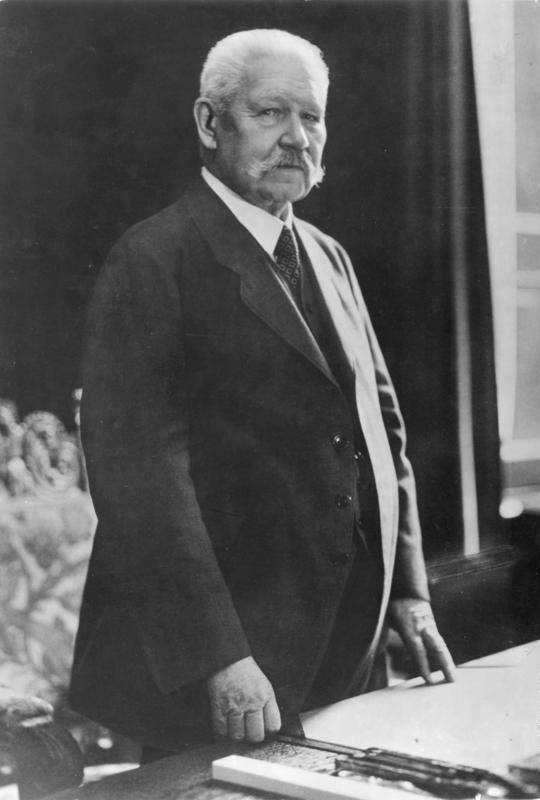
So the Weimar Republic had a President stepping into the footsteps of previous monarchs, a President with extensive powers all the way down to the infamous Article 48, which allowed him to bypass parliament and rule by decree in times of emergency. This was used liberally by the first Reich President Friedrich Ebert. After 1930, when economic, political and social turmoil engulfed Germany, it was used more and more by Reich President Paul von Hindenburg, culminating in presidential decrees playing a major role in turning democracy into dictatorship. It was also Hindenburg who appointed Hitler as Chancellor in 1933 – incidentally, on 30 January.
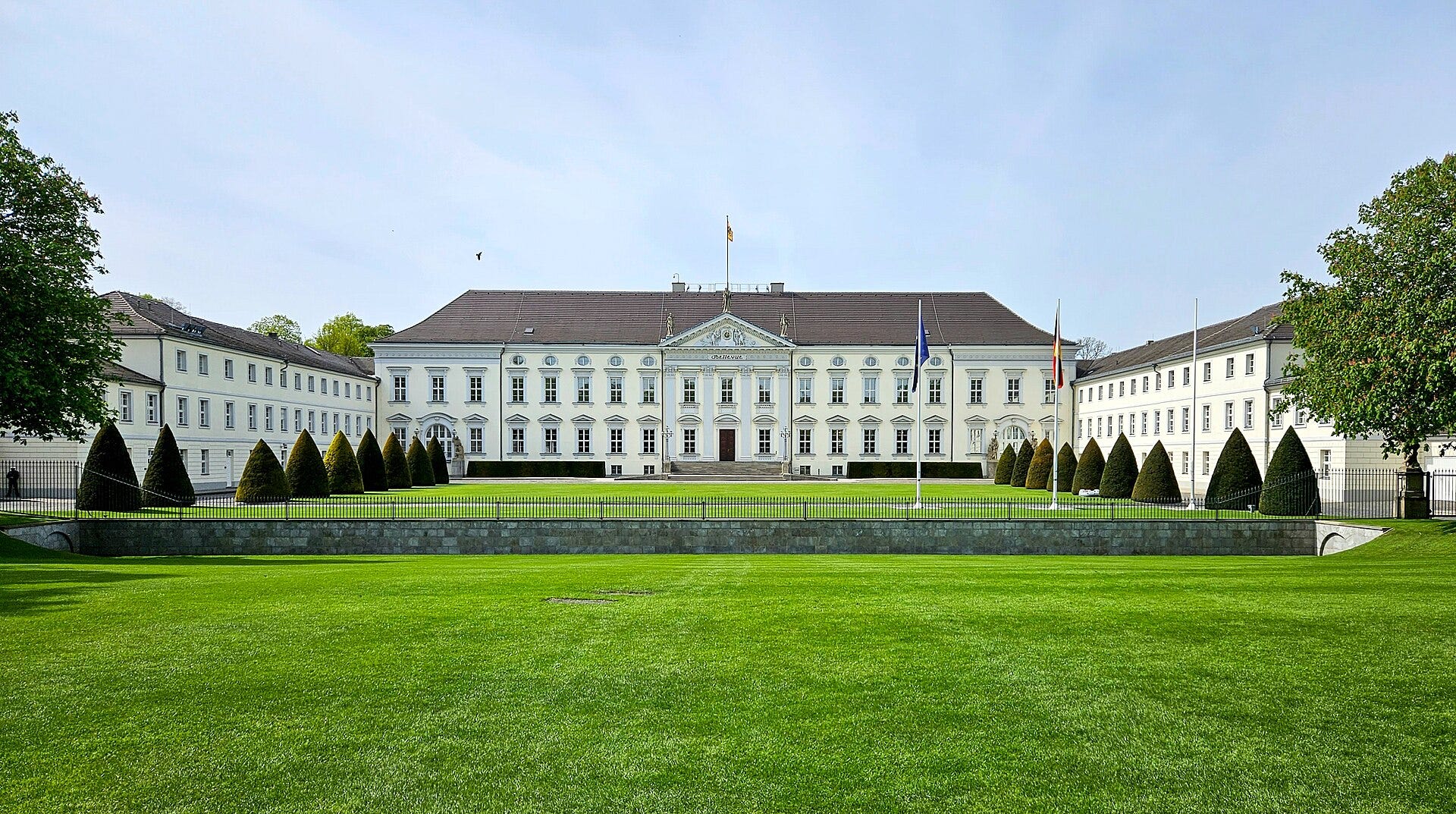
After the Second World War, the West German constitution, called the Grundgesetz or Basic Law, drew on the Weimar experience to create a more resilient democracy. Among the many tweaks and changes was a significant toning down of the Presidency. While there are a few trappings of the olden days – the official residence is a palace, for instance: Schloss Bellevue – the Presidency has been thoroughly defanged. Today’s office holders can no longer command the military, and they have to appoint the Chancellor chosen by parliament.
There is one other crucial change: Weimar Presidents were elected directly by the people. Their current-day successors are not. The rationale is that Germans elected Hindenburg, and Hindenburg appointed Hitler. To prevent a repeat of such a chain, Presidents are now elected through a process that is only indirectly linked to the electorate. A Federal Convention is convened solely for this purpose. It contains all members of parliament and an equal number of delegates sent by Germany’s constituent states. The latter can also include non-politicians. You often see public figures like footballers, actors or writers being nominated.
And that is where we get back to Ilse Aigner. In theory, every member of the Federal Convention can nominate a candidate. The only conditions are that they are German, at least 40 years old and eligible to vote themselves. In practice, however, parties agree on candidates in advance and often speak beforehand to work out which candidate is likely to win a majority.
Ilse Aigner is from the Bavarian CSU, the sister party of Merz’s CDU. So both those parties are happy with her. The SPD and the Greens have also signalled their consent, mainly because Aigner is a woman and they have long argued for a female candidate. So that will likely be enough to carry her over the line.
For months, the gender issue has dominated the debate as to who should be the next President. I have publicly argued that this is nonsense, and most surveys I have seen show that the majority of Germans agree that the gender of the candidates doesn’t matter. People want a competent and credible candidate. Most don’t care whether they are a man or a woman. Ilse Aigner certainly hasn’t been done any favours by being designated as the female candidate. Upon her nomination, the AfD’s Beatrix von Storch scoffed on social media: “What qualifies Ilse Aigner for the office of Federal President? 1. She is a woman.”
Actually, Ilse Aigner is an interesting choice in her own right, and it would have helped if she had been nominated for those reasons rather than for having ovaries. For one thing, she is an overtly regional candidate. She’s from Bavaria and speaks in the broad dialect of her upbringing. Germany doesn’t often have that. As I mentioned in a recent article, most politicians speak clean, neutral High German (Hochdeutsch). So far, Germany has had only one Bavarian head of state: Roman Herzog (in office 1994-1999).
Herzog remains one of the most popular figures ever to have held that office. As for his dialect, he once said that he couldn’t get rid of it if he tried, but that that’s no bad thing. People associate Bavaria with good things: mountains, beer and happy summer visits. So, he joked, when he opened his mouth, listeners immediately felt as though they were on holiday.
Aigner shares another quality with Herzog that may help her make a success of the role. Herzog had a reputation for being down-to-earth. He could be quite funny and had a demeanour that was once described as akin to that of a “niederbayerischer Bauernpfarrer” – a Lower Bavarian country pastor – i.e. someone who could relay moral, political and social messages to ordinary people. Aigner has a similar reputation as being approachable. In a world where most politicians have university degrees, she began her professional life as a technician, joining her parents’ electrical installation business in the 1980s.
Like most Germans, I don’t know that much about her. She served as agriculture minister under Angela Merkel for a few years, but otherwise spent much of her political career in Bavaria. She’s currently President of the Bavarian state parliament, where she also has to manage different political groups and build bridges. So who knows? The curious and often obstructive mix of identity and party politics may, for once, have produced a highly suitable candidate for an important office. But I’ll reserve judgement until Aigner is elected and we’ve seen her in action.
What is already clear is that being German President in times of increasing polarisation will be a challenging and important role. They are elected for five years, which seems an eternity in the times we live in. So Aigner has a real chance here to focus minds at the top of politics, steady passions among the population and help keep the ship steady amid the coming storms. I hope she can prove the doubters wrong by showing she's not just a product of internal political dynamics, but the best person for an important job.
I’m surprised her gender is an issue in 2026; are the AfD just ticking another cliché box? As you wrote what matters is her competence in the role. She is coming into office at a difficult time, perhaps her background will appeal to her general public. Maybe she needs an “I see only Germans” speech, emphasising what unifies rather than divides. Best of luck to her.
A President from the Principality also known as the Kingdom of Baveria, why not :)